Senegal Color Palette: Indigo, Teranga Sand and the Pink Lake
By Essence of the Road Art · Published July 2026
This article contains affiliate links. If you buy through them, we may earn a small commission at no extra cost to you. We only feature pieces we would live with ourselves.
Senegal’s most famous color is born green. In the dye vat, fermented indigo leaves turn the liquid a murky yellow-green, and cloth comes out of it looking like pond water. Then the air gets to work. Within minutes the fabric oxidizes in front of you — green to teal to that deep, breathing blue that West Africa has been wearing for the better part of a thousand years. No other palette in our African color palette guide has an entrance like that.
But Senegal is more than its blue. It is the warm sand of Dakar’s streets and the brown of attaya tea poured from a height. It is a lake that turns rose-pink in the dry season. It is a colonial island city fading beautifully in ochre and coral, and it is the shine of bazin riche damask, beaten with wooden clubs until the cobalt gleams like metal. This guide turns all of it into five livable schemes with real hex codes, the room each one serves best, and the art that carries it home.
It is the color companion to three earlier pieces — teranga, the Senegalese art of welcome, our Senegal interior design guide and the Senegalese symbols guide. Those cover the philosophy, the rooms and the motifs; this one gives them their colors.
Quick answer: The classic senegal color palette layers deep indigo blue over warm sand and brown neutrals, with one unexpected accent — the rose pink of Lake Retba. Use indigo as the saturated 30 percent of a 60-30-10 scheme, keep the base sandy and warm, and let pink or faded denim blue take the final 10. The one-step version is our 18-piece Indigo Afrocentric bundle, which carries the whole register from ink to faded denim in a single download.
Table of Contents
What makes Senegalese color different
Two things, and they explain every scheme below. The first is indigo itself: unlike paint, indigo is a living chemistry, built up dip by dip, so Senegalese blue always exists as a family of depths rather than one flat shade — ink, denim, faded sky, all on the same cloth. Rooms built on it inherit that softness automatically.
The second is teranga. The Wolof word is usually translated as hospitality, but it works more like an operating system: a home is organized around the people about to arrive. A senegal color palette follows that logic — it is warm, low-glare and generous, tuned for long conversations over three rounds of tea rather than for photographs. Of all the palettes we have traced across the continent, this is the one most obviously designed for staying, which is why it suits bedrooms, reading corners and every room where you want time to slow down.
1. Dakar Indigo — the signature scheme
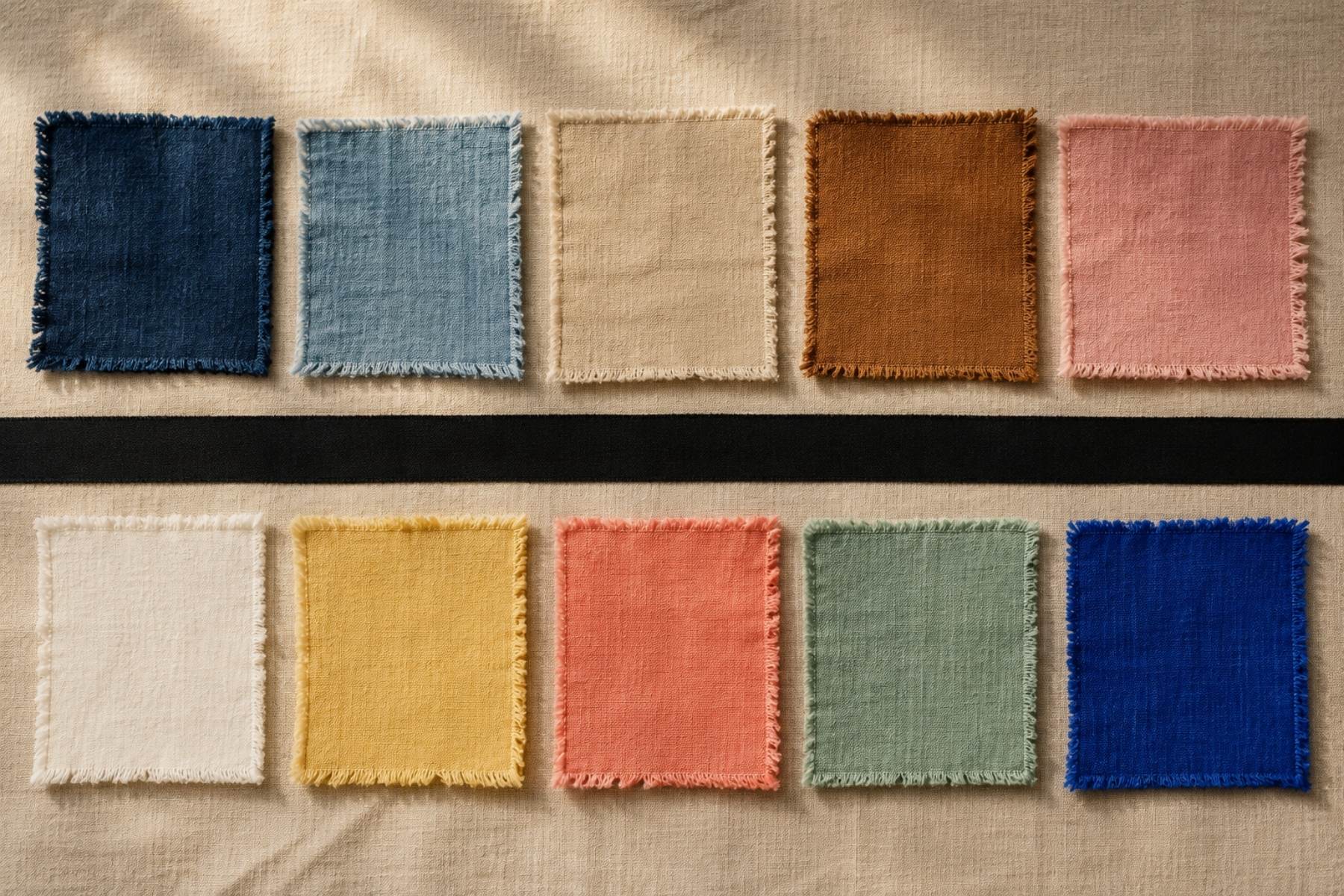
Indigo #2B3A67 · Faded denim #5C7599 · Sand #E3D6BE · Teranga brown #8C5B3F · Ink #1D2438
Where the color comes from. West African indigo dyeing predates synthetic color by centuries. Leaves of the indigo plant are packed into a vat and fermented; the dyer reads the vat by smell and by the copper sheen on its surface. Cloth is dipped, aired, dipped again — each cycle deepens the blue, and a master dyer can hit a dozen distinct depths on one length of cotton. In Senegal the tradition runs strongest in the south, in Casamance, and its cloth travels north to Dakar’s markets and tailors.
What it means and how it feels. Across West Africa indigo has long been the cloth of dignity — woven into weddings, worn for protection, traded like currency. As a room, Dakar Indigo is the calmest scheme in this guide: blue recedes, so walls breathe; sand and brown keep it human; ink appears only in lines and frames. The impression is dusk on the Corniche — cool air, warm ground.
Hang it: the 18-piece Indigo bundle is the full register in one set, or start smaller with the Indigo Africa Map poster. Layer it: an indigo mudcloth-style throw pillow set. For the deeper story of styling blue as quiet luxury, our Indigo decor guide picks up where this scheme ends.
Indigo is not Senegal’s alone. The Yoruba adire tradition works the same resist-dye blue further east, with a different pattern language and a warmer ground — the Nigerian palette shows how the two differ.

2. Teranga Sand — the hospitality neutrals
Warm sand #E3D6BE · Shea cream #F0E9D8 · Clay brown #8C5B3F · Attaya amber #B07B3E · Mint leaf #5F8A5E
Where the color comes from. This is the palette of a Senegalese welcome. Sand is the ground everything stands on, from Dakar’s streets to the courtyards where guests are received. Shea cream is the butter worked into skin and hair; amber is attaya, the strong green tea brewed in three rounds and poured theatrically from a height until it foams — the first round bitter like life, the second balanced, the third sweet like love, as the saying goes. The mint goes into the pot.
What it means and how it feels. Teranga Sand is what happens when a neutral scheme has a purpose. Nothing in it competes with a guest’s face or a long conversation; the amber and mint exist at the scale of tea glasses and plants, not walls. It reads as the most livable scheme here — soft, sunlit, unhurried — and it doubles as the base layer under any of the other four. If you loved our Earthroot terracotta palette, this is its cooler, sandier cousin.
Hang it: the Quiet Love Family Indigo Print Set of 3 sits perfectly on a sand wall, as does the Black Woman & Botanical Set of 3. Layer it: a natural woven jute and cotton throw blanket and a proper tea tray.

3. Lake Retba Rose — the pink accent scheme
Retba rose #D98E9A · Deep brine rose #B96276 · Salt white #F2EEE6 · Dune sand #DFC9A4 · Gray driftwood #8A8177
Where the color comes from. Lac Rose — Lake Retba — sits an hour north-east of Dakar behind a ribbon of dunes. Its water is up to ten times saltier than the ocean, and in the dry season a salt-loving micro-alga, Dunaliella salina, blooms and turns the whole lake strawberry-rose. Salt harvesters pole out in wooden pirogues, coat their skin in shea butter against the brine, and bring the lake bed up by hand. The pink is strongest when the light is high and the wind is low.
What it means and how it feels. Pink arrives in Senegal not as sweetness but as geology, which is exactly how to use it at home: mineral, dusty, grounded by sand and driftwood gray rather than paired with white-on-white. One rose wall in a bedroom, or rose textiles against salt white, reads grown-up and slightly surreal — a room with its own weather. This is the scheme for anyone who wants the softest possible entry into color.
Hang it: the Watercolor Africa Map print in pastel was made for this scheme, backed by a piece from the Black Woman Set of 15 in its softer tones. Layer it: a dusty rose linen cushion cover pair.

4. Saint-Louis Pastels — the faded colonial scheme
Ochre facade #D2A24C · Coral wash #D98B6F · Sea-foam #A8C5BB · Lime white #F1EDE1 · Balcony iron #33312E
Where the color comes from. Saint-Louis, on its island in the Senegal River, was the colonial capital, and its old town — a UNESCO World Heritage site — still wears the era’s paint: ochre and coral facades, wooden balconies, lime-washed walls flaking into a hundred sun-bleached in-betweens. Below the bridges, the fishing quarter answers with pirogues painted in every color a boatyard can mix. The scheme’s beauty is its fade; nothing in Saint-Louis is freshly painted, and that is the point.
What it means and how it feels. This is Senegal’s most romantic palette and its most complicated inheritance — colonial architecture, reclaimed and lived in on Senegalese terms, jazz festival and fishing port at once. At home it translates to matte, chalky finishes and colors that look like they have twenty years of sun in them. It suits kitchens, bathrooms and any small room that wants charm without saturation.
Hang it: the Vintage Africa Map print, dark painterly carries the aged, layered feeling, or go lighter with the Watercolor Africa Map pastel. Layer it: aged terracotta and ceramic pots for the flaking-paint texture.

5. Bazin Riche Jewel — the celebration scheme
Cobalt #2749A8 · Emerald #1F7A57 · Fuchsia #B93A7C · Gold thread #C79A3A · Damask white #F3EFE4
Where the color comes from. Bazin riche is the fabric of Senegalese celebration: cotton damask, dyed in saturated jewel tones, then starched and beaten with wooden clubs until the surface shines like beaten metal. You hear a bazin workshop before you see it. Tailors cut it into grand boubous for Friday prayers, weddings and baptisms, and Dakar’s streets on a festival day are a runway of cobalt, emerald and fuchsia catching the sun.
What it means and how it feels. Bazin is status, joy and occasion — color worn at full volume, on purpose. At home, treat it the way a tailor does: one jewel at a time, cut precisely. A single emerald velvet chair in a Teranga Sand room, one cobalt artwork on a lime-white wall, fuchsia only at cushion scale. The impression is festive and confident; the discipline is what keeps it from tipping into noise.
Hang it: the colorful editorial Black Woman print brings exactly this energy, and the Indigo Black Woman & Bird set anchors it in blue. Layer it: an emerald green velvet cushion cover.

A note on sources, briefly
Every color above is a made or found thing: indigo fermented from leaves, rose bloomed from a salt lake, amber brewed in a teapot, damask beaten to a shine by hand. Senegal’s palette is craft and geography before it is decor. When you bring it home, keep the names attached — it is the difference between a blue room and a room that knows where its blue comes from.
How to choose between the five
Every senegal color palette above shares the same DNA — warm ground, dyed depth, one act of delight — so the choice is about the room’s job, not about taste. Rooms for rest take Dakar Indigo or Lake Retba Rose — blue recedes and mineral pink calms, so bedrooms and reading corners get their space back. Rooms for gathering take Teranga Sand as the base with Bazin Riche accents — the neutral does the hosting, the jewel does the celebrating. Rooms for charm — kitchens, baths, entryways — take Saint-Louis Pastels, where the faded finish forgives wear and the small scale suits small color.
Light matters less here than in our Moroccan guide, because Senegal’s schemes are gentler across the board, but one rule holds: keep the 60-30-10 rhythm, and let indigo or sand — never the accent — carry the biggest share.

The 10-minute version: hang the palette
Printable art remains the cheapest way to audition a country. Download one of the sets above, print at home or at a local shop (our printing guide covers sizes and paper), frame it, and live with the scheme for two weeks before committing fabric or paint. Oak frames warm the indigo schemes; black frames sharpen the pastels. A set of 11×14 oak-finish frames covers a three-piece wall, and Vecteezy’s mockup library lets you preview the wall before you print a page.

Frequently asked questions
What colors is Senegal known for?
Indigo blue above all — Senegal sits inside West Africa’s ancient indigo-dyeing belt — surrounded by warm sand and brown neutrals, the rose pink of Lake Retba, the faded ochre and coral of Saint-Louis’s colonial facades, and the saturated jewel tones of bazin riche celebration cloth. The national mood board runs cooler and softer than Morocco’s or Ghana’s.
Why is Lake Retba pink?
A salt-loving micro-alga, Dunaliella salina, thrives in the lake’s extreme salinity and produces a red pigment to protect itself from the sun. In the dry season, when salt concentration peaks, the bloom turns the water strawberry-rose. The lake is also a working salt mine, harvested by hand from wooden pirogues.
What is teranga and how does it shape a home?
Teranga is the Wolof concept of hospitality — a home arranged around the guest about to arrive. In color terms it favors warm, low-glare neutrals, seating arranged for conversation, and accents at human scale: tea glasses, plants, textiles. Our teranga at home guide unpacks the full philosophy.
How is Senegalese indigo different from Nigerian adire or Malian mudcloth?
All three are West African resist-and-dye traditions, but they behave differently: Senegalese and Guinean indigo builds depth through repeated dips, Yoruba adire paints cassava-starch resist patterns before the indigo bath, and Malian bogolan is not indigo at all — it is fermented river mud reacting with leaf-tanned cotton. On a wall they layer beautifully, because they share the same earth-and-ink register.
Which senegal color palette works in a small apartment?
Dakar Indigo is the strongest small-space scheme in this whole series: blue visually recedes, so rooms read larger, while the sand base keeps the warmth. In a studio, run indigo through art and textiles, keep furniture pale, and let one Lake Retba pink object be the single surprise.
What wall colors go with indigo decor?
Warm sand, bone and shea cream serve indigo best — they hold the warmth while the blue does the depth. Avoid gray-based whites, which pull indigo toward coldness, and avoid navy-on-navy walls, which flatten the very variation that makes dyed indigo alive.

Related reading
- African Color Palette Guide 2026: From Marrakech Clay to Himba Ochre
- Teranga at Home: The Senegalese Art of Welcome
- Senegal Interior Design: Style Ideas for Soulful Apartments
- 12 Senegalese Symbols & Their Meanings
- Indigo Decor: A Quiet Luxury Guide
Closing
Five schemes, one temperament: Senegal colors a home the way it welcomes a guest — warmly, calmly, with one moment of delight held back for the right wall. Start with indigo if you want depth, Teranga Sand if you want ease, and the pink lake if you want the story nobody else’s living room can tell. The single set we hand to readers starting from zero is the 18-piece Indigo Afrocentric bundle — the entire Dakar register, ink to denim, in one download.
Dakar indigo maps almost exactly onto cool blue, one of 2026’s five trend colours — which is less a coincidence than a long overdue credit.