Senegal Interior Design Style Ideas for Soulful, Stylish Apartments
By Essence of the Road Art · Published May 2026
This article contains affiliate links. If you buy through them, we may earn a small commission at no extra cost to you. As an Amazon Associate I earn from qualifying purchases. We only feature pieces we would live with ourselves.
Introduction
There is a difference between a room that merely references Senegal and a room that actually listens to it. The first throws together random “tribal” prints, generic baskets, and loud colors. The second pays attention to the layered atmospheres that make Senegal visually distinct: the Atlantic openness of Dakar[3], the balcony-lined elegance of Saint-Louis[4], the green softness of Casamance[5], the depth of indigo textiles, and the social warmth captured by the Senegalese idea of teranga. [15]
If you trying to make an apartment feel stylish, rooted, and emotionally yours, Senegal offers a richer path than generic boho. It gives you contrast instead of clutter, history instead of trend-chasing, and hospitality instead of performance. It is especially powerful when you want a home that feels collected, feminine, warm, and culturally awake without looking staged. [16]
This guide on Senegal interior design style ideas is designed for real apartment life: white rental walls, limited square footage, awkward corners, landlord rules, and a desire for beauty that still feels grounded. The goal is not to recreate a museum, a hotel, or a costume. The goal is to build a home that carries Senegalese mood, texture, and intelligence in a way that feels contemporary and livable.
Quick answer: Senegal interior design style is the difference between a room that merely references Senegal and one that actually listens to it — restraint and textile intelligence rather than generic tribal print. The palette runs chalk white, sun-washed ivory and sand as the base, with deep indigo, tile red, river brown, palm green and muted gold carried in smaller measures. It suits apartments particularly well, because the look depends on texture and light rather than square footage.
Table of Contents
What Senegal interior design style means in a home
“Senegal interior design” works best as a living synthesis, not a rigid formula. Official tourism, UNESCO, museum, and state culture sources show a set of visual reference points that can translate beautifully into interiors: Dakar’s mix of authenticity and modernity, Saint-Louis’s galleries, balconies, quays, and ironwork, Casamance’s creeks, palms, and village textures, the importance of textiles beyond clothing, the tapestry history of Thiès, and the contemporary art platform created by Dak’Art. Taken together, these references create a design language built from air, texture, memory, rhythm, and art. [8]
That means a Senegal-inspired apartment does not need to be overloaded with pattern. In fact, the strongest version of this look usually relies on a calm base and a few deeply intentional gestures: indigo, woven cotton, warm neutral curtains, clay or plaster-like surfaces, one strong wall-art story, elegant metal details, and seating that suggests welcome rather than display. That last quality matters because teranga is not only about hospitality in the tourist sense; official Senegal travel language describes it as openness, generosity, warmth, familiarity, and the well-being of all in the respect of differences. That principle translates beautifully into how a room should feel. [17]

Why this look works so well in apartments
This aesthetic is unusually apartment-friendly because its strongest tools are portable and layered. You do not need to knock down walls to suggest Saint-Louis. You can echo it with black metal frames, an iron-look side table, or one balcony-inspired wall sconce. You do not need custom millwork to nod to Casamance. You can introduce that softness through woven storage, raffia texture, green accents, and low relaxed seating. You do not need a major remodel to bring in Dakar modernity. Contemporary art, cleaner silhouettes, and a stronger light strategy already move the room in that direction. [18]
For women decorating apartments in France and the USA, this matters because the pressure is often contradictory: you want your home to reflect Blackness and style, but you also want it to feel polished, adult, and practical in a rental. Senegal offers a way to do that through atmosphere rather than excess. It lets you keep the room airy while still making it unmistakably soulful.
A Senegal-inspired color palette that feels elevated
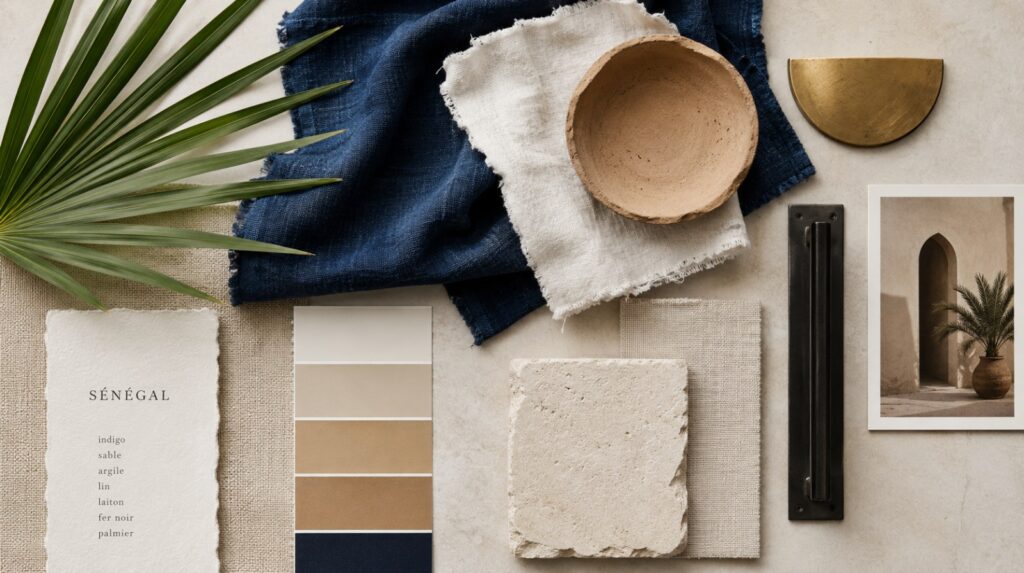
Start with chalk white, sun-washed ivory, and sand for the base. These shades speak to light, limewash-like softness, and the faded elegance that makes Saint-Louis so beautiful. Add deep indigo as your emotional anchor. Then layer in tile red, oxidized black, river brown, palm green, and if you want one luminous accent, a restrained muted gold. The gold note feels especially relevant right now because Caroline Gueye[19]’s current Senegal pavilion project in Venice is titled WURUS, with “gold” glossed on the official page as wurus in Wolof. [20]
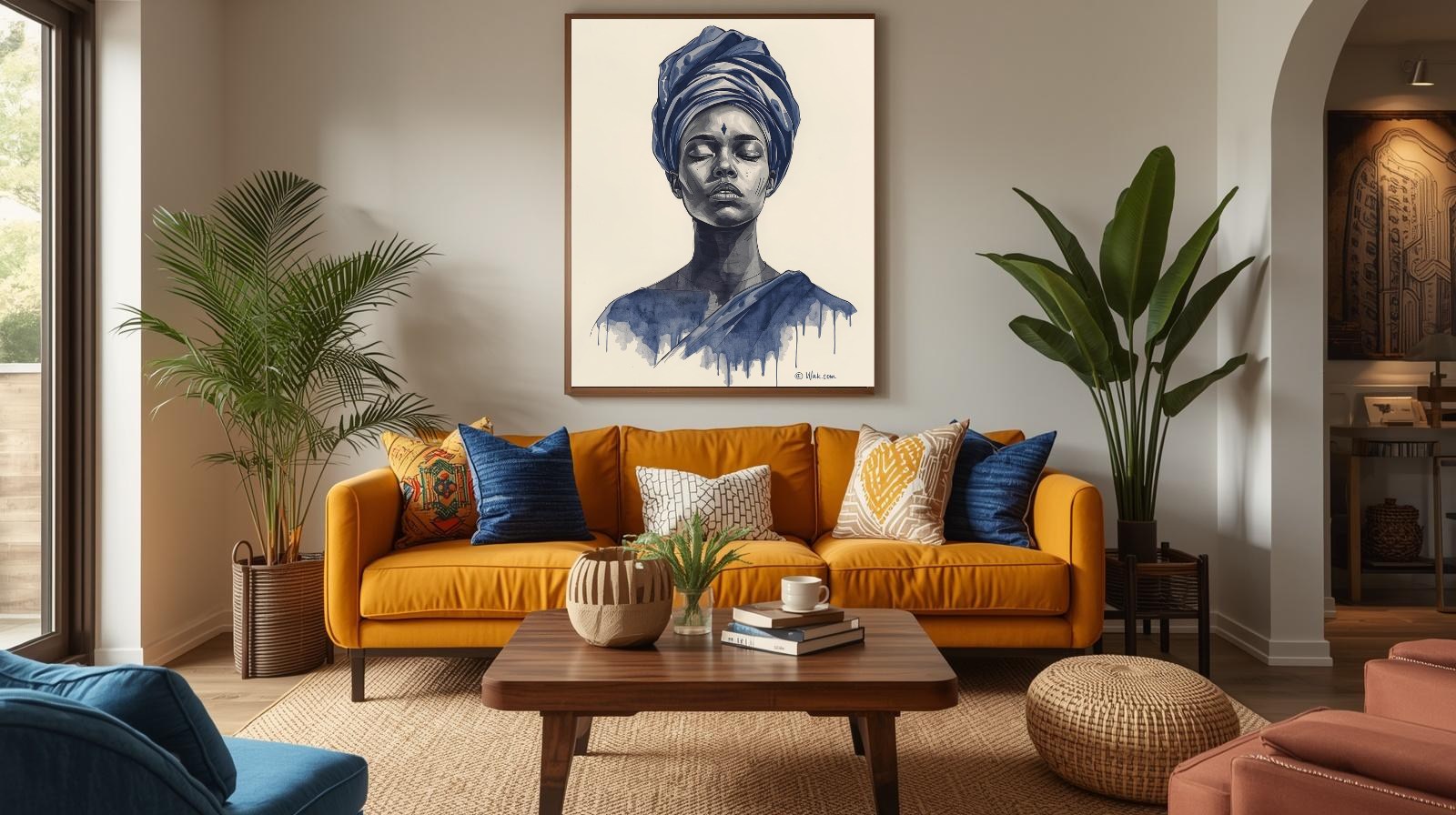
A practical palette formula for apartments looks like this: 70% quiet neutrals, 20% woven and earthy textures, 10% saturated cultural color. In other words, let the walls, curtains, rug, and bedding stay calm. Put the depth into cushions, one textile panel, one art print, a table runner, or a statement chair. This is what keeps the room from sliding into “theme” territory.
The design elements that make the room feel rooted, not random
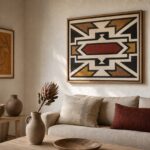
The first foundation is indigo. The Met’s textile material on Senegal highlights a rich range of deep-blue indigo resist-dyed traditions, and its Saint-Louis wrapper entries show how refined those cloths could look on elite women in the early twentieth century. What matters for your apartment is not historical reconstruction. What matters is the visual lesson: indigo reads best when it is deep, crisp, and edited. One or two indigo cushion covers, a folded textile on the bed, or a framed panel will always look more expensive than ten blue patterns competing for attention. [21]
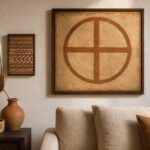
The second foundation is textile intelligence. The official Monod museum notes that West African textiles play important roles in social life and are not limited to clothing alone. That is an important design cue. Instead of treating textiles as background, let them function as art. A runner can become a console accent. A cloth can become a framed panel. A handwoven throw can replace generic wall art over a desk. This is where the work of Aïssa Dione[22] becomes especially useful as inspiration: the official contemporary furniture studio extending her legacy describes how traditional Senegalese weaving was adapted for upholstery and contemporary design, proving that woven heritage can move naturally into home interiors. [23]
The third foundation is architectural restraint. UNESCO’s description of Saint-Louis points to balconied houses, gallery houses, regular quays, and a strong urban rhythm. Translate that into interior choices through repeated verticals, rail-like shelf lines, black or bronze metal, arched mirrors, and stronger symmetry in how you hang art or place lamps. If your room feels messy, architecture is usually the fix. Add order before you add more objects. [24]
The fourth foundation is earth-and-fiber texture. Contemporary architecture commentary on Dakar notes ongoing interest in local materials, including earth construction, while Casamance’s official tourism language emphasizes creeks, sacred woods, fine sand, palms, and village life. In practical decorating terms, that means plaster-like finishes, ceramic lamps, jute rugs, cane details, raffia baskets, unfinished wood, and matte surfaces. These materials create depth even when the room is visually quiet. [25]
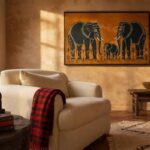
The fifth foundation is contemporary Senegalese art, not only “ethnic” décor. Dak’Art has been state-backed since 1989 and, since 1996, has been dedicated to contemporary African creation. That matters because it gives you editorial permission to style Senegal through current visual culture, not only through heritage motifs. A room inspired by Senegal should have space for abstraction, hybridity, wall sculpture, and conceptual art. The official biographies of Omar Ba[26], Soly Cissé[27], and Caroline Gueye all point toward a design language of layered references, hybrid figures, expressive gesture, and spatial experimentation. Use that as your art brief. Look for licensed prints, books, postcards from exhibitions, or gallery posters rather than imitation “African art” from unknown sellers. [28]
The sixth foundation is warm light. Senegal-inspired rooms look best under low, flattering, amber-leaning light that makes indigo richer and clay softer. Skip harsh daylight bulbs. Use warm bulbs, a small rechargeable art light over one image, and one ceramic or linen-shaded lamp at eye level. This is a simple but transformative apartment move.
The seventh foundation is teranga as layout. A Senegal-inspired room should look ready to receive people. That does not mean overfilling it with seating. It means arranging the room so that conversation, tea, reading, or an unplanned catch-up feels natural. Move chairs inward. Keep a tray ready. Leave one surface beautifully open instead of covering everything with décor. The hospitality should feel built into the room. [29]
Renter-friendly Senegal style ideas room by room
In the living room, begin with one large neutral rug, soft curtains, and a low contrast base. Then build the Senegal story with one indigo accent, one clay object, one woven wall composition, and one contemporary artwork. If you want a basket wall, keep the palette mostly natural and let the shapes vary. If you want stronger color, keep the wall quieter and use a single indigo textile. This is also the best room to echo Saint-Louis through black metal or balcony-like lines. [30]
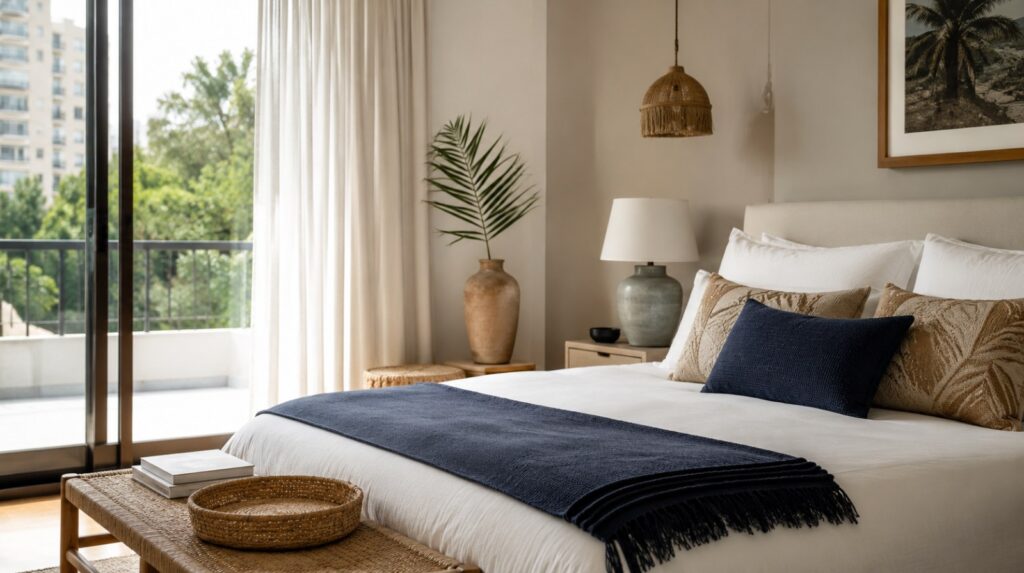
In the bedroom, think Casamance meets Saint-Louis: softer, cooler, lighter. Use white or cream bedding, a folded indigo textile at the foot of the bed, one ceramic vase, and one art print rather than multiple small accessories. A Senegal-inspired bedroom should feel breathable. If you want pattern here, make it one hero move, not an all-over layer cake. Casamance’s official imagery of green softness and village life supports that calmer, nature-weighted direction. [31]
In the dining corner or kitchen, this style works best through table culture. A cloth runner, woven placemats, a beautiful serving bowl, and warm low lighting are enough. This is a smart place to test thioup/tioup influence through a runner, napkin set, or framed textile remnant, especially because Senegal-focused textile workshop language explicitly extends batik and thioup practice to home pieces such as draps, taies d’oreillers, nappes, and rideaux. That makes thioup one of the strongest bridges between textile heritage and apartment décor. [32]
In the entryway, keep the look disciplined. Use a narrow console or shelf, a round mirror, one vessel, and one tray. If you want to bring in Saint-Louis reference here, a black frame or iron-look sconce works beautifully. If your entry is tiny, this is also the perfect spot for one contemporary print or poster from a Senegalese artist rather than another storage basket. [33]
In the office nook, take your cues from Dakar’s contemporary identity instead of from “boho office” clichés. Use one strong chair, one sculptural object, clean shelving, and one piece of art with conceptual weight. Dakar is officially described as a cosmopolitan city with museums, galleries, markets, artisan villages, and a vibrant cultural life. Your workspace should therefore feel intellectually alive, not just decorative. [34]
On a small balcony or window corner, this look can become very poetic very quickly. Think plant, woven stool, striped cushion, tea tray, and one fabric drape if your lease allows it. Saint-Louis gives you the balcony language. Casamance gives you the softness. Teranga gives you the social spirit. [35]
How to keep the look from feeling busy or costume-like
The easiest mistake is to confuse cultural richness with visual overload. Do not layer wax print, faux mud cloth, random basket walls, carved masks, and bright beads into one room and call it “African.” If the room has a hero textile, let the other pieces support it. If the room has a strong art wall, reduce the patterned soft furnishings. If the room already has architectural character, keep the accessories almost quiet. Style should feel edited enough that every object still has air around it.
A simple rule works well here: one story per sightline. On the sofa wall, maybe the story is indigo plus art. On the dining shelf, maybe the story is woven texture plus ceramics. On the bed, maybe the story is white bedding plus one folded cloth. If you keep changing the story every three feet, the room stops feeling rooted and starts feeling merchandised.
How to source with respect and style with context
This is the section that will distinguish your blog from generic décor content. Say clearly that not every bright print is Senegalese, not every resist-dyed fabric is “tribal,” and not every product marketed as “African” has meaningful provenance. Museum sources show that wax print has a broader transnational history tied to Indonesian batik and Dutch industrial copying, even though it became deeply meaningful across many African fashion cultures. So if you use wax print in this post, present it honestly as part of a wider West and Central African visual history rather than as a uniquely Senegalese origin story. [13]
By contrast, tioup/thioup is worth naming more specifically. A French museum exhibition dedicated to Senegal’s textile colors used Tioup Tak etc. as its title, while Dakar workshop material explicitly presents batik and thioup as textile practices that can extend into home linens and interior accessories. That makes thioup especially useful for this article because it offers a Senegal-linked route into home styling that is both visual and practical. [12]
For readers who want a modern, non-folkloric route, point them toward contemporary Senegalese makers and artists instead of toward anonymous “ethnic wall art.” The official design ecosystem growing from Aïssa Dione’s legacy explicitly frames traditional craft as a living archive adapted for upholstery, furniture, lighting, and home accessories. That is exactly the worldview this blog should champion: preservation through intelligent contemporary use, not flattening through stereotype. [36]
Shop the look
If I were styling this look from scratch in a rental apartment, I would spend first on the base and second on the cultural accent. The base is curtains, rug, lamp, warm light bulbs, ledges, and hanging hardware. The accent is indigo, one textile story, and one meaningful piece of art. That order matters. It is what stops the room from looking like a theme board and helps it read like a real home.
I would also avoid buying “Senegalese” products on a mass marketplace unless the seller names the origin, maker, or tradition. Use marketplaces for the neutral support pieces. Save the cultural weight for the pieces with a real story.
Tasteful affiliate product sets
| Section | Product | Price range |
| Introduction / color palette | Indigo linen-look pillow cover or set | $12–$24 |
| Living room texture | Handwoven-style seagrass wall basket set | $22–$57 |
| Living room foundation | Natural jute or natural-fiber area rug, 5×7 | $57–$100 |
| Window treatment | Neutral linen or linen-look curtain pair, 84 inch | $40–$60 |
| Art styling | Rechargeable cordless picture light, warm gold or brass tone | $30–$40 |
| Renter-friendly hanging | Damage-free picture hanging strips | $13–$25 |
| Gallery wall / shelf styling | White or natural picture ledge shelf set | $30–$70 |
| Bedroom lighting | Matte ceramic table lamp with linen shade | $35–$90 |
| Lighting mood | 2700K warm LED bulb multipack | $20–$35 |
| Shelf / console styling | Rustic terracotta or clay-look vase | $20–$60 |
Frequently asked questions
Can I create this look in a very small apartment?
Yes. Small rooms actually benefit from this approach because Senegal-inspired décor works through atmosphere, not object count. Keep the base pale, use one indigo accent, and make lighting part of the design.
Can I use wax print in a Senegal-inspired room?
Yes, but carefully and honestly. Use it as part of a wider African textile conversation, not as shorthand for Senegal alone. One runner, one cushion, or one framed textile is enough. [13]
What if I do not want the room to look “boho”?
Then lean more Dakar than generic boho: cleaner lines, fewer accessories, stronger art, better lighting, and richer textures instead of more pattern. [37]
What is the fastest way to make the room feel more Senegal-inspired?
Change the light temperature, add indigo, introduce one woven texture, and hang one piece of art with depth. Those four moves do more than buying ten small decorative objects.
Closing note
The most beautiful Senegal-inspired rooms do not shout. They hold history quietly. They let indigo deepen the space. They let woven work soften it. They let art sharpen it. And they leave enough room for the generosity of real life to happen inside it. That is the feeling to aim for.
Related reading
- Moroccan Geometric Patterns: 10 Zellige Motifs Explained
- 12 Adire Patterns and Their Meanings: A Decor Lover’s Guide
- 12 Ethiopian Symbols and Their Meanings: A Decor Lover’s Guide
- 15 Coffee Table Decor Ideas to Make Your Living Room Feel Warm, Collected and Personal

- Afrocentric Home Decor Beyond Wall Art: 9 Everyday Pieces That Carry the Same Design