Ghana Color Palette: Kente Gold, Red Clay and the Colors of Accra
By Essence of the Road Art · Published July 2026
This article contains affiliate links. If you buy through them, we may earn a small commission at no extra cost to you. We only feature pieces we would live with ourselves.
In Ghana, color has always been literate. A kente cloth is read as much as it is worn — gold for royalty, green for growth, red for sacrifice, black for ancestral maturity. Which makes a ghana color palette something better than decoration: it is a vocabulary you can furnish a room with.
This guide translates that vocabulary into five schemes with hex codes and room-by-room styling. It is the color companion to our 12 Adinkra symbols guide — that article covers what the symbols mean; this one covers the colors they live in.
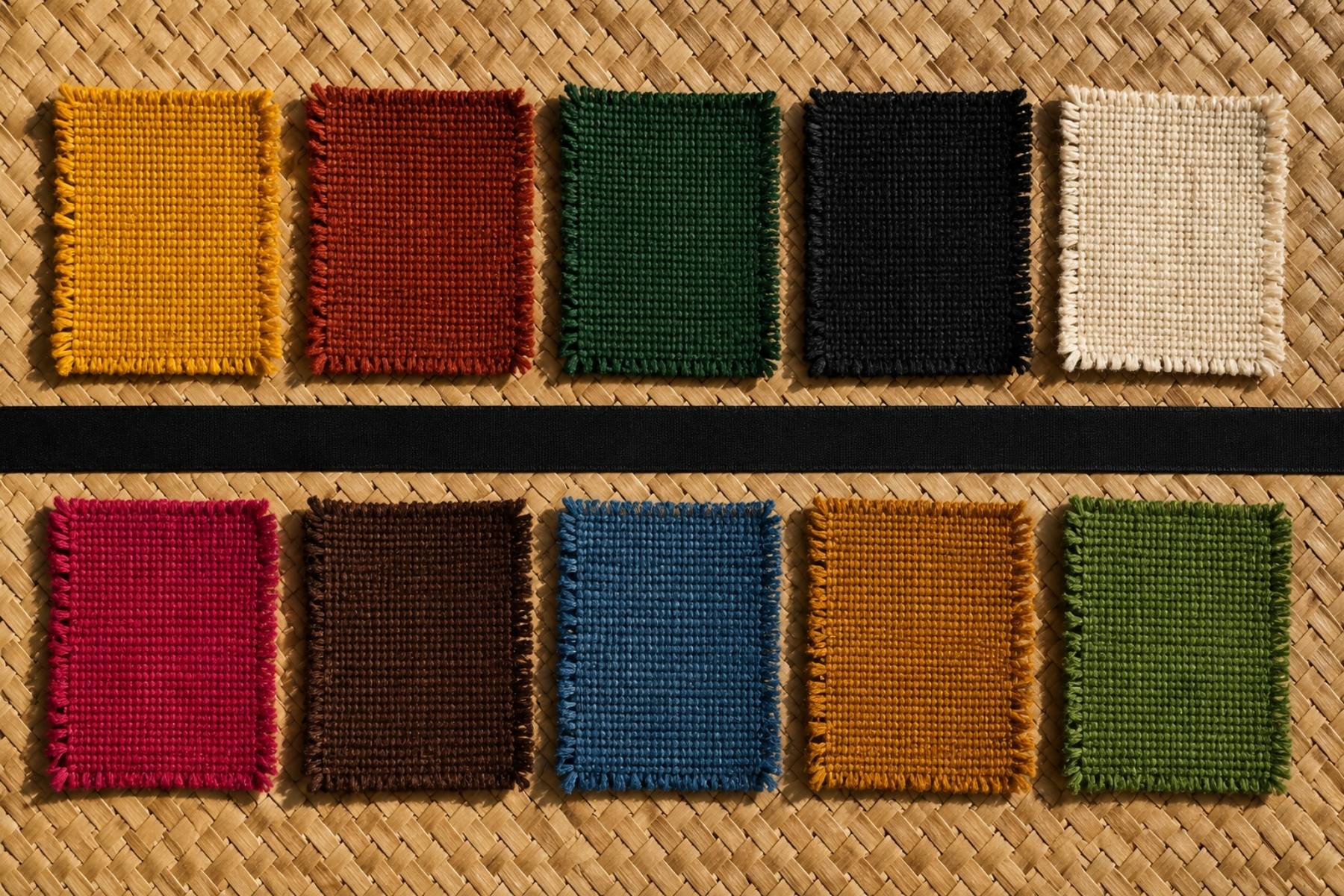
Quick answer: The foundational ghana color palette comes from kente weaving: gold #D9A404, red clay #9E3B26, forest green #2E5D3A and black #1C1714 on a bone ground, used in a 60-30-10 rhythm with bone as the base. The fastest way to hang the palette is our Adinkra Symbol five-piece set, which pairs the color family with the symbols that share its meaning.
Table of Contents
What kente colors actually mean
Before the schemes, the grammar. In kente tradition, colors carry defined meanings: gold speaks of royalty, wealth and spiritual purity; green of land, growth and renewal; red of political struggle and sacrifice; blue of peace and harmony; black of maturation and connection to ancestors; white of purification and festive joy. Weavers combine them deliberately — a cloth for a graduation reads differently from a cloth for a funeral.
Bring that intentionality home: decide what you want the room to say before assigning the colors. A study asks for gold and black (achievement, depth); a bedroom for blue and bone (peace); a family room for green and red-clay warmth (growth, vitality).
1. Royal Kente — the signature scheme
Kente gold #D9A404 · Red clay #9E3B26 · Forest green #2E5D3A · Black #1C1714 · Bone #EFE6D4
The full ceremonial chord. The mistake non-Ghanaian interiors make with it is equal strength everywhere — a true kente room lets bone and black do 70% of the work while gold, red and green alternate as the lead voice by zone. Gold above the sofa, green at the window, red in the textiles: one lead per wall.
On the wall, this is Adinkra Symbol set territory — five symbols, one visual language, and our guide to building the 5-piece gallery wall walks the layout.
Kente is not the only ceremonial weave in the region. Nigerian aso-oke works the same logic in coral and brass rather than gold and green — the Nigeria palette sets the two side by side.
2. Makola Market — the Accra energy scheme
Market fuchsia #C43E7F · Mango #E8A13D · Palm green #5F9E54 · Sky wash #BFD5DC · Charcoal #2A2A28
Makola market in central Accra is one of the great color fields on earth — wax prints, produce, painted kiosks, everything at maximum chroma at once. Domesticated, the scheme keeps two brights (fuchsia and mango), cools them with sky wash, and grounds them in charcoal. It is the extrovert scheme of this guide: kitchens, creative studios, kids’ spaces.
Our colorful editorial Black woman prints carry exactly this register — one is an accent, a pair is a statement.
3. Northern Clay — the Sirigu earth scheme
Red earth #A5522F · Dark umber #5C3A26 · Straw #D9C08A · White lime #EDE7DA · Basalt black #33302B
In Ghana’s north, the Sirigu tradition paints homes in red, black and white earth pigments laid in bold geometry — architecture and mural as one. The domestic version is the warmest, most grounded scheme here: red-earth walls or textiles, straw and lime keeping it breathable, black used in pattern rather than mass. It shares a bloodline with the terracotta direction in our Earthroot palette.
An abstract Africa map in earth tones over a straw-toned wall is the one-frame version of this scheme.
4. Gold Coast — the Cape Coast blue scheme
Fishing-boat blue #3A6B8C · Whitewash #F1EDE2 · Rope tan #C9A97A · Sea green #5F8F7B · Tar black #26282A
Ghana’s coast runs on a different palette: painted pirogues, whitewashed forts, rope and net textures. It is West Africa’s answer to coastal decor — blue and white, but warmed by tan and weighted by black, so it never drifts into nautical cliché. Bedrooms and bathrooms take it naturally.
Style it with our Afro Boho Coastal trio and keep frames pale — a set of natural oak frames matches the rope-and-whitewash mood.
5. Ashanti Forest — the cocoa and green scheme
Deep forest #28492F · Cocoa #6B4A32 · New leaf #8FAE5D · Cream #F0EAD8 · Ochre #C28E3C
Inland Ghana is forest and farm — cocoa pods, palm, hardwood. This is the quietest scheme in the guide and 2026’s most fashionable one: Pinterest’s jade prediction is essentially this green family. Use deep forest in the largest textile or a feature wall, cocoa in furniture and frames, new leaf only in plants and one artwork.
Our Neutral Botanical trio plus a fiddle-leaf fig is the entire scheme in one afternoon.
How to style a ghana color palette without costume
The line between homage and theme-park is intent. Three rules keep you on the right side of it. Use the color meanings — choose gold because the room celebrates achievement, not because it photographs well. Source real craft where you can — a genuine kente strip or Bolga basket among the prints changes everything. And let the palette breathe — Ghanaian interiors are not maximal by default; bone walls and wooden floors are the native ground for these colors.
Printable art is the honest test: hang the palette for two weeks before you commit to paint. Every set in our shop downloads with all standard ratios (printing guide here); for pattern fills and mockups we use Creative Fabrica in our own production.
Frequently asked questions
What are the national colors of Ghana?
The flag holds red, gold, green and a black star — red for the independence struggle, gold for mineral wealth, green for the forests, black for African unity. Kente tradition extends the list with defined meanings for blue, white, purple and more, which is why Ghanaian color feels systematic rather than decorative.
Can I use kente colors if I am not Ghanaian?
Respectful use is welcome in most contexts: use the colors with their meanings, credit the tradition when asked, and avoid imitation-kente prints marketed as the real cloth. Buying genuine kente or Ghanaian-made goods to sit alongside your palette is the strongest form of respect.
Which ghana color palette works in a small apartment?
Gold Coast blue or Ashanti forest — both run on pale grounds that keep small rooms open, with the saturated colors confined to art and textiles. Royal Kente in full strength wants space and daylight; in a studio, use it as a single gallery wall instead.
What wall colors go with kente-inspired decor?
Bone, cream and warm straw let the gold-red-green chord stay legible. Avoid gray-based whites, which turn kente gold brassy, and avoid painting walls in one of the chord colors at full strength — the cloth colors should outrank the architecture.
How is this different from a general African color palette?
A general african color palette borrows from the whole continent; Ghana’s is a defined system with named meanings from a living textile tradition. If you want a palette that says something specific, Ghana’s is the most articulate starting point in West Africa.
Related reading
- African Color Palette Guide 2026: From Marrakech to Zanzibar
- 12 Adinkra Symbols & Their Meanings: The Symbolism in African Art
- Adinkra 5-Piece Gallery Wall: How to Build One at Home
- Earthroot: A Warm Sister Palette to Indigo
- Moroccan Color Palette: 5 Souk-Inspired Schemes
Closing
Ghana offers what most palettes cannot: colors that mean something before you hang them. Pick the scheme that matches what your room should say — royal gold for pride, market brights for energy, northern clay for warmth, coastal blue for calm, forest green for growth — and build it in three layers: art set, two textiles, one real Ghanaian object. The first layer is one click: the Adinkra Symbol five-piece set hangs the vocabulary and its colors in a single afternoon.
Ashanti forest green is not a trend colour by accident — jade, one of 2026’s five defining tones, comes from exactly this family.