Quiet Afrocentric Luxury: A 2026 Decor Movement
By Essence of the Road Art · Published May 2026
This article contains affiliate links. If you buy through them, we may earn a small commission at no extra cost to you. We only feature pieces we would live with ourselves.
There is a noticeable shift happening in afrocentric interior styling in 2026, and it is not the one most decor magazines are writing about. The loud, layered, pattern-on-pattern afro-bohemian look that dominated the past three years is quietly being replaced by something more disciplined. We have started calling it quiet afrocentric luxury, because the phrase quiet luxury is already in the broader decor vocabulary and this is the genuinely culturally rooted version of it.
This article is our attempt to define the movement honestly — what it is, what it is not, what it borrows from, what is original, and how to bring it into a real home without buying into a trend that will date in eighteen months.
| Quick answer Quiet afrocentric luxury is a 2026 decor movement that pairs the restraint of mainstream quiet luxury — muted palettes, fewer pieces, considered craftsmanship — with the cultural depth of afrocentric design. It is recognisable by warm neutral palettes, one or two carefully chosen heritage pieces per room, hand-made textures, and dignified figurative or symbolic art. It is the opposite of cluttered afro-boho. It reads as expensive without being expensive, because the cost lives in the editing, not the buying. |
Table of Contents
What quiet afrocentric luxury actually is
Quiet afrocentric luxury is a styling approach, not a product category. You cannot buy it as a set. It is defined by what is removed from a room as much as by what is placed in it.
At its core, it pairs three things. First, the visual restraint that mainstream quiet luxury introduced into general interior design — muted palettes, considered material choices, an absence of obvious branding or trend signalling. Second, the cultural specificity of afrocentric design — heritage motifs, traditional craftsmanship, materials that carry meaning. Third, an editorial eye that is willing to leave space.
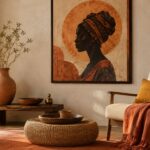
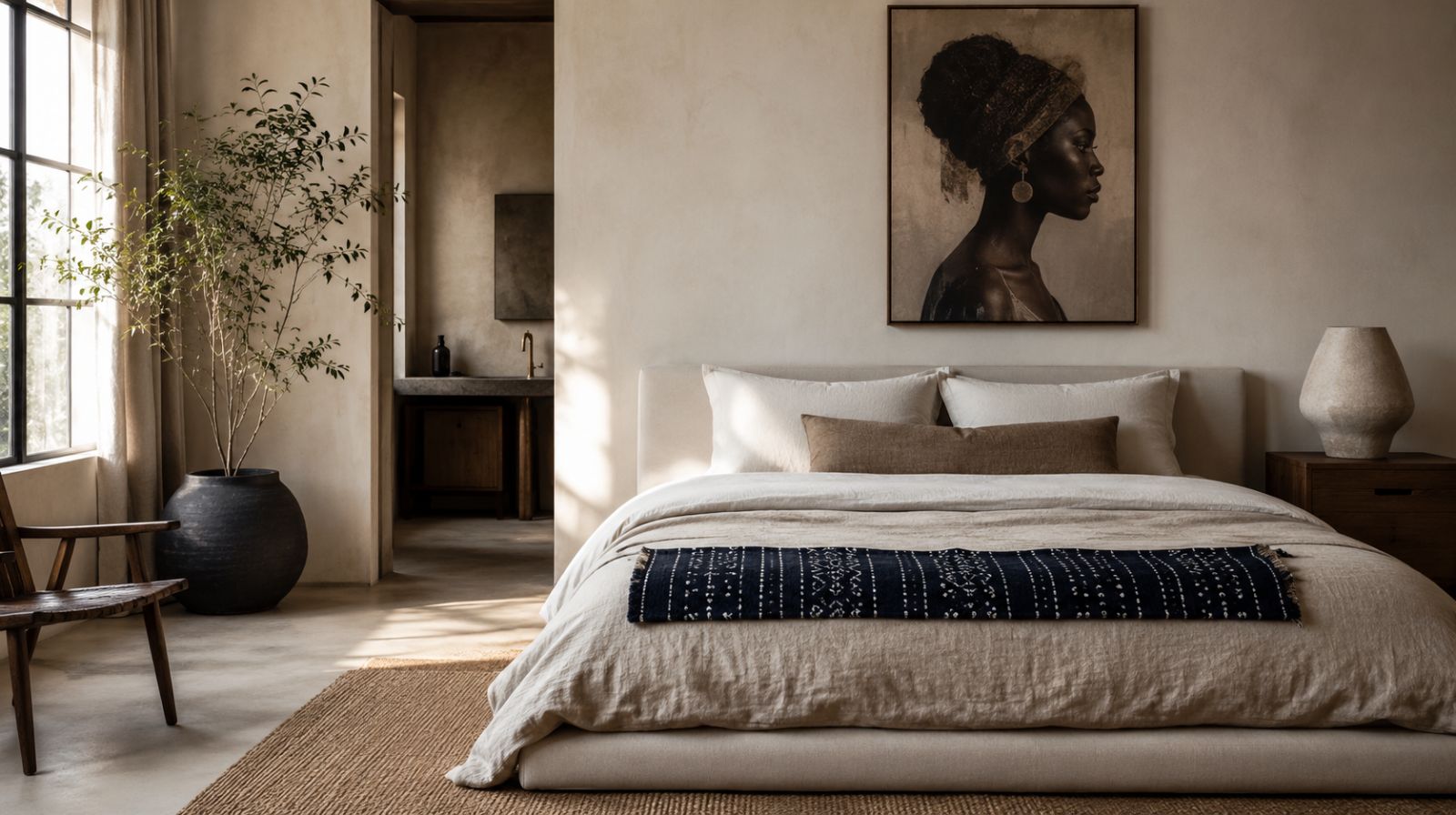
The result is rooms that feel grounded rather than busy, expensive rather than expensively decorated, and rooted rather than themed. A single mudcloth throw at the foot of a linen bed, with a hand-thrown ceramic on the nightstand and one large portrait above the headboard, can read more luxurious than an entire wall of layered textiles. The discipline is the luxury.
How it is different from afro-bohemian decor
Afro-bohemian decor — which we have written about extensively — is generous, layered, and visually full. It celebrates pattern collision, plant-filled corners, and the maximalist warmth of homes that have collected pieces over decades. It is a beautiful style and it is not going anywhere.
Quiet afrocentric luxury is the editorial sibling. The same cultural reference points are present, but the room contains fewer of them, and each one is given more space to be itself. Where afro-boho asks how many textures can live together, quiet afrocentric luxury asks which single texture deserves the most attention.
A useful way to think about the difference: an afro-boho room invites you to look at everything in it. A quiet afrocentric luxury room invites you to look at one thing in it, slowly.
Why this movement is happening now
Three forces are pushing this style forward in 2026.
The broader quiet luxury trend in fashion and interiors has been mainstream for two full years. That has created a visual vocabulary that consumers can read instantly — and a hunger for versions of that vocabulary that are not all Scandinavian neutrals and beige boucle.
At the same time, afrocentric decor has matured as a category. The early generation of widely available afrocentric pieces tended toward decorative loudness, partly because the audience was new and the pieces needed to announce themselves. The category is now confident enough to whisper.
And on a practical level, smaller homes, rental constraints, and the fatigue of curated maximalism have all pushed people toward fewer, better pieces. Quiet afrocentric luxury is what happens when these forces meet in a room with cultural intent.
The visual signatures of the style
Palette: warm earth neutrals as the base
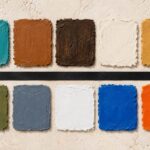
The base palette is built from cream, oat, soft clay, muted terracotta, warm taupe, and unbleached linen. These are layered tonally rather than contrasted. A quiet afrocentric luxury room rarely uses more than four base colours, and the variation between them is subtle enough that a casual visitor would describe the room as one colour.
Accent colour: one heritage tone, used twice
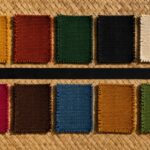
On top of the neutral base, one heritage accent — indigo, deep brick, ochre, or aged brass — is repeated in two specific places in the room. Once as a textile, once as art or ceramic. The repetition is what makes the colour read as intentional rather than incidental.
Materials: hand-made, irregular, tactile
Hand-thrown ceramics. Loomed cotton. Woven sisal. Carved wood. Cast brass. The material vocabulary is unmistakeably hand-made, and the small irregularities are kept rather than designed away. The wonkiness of a hand-pulled vase is the point.
Pattern: one carrier piece, never more
Quiet afrocentric luxury allows one pattern-rich piece per room — a mudcloth throw, an adinkra-print cushion set, a kente runner. The rest of the room is solid or near-solid in colour. This is the rule that separates the style from afro-boho most clearly.
Art: dignified, scaled up, framed simply
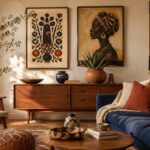
Wall art in this movement leans large and singular rather than gallery-walled. A single 24×36 portrait. A trio in matched thin frames, like our Afrocentric Wall Art Set — Black Woman trio. An abstract Africa map in muted earth tones above a console. The frames are minimal — thin black, raw wood, or unfinished brass.
What this style explicitly avoids
Naming what is excluded is part of defining the style.
- High-contrast pop-art portraits. Brilliant graphic portraits in primary colours belong to a different decade of afrocentric interiors. Quiet afrocentric luxury does not use them.
- Mass-market “tribal” prints. Vague safari-themed wall art, faux-African mass-produced statues, and generic “ethnic” textiles read as costume rather than depth.
- Pattern collision. Mudcloth on the sofa, kente on the cushions, ankara on the curtains. This is afro-boho, and it is its own beautiful thing — but it is not this.
- Faux-natural materials. Vinyl that mimics rattan, plastic carved to look like wood, polyester that mimics linen. These are visible immediately in a style that depends on real texture.
- Sloganed home decor. Cushions and signs with afrocentric phrases printed on them. The style speaks through materials, not text.
How to bring quiet afrocentric luxury into a real home
Three practical entry points, depending on how much you want to change at once.
Entry 1: Reduce, then add one piece
Take a room you live in and remove half of what is on display. Pillows, knick-knacks, framed prints. Live with the room emptier for a week. Then add one considered piece — a single large portrait, a hand-thrown vessel, a mudcloth throw — and stop. This single edit is the closest thing the style has to a recipe.
Entry 2: Build a foundation wall
Choose one wall in the room as the foundation. A single large piece — or a tight trio in matched thin frames — defines the cultural anchor of the whole space. Our Afrocentric Wall Art Set — Black Woman trio and the Africa Map abstract print were both designed for this kind of placement: visible, intentional, and not competing with other elements in the room.
Entry 3: Edit the palette before anything else
Repaint to a warm neutral if your current room reads cool. Swap white bulbs for warm-temperature bulbs (2700K, not 4000K). Replace one synthetic-looking textile with a real linen one. None of these changes are about adding afrocentric pieces — they are about preparing a room that can carry them.
Where this movement is going
We expect quiet afrocentric luxury to be the dominant afrocentric styling direction for the next two to three years, for the same structural reasons quiet luxury became the dominant fashion direction: it photographs well on Pinterest, it ages slowly, it costs less than it looks, and it is generous to small spaces.
What we are watching for next is the inevitable second wave — a generation of products designed specifically for this style rather than rescued from older afrocentric or quiet-luxury categories. We are already seeing it in independent ceramics, linen brands with heritage-pattern capsules, and small wall-art studios working in restrained palettes.
If you are styling a home in 2026, this is the direction we would build toward.
Frequently asked questions
Is quiet afrocentric luxury just minimalism with African touches?
No, and the distinction matters. Minimalism is defined by reduction as an end in itself — fewer things, less colour, less texture. Quiet afrocentric luxury keeps the warmth, the cultural specificity, and the tactile materials of afrocentric design. The restraint is editorial, not austere. A minimalist room feels empty. A quiet afrocentric luxury room feels considered.
Can I do this style in a small apartment or a rental?
Quiet afrocentric luxury is unusually well suited to small spaces and rentals. The discipline of one accent colour, one pattern piece, and one anchor wall actually works better in 50 square metres than in 150. For rentals, focus on textiles, lighting temperature, and one or two large wall pieces. None of that requires drilling, painting, or landlord permission.
What furniture works with this style?
Low-profile sofas in linen, oat, or warm taupe upholstery. Solid wood furniture in mid-tone finishes — walnut, oak, or warm-stained pine. Round or oval coffee tables in stone, wood, or rattan. Avoid glass, chrome, or anything that reflects light dramatically; the style depends on absorbed light rather than reflected light.
How is this different from Scandinavian minimalism with African accents?
Scandinavian minimalism leads with cool light, white walls, and pale wood. Quiet afrocentric luxury leads with warm light, warm walls, and mid-tone wood. A Scandinavian room with an African mask added is still a Scandinavian room. Quiet afrocentric luxury is built from the palette and materials of afrocentric design first, and the restraint is layered on top.
Does quiet afrocentric luxury work for people who are not Black?
The style is widely styled by people from many backgrounds, and afrocentric design has a long tradition of cross-cultural influence. What matters is that the cultural references are treated with care: bought from sources that respect the artists and traditions, contextualised rather than ornamental, and integrated into a home that genuinely loves the pieces rather than collecting them for visual content. The same standard applies in both directions.
Related reading
- Indigo Decor: A Quiet Luxury Guide to Afrocentric Wall Art in Blue Tones
- Afro-Bohemian Decor 101: How to Style African Heritage With Boho Warmth in 2026
- Afrocentric Bedroom Ideas: Warm, Calm Sanctuary Styling for 2026
- What’s Actually Trending in Global Decor in 2026: A Pinterest Data Analysis
Closing
Quiet afrocentric luxury is, finally, a styling philosophy: respect the cultural pieces enough to let them breathe, edit the room around them, and trust that restraint will read as intent rather than absence.
If you are starting from a generic room and wondering where to begin, begin with a single piece of wall art that anchors the cultural direction of the whole space. Our shop was built around exactly this kind of foundation piece — wall art designed to sit at the centre of a room without needing the room to shout back.
Shop the Essence of the Road Art collection
Essence of the Road Art on Etsy — full collection
Afrocentric Wall Art Set — Black Woman trio
Afrocentric Wall Art — Abstract Africa Map
Afrocentric Wall Art — Botanical Trio
- 24 African Symbols and Their Meanings: A Region-by-Region Guide
- 12 Kenyan Symbols and Their Meanings: A Decor Lover’s Guide
- Moroccan Geometric Patterns: 10 Zellige Motifs Explained

- 12 Adire Patterns and Their Meanings: A Decor Lover’s Guide
- 12 Ethiopian Symbols and Their Meanings: A Decor Lover’s Guide
- 15 Coffee Table Decor Ideas to Make Your Living Room Feel Warm, Collected and Personal