
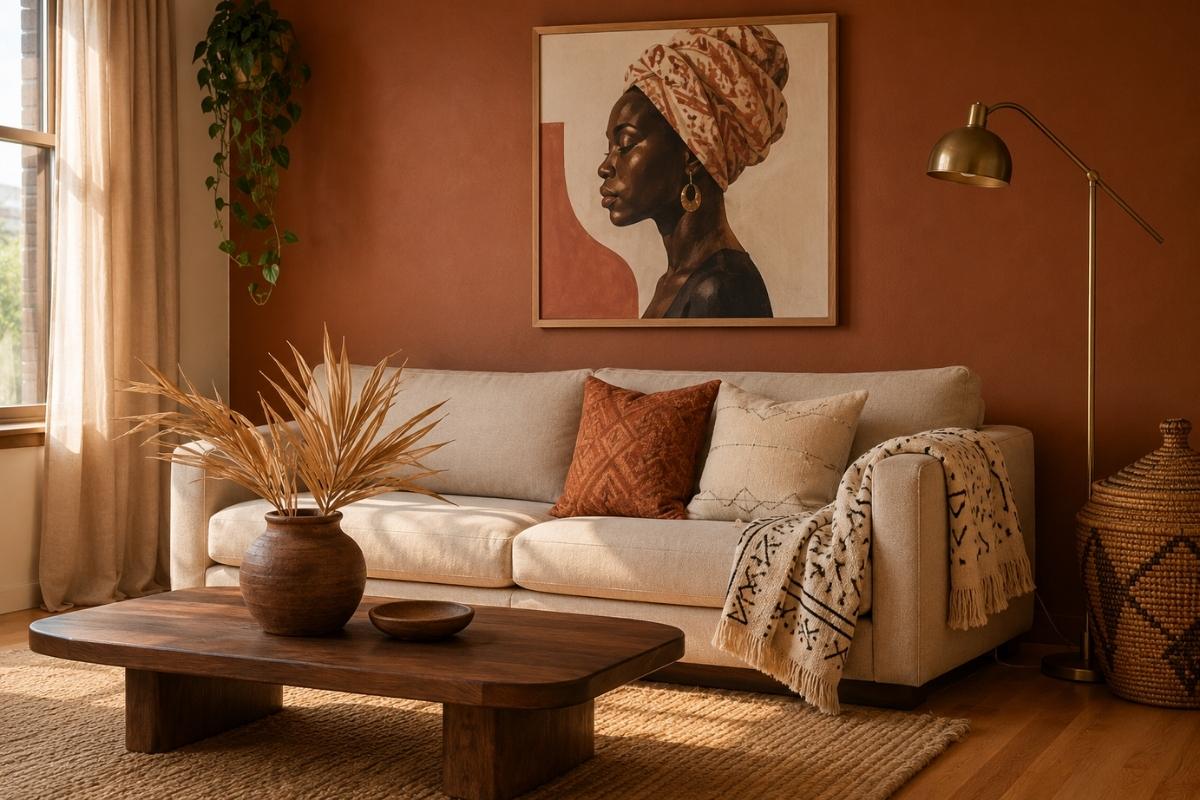
A Beginner’s Guide to Afrocentric Decor in 2026
By Essence of the Road Art · Published June 2026
Afrocentric decor can feel intimidating when you are starting from scratch. The category sits at the intersection of culture, history, design, and craft, and most introductory writing about it skips one of those layers and pretends the others do not matter.
This guide is the starting point we wish we had read when we first began styling afrocentric interiors. It moves from the question ‘what does this style actually mean’ through ‘what palette do I work in’ to ‘what do I buy first’ — at a beginner’s pace, without skipping the cultural grounding that makes the style worth doing in the first place.
| Quick answer A beginner’s guide to afrocentric decor in 2026 starts with three decisions: choose a warm earth-tone palette (terracotta, cream, soft clay, indigo as accent), commit to one heritage textile per room (mudcloth, kente, or adinkra-printed), and anchor each room with one piece of dignified afrocentric wall art. Build one room at a time, source from named artisans rather than mass-market lookalikes, and apply the same restraint that defines quiet luxury — fewer pieces, each given more space. The Afrocentric Wall Art Set — Black Woman trio in our shop was designed as exactly this kind of starting-point anchor piece. |
Table of Contents
What afrocentric decor actually is
Afrocentric decor is a design approach that places African heritage, materials, textiles, and visual traditions at the centre of a home’s styling rather than as accents or borrowed motifs. The word matters. Afro-centric means African at the centre — not African as ornament added to a Eurocentric base.
This distinguishes it from related categories that are often confused with it. African-inspired decor borrows motifs from the continent without placing the culture at the centre. Afro-bohemian decor combines African references with the layered globalism of bohemian styling. Heritage-informed modern decor uses African design as one of several historical reference points in a contemporary interior. All of these are legitimate styles, but they are not the same thing as afrocentric decor.
In a beginner’s guide to afrocentric decor, the most important first move is to be clear which version of the style you are building toward. The choices that follow — palette, textiles, art, materials — all flow from that initial clarification.
The three core principles of afrocentric decor for beginners
Principle 1 — Heritage at the centre, not at the edge
Afrocentric decor is recognisable by what occupies the most visible space in a room. A framed portrait of a black woman above the sofa. A mudcloth throw at the foot of the bed as the primary textile. An adinkra symbol print in the entryway. These pieces are placed where the eye lands first, not in corners or on shelves where they recede into the rest of the decor.
Principle 2 — Warm earth tones over cool minimalism
The dominant palette of afrocentric decor leans warm: terracotta, ochre, clay, cream, deep brown, warm leather. Cool palettes — particularly cool grey, white, and chrome — fight the entire visual vocabulary of the style. If you are starting from a cool-toned space, the palette is the first thing to change.
Principle 3 — Hand-made materials over mass-produced lookalikes
Hand-thrown ceramics, real linen, woven sisal, hand-painted bògòlanfini, hand-woven kente. The material vocabulary of afrocentric decor is unmistakably tactile and irregular. Synthetic versions of these materials — printed polyester mudcloth, plastic-fibre baskets, ceramic-look plastic vases — are immediately visible in a style that depends on real texture.
The afrocentric decor palette for beginners
If you remember nothing else from this guide, remember the palette. The right palette will do most of the heavy lifting for you, even before you add a single heritage piece.
- Base tone: warm cream or soft clay. Walls, large upholstery, bedding. The base layer of the entire palette.
- Anchor tone: terracotta. Throw pillows, ceramic vessels, accent walls. The colour that defines the room as warm.
- Depth tone: deep brown or burnt sienna. Wood furniture, leather, darker textiles. The shadow tone that gives the room weight.
- Accent tone: indigo or ochre. One piece, used twice in the room. The accent that signals deliberate styling.
- Metal: brass. Lighting, hardware, picture frames, candle holders. Brass is the metal of this entire palette.
Avoid: bright white walls, chrome or silver metals, cool grey, beige boucle, and any saturated primary colours. These will fight the rest of the palette and undo most of the styling work.
The first five pieces to buy
Build a beginner afrocentric room in this order. Each piece supports the next.
Piece 1 — One anchor wall art piece
The first piece you buy should be the one that announces the room. A single large framed afrocentric portrait, a coordinated trio, or an abstract Africa map print. This piece tells the rest of the room what it is. Our Afrocentric Wall Art Set — Black Woman trio was designed specifically as this kind of starting-point anchor — three coordinated portraits in warm cream and terracotta tones, sized for the wall above a sofa, bed, or console.
Piece 2 — One heritage textile
A folded mudcloth, kente, or adinkra-printed throw, draped over the arm of a sofa or folded at the foot of a bed. One textile per room — never more — chosen from a named artisan or fair-trade source rather than a mass-market lookalike.
Piece 3 — One hand-thrown ceramic
A single substantial vessel — a vase, a bowl, a lidded jar — in warm terracotta, deep brown, or unglazed stoneware. Placed on a coffee table, console, or shelf where it can be the only thing in its sightline.
Piece 4 — One woven natural-fibre piece
A sisal basket, a jute rug, a woven seagrass tray. Natural-fibre only; plastic alternatives never get the texture right. The piece adds the third major material layer to the room (after the textile and the ceramic).
Piece 5 — One brass object
A small brass candle holder, a brass picture frame, a brass-handled vessel. The metal anchors the warm palette and ties together the textile, the ceramic, and the natural fibre.
Five pieces. One room. Done. This is the smallest meaningful version of afrocentric decor, and it works.
Where to buy as a beginner
- Etsy. The strongest single platform for independent artists, ceramicists, and textile makers in this category. Filter by shops that name the maker and the region.
- Fair-trade marketplaces. Ten Thousand Villages, Indego Africa, Cultural Threads, and similar organisations work directly with African artisan communities and document each piece’s provenance.
- Specialty African design retailers. Online and in-person shops focused specifically on African textile import typically stock authentic pieces with documentation.
- Amazon for supporting pieces, not heritage pieces. Amazon is fine for thin black picture frames, linen bedding, brass candle holders, and other supporting infrastructure. Heritage textiles and art should come from named artisan sources.
- Digital download wall art. For wall art specifically, digital downloads from independent shops let you print at the exact size your wall needs, in the paper and frame you choose, for a fraction of the cost of pre-framed retail. This is the highest-value entry point in the category.
Common beginner mistakes — and how to avoid them
- Buying too many pieces at once. Five pieces, one room, settled before you add a sixth. Buying a curated set at the same time produces a room that reads as a showroom; building one piece at a time produces a room that reads as collected.
- Mixing all three textile traditions in one room. One per room — mudcloth in the living room, kente in the dining room, adinkra in the entryway. Three in one room creates a competing visual conversation.
- Going for mass-market “African inspired” decor. Generic safari prints, polyester “mudcloth,” and unbranded “tribal masks” are decor that borrows the surface of the style without engaging with any of the traditions behind it. The pieces look thin in person and they age the room badly.
- Ignoring the palette. Afrocentric pieces placed in a cool grey or chrome-heavy room will read as accents rather than as the centre of the decor. Fix the palette first; add the heritage pieces second.
- Treating the style as decoration rather than as identity. The strongest afrocentric homes are the ones where the decor reflects who lives there. Pieces collected for visual content rather than personal meaning rarely settle.
A one-room beginner plan you can do this month
If you want a concrete plan to begin with, this is the one we keep returning to.
Choose the living room. Repaint or accept the walls in a warm off-white or soft clay. Move out anything chrome, silver, or cool grey to another room. Buy one large framed afrocentric wall art piece for above the sofa. Buy one mudcloth throw and fold it over the arm. Buy one hand-thrown terracotta vessel for the coffee table. Buy one woven sisal basket for the corner. Add one brass floor lamp. Swap all the bulbs in the room to 2700K warm-white.
That is the entire beginner version of afrocentric decor. Six purchases, one repaint, one set of bulbs. The room will read as a deliberate, cohesive, warm afrocentric space — without you having yet built up to the more advanced decisions of textile layering, gallery walls, or seasonal styling.
Live in it for a season. Notice what you love and what you want more of. Add the next piece when the room tells you what it is missing.
Frequently asked questions
Where should I start with a beginner’s guide to afrocentric decor if I only want to buy one thing?
Start with one piece of framed wall art. The wall art does more visual work per dollar than any other category in afrocentric decor, it anchors the cultural identity of the room before any textile or ceramic is added, and it does not require furniture changes to incorporate. A single large framed afrocentric portrait or abstract Africa map print is the highest-impact first purchase.
Do I need to be Black to decorate in an afrocentric style?
No, the style is widely styled by people from many backgrounds, in the same way that Scandinavian or Japandi styles are practised across cultures. What matters is that the cultural pieces are sourced respectfully from named artisans, integrated as part of a coherent home rather than collected as visual content, and treated with the same standard you would apply to any heritage decor: depth of engagement over surface adoption. This is true regardless of who is doing the styling.
How expensive is it to build an afrocentric home as a beginner?
Less than most beginners expect. The five-piece starter formula — one wall art piece, one textile, one ceramic, one basket, one brass object — can be assembled for under $300 to $400 if you choose digital download wall art and source from independent artisans rather than retail. The cost lives in the editing — in the discipline to buy fewer, better pieces — rather than in the price of any single item.
What rooms work best for a beginner’s guide to afrocentric decor?
The living room is the most rewarding starting point because the visible surface area is largest, the styling decisions are most flexible, and the room is the one most likely to be seen by visitors. The bedroom is the second-best starting point because the lower visual complexity makes the warm earth-tone palette easier to commit to. Bathrooms and kitchens are harder starting points; leave them for after you have settled at least one main room.
Should I learn about the cultural origins of each piece before buying it?
Yes, at least at a basic level. Knowing whether a textile is mudcloth or kente, whether an adinkra symbol is Sankofa or Aya, and what each tradition broadly means changes both how you display the piece and what you can say about it. It does not require academic depth — a short read on the specific tradition is usually enough. The pieces sit more naturally in a home where the buyer can name what they have.
Related reading
- Afro-Bohemian Decor 101: How to Style African Heritage With Boho Warmth in 2026
- Find Your Afrocentric Home Style (Quiz)
- 15 Afrocentric Wall Art Ideas for a Modern Living Room
- How to Style Afrocentric Wall Art Without Making a Room Feel Busy
Closing
The shortest version of this entire beginner’s guide to afrocentric decor: warm palette, one heritage textile, one anchor wall piece, one good ceramic, one woven natural-fibre object, brass instead of chrome, warm bulbs. Five pieces, one room, room to grow. Settled before you add the next.
If you want a piece that does the wall-art portion of that starter plan in one decision, our Black Woman trio, our Africa Map print, and our Botanical Trio were all designed as starting-point anchor pieces — palette-disciplined, scaled for real rooms, and made to sit at the centre of an afrocentric home rather than at its edge.
Shop the Essence of the Road Art collection
Essence of the Road Art on Etsy — full collection
Afrocentric Wall Art Set — Black Woman trio