Afrocentric Bathroom Ideas: 14 Warm Upgrades for a Spa-Like Sanctuary
By Essence of the Road Art · Published July 2026
Bathrooms are where warm decorating goes to die. Every surface is cold by construction — tile, porcelain, chrome, mirror — the light is usually the harshest in the house, and the room resists the two easiest warmth tools (textiles and wood) with daily steam. Which is exactly why a bathroom done warmly feels almost supernaturally good: the contrast is the luxury.
Bathroom inspiration is surging on Pinterest right now — saves up tenfold month over month — and nearly all of it is the same cool-grey spa. This guide is the other spa: fourteen afrocentric bathroom ideas built on teak and clay instead of chrome, oat linen instead of optical white, botanical art behind glass, and a bar of black soap whose story is older than the word “self-care.” Most ideas are renter-safe; the full transformation runs $150–350; the room it produces is the one guests quietly compliment most.
Quick answer: Afrocentric bathroom ideas turn the house’s coldest room warm through materials: teak and bamboo where plastic was, woven baskets for storage, oat and terracotta linen towels, one framed afrocentric botanical or portrait print behind glass, a humidity-loving plant in clay, brass or matte-black hardware, African black soap displayed on a clay dish, and 2700K warm light. The spa effect comes from the contrast between warm objects and cool surfaces — not from more tile.
Table of Contents
The bathroom palette
The room supplies cold; you supply warm — that division of labor is the whole palette strategy. Keep what’s fixed (white tile, white porcelain) as the neutral canvas it is. Add: warm sand or soft clay on paintable walls, oat and terracotta in every textile, teak and bamboo in every tool, unglazed clay and warm ceramics on surfaces, one deep green (the plant, and perhaps a eucalyptus bundle) as the freshness note, and brass or matte black on anything metal you’re allowed to change. Chrome you can’t change stops mattering once it is outnumbered.
One palette warning specific to bathrooms: grey-beige “greige” reads sophisticated on a paint chip and morgue-adjacent under bathroom lighting. Test every wall color at night, under the actual vanity bulbs, before committing — and change those bulbs to warm white first (idea 3), because half of what people hate about their bathroom is 5000K light doing crimes against skin tones and terracotta alike.
The 14 upgrades
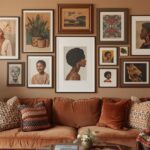
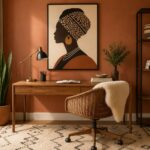
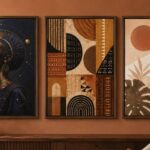
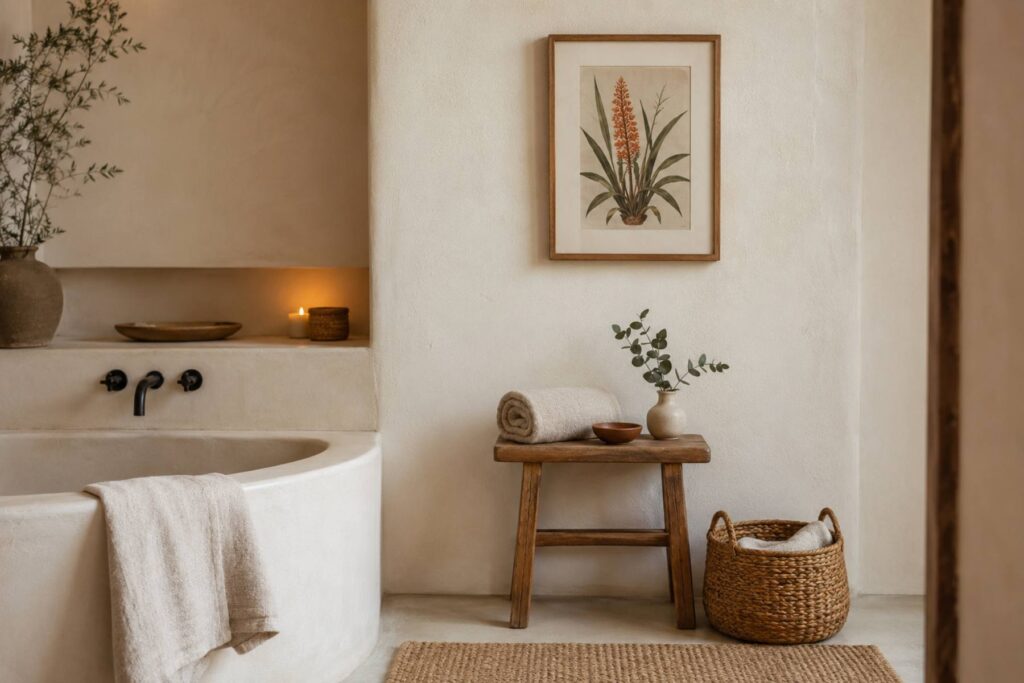
1. One framed print, behind glass, full stop. Bathroom art has one non-negotiable: glass-front frame with a sealed back, because steam destroys unframed paper and open canvas within months. Within that rule, small warm art transforms the room — a neutral botanical trio split across the room’s walls, one dignified Black woman silhouette print opposite the mirror, or a Kilimanjaro landscape above the towel bar. Printables win doubly here: if a decade of steam ever hazes the print, the file reprints for pocket change.
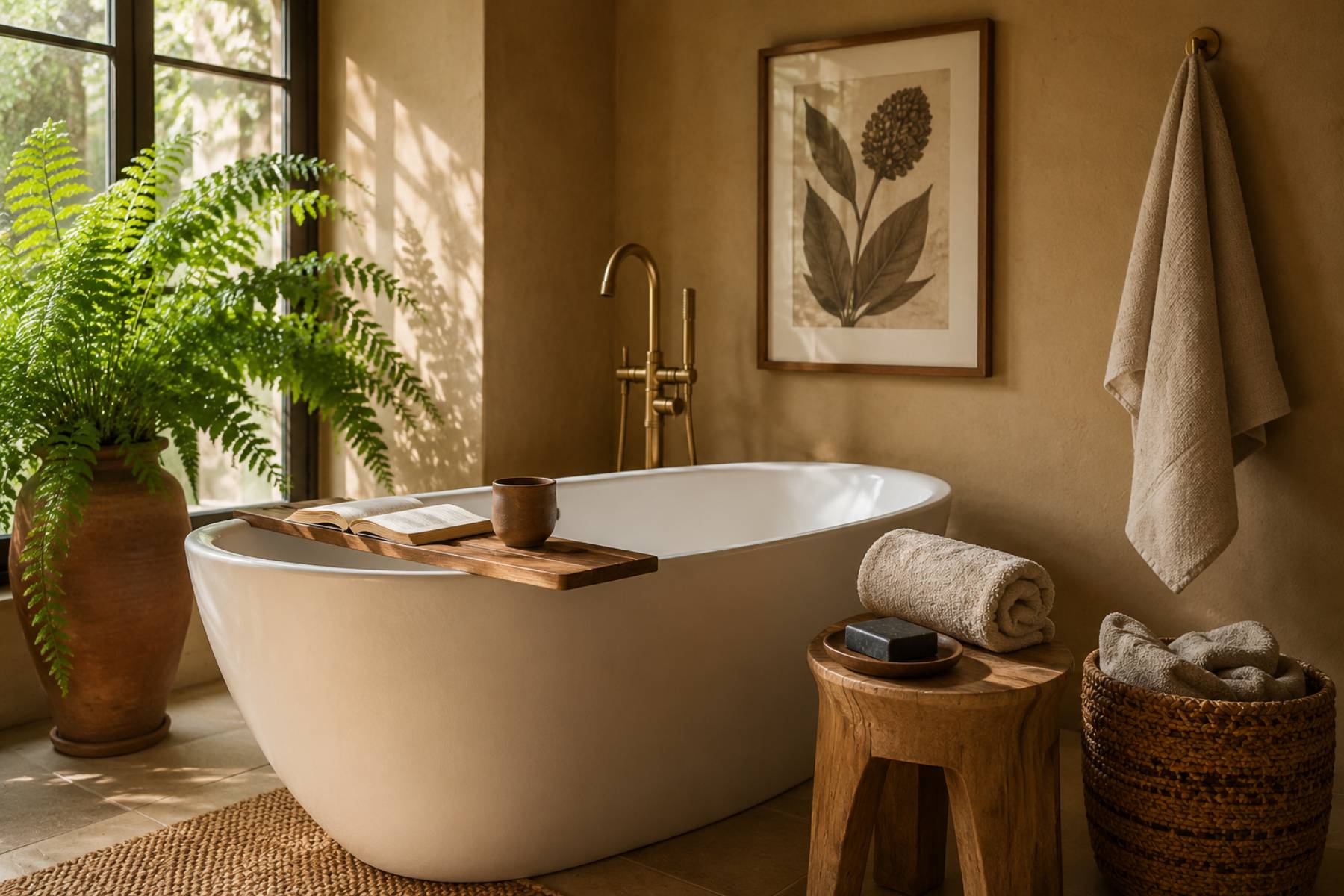
2. The teak bath tray. The single most spa-per-dollar object in existence: a teak or bamboo bath caddy ($30–60) across the tub, holding a book, a clay cup, a candle. Even shower-only bathrooms get the effect from a teak corner stool doing the same warm-wood work.
3. Warm every bulb. 2700K warm-white bulbs in the vanity fixture, plus — the upgrade nobody regrets — a small dimmable lamp or wall sconce for bath hours. Overhead-only bathroom light is interrogation light; the evening soak deserves the same lamp logic as the living room.
4. African black soap, displayed like the heirloom it is. Real black soap — the Ghanaian alata samina tradition of plantain-skin ash and shea, made by hand for centuries, long before the word “artisanal” — is both the best thing that will touch your skin all day and, on a hand-thrown clay dish, quietly the most authentic decor object in the entire house. Buy it from Ghanaian- and diaspora-owned makers on Etsy ($8–15 a generous bar), keep it on a draining dish, and let the bathroom’s centerpiece be something that actually does the caring.
5. Woven storage everywhere plastic was. One large lidded woven basket for towels or laundry, small open ones corralling the counter clutter, a woven tray inside the cabinet imposing order where guests never look but you always do. Same rule as every room in this style: the container is decor.
6. Towels in oat, terracotta and charcoal. Retire the bleach-white hotel stack. Earth-tone waffle or linen-blend towels ($40–80 for a set) turn the towel bar into a palette statement — and hide the tired towels’ age besides. Roll spares in the basket; fold the daily set in thirds on the bar, hotel-style, because the ritual is free.
7. The wooden stool. A small teak, acacia or hand-carved stool beside tub or shower carries the towel, the soap, the phone exile. If you can find a genuine carved African stool secondhand, it becomes the room’s soul for $40–80; the teak shower stool is the reliable understudy.
8. One humidity-loving plant in clay. The bathroom is the easiest plant room in the house: a fern, pothos or peace lily drinks the shower steam and forgives the low light. Terracotta pot, always — the warm clay against white tile is the palette in miniature. No window at all? A eucalyptus bundle hung from the showerhead releases scent with every hot shower and costs $6 to replace monthly.
9. Swap the hardware you’re allowed to. Towel bar, hooks, toilet-paper holder — the small matte black or brass bathroom hardware set ($25–60) is a screwdriver job that recolors the room’s metal story. Renters: over-door hooks and tension-mounted bars in the same finishes, zero holes.
10. The shower curtain is a wall — treat it like one. In most bathrooms the curtain is the largest soft surface in the room. A mudcloth-patterned or earth-tone geometric shower curtain ($25–45) does at bathroom scale what the accent wall does elsewhere — and swaps seasonally for less than a throw pillow.
11. Clay, everywhere small. Soap dish, tumbler, tray for the rings, a small hand-thrown bowl for hairpins — replace the plastic and chrome smalls with warm ceramics one by one. Thrift stores overflow with handmade pottery at $3–8; the bathroom is where those orphaned pieces find their calling.
12. A washable rug with actual color. The bath mat is a decor surface hiding as utility: a flat-woven washable rug in terracotta stripes outperforms the fluffy white rectangle on every axis — looks, laundering, longevity.
13. Scent as architecture. One warm note, consistently: shea and amber candle for evenings, eucalyptus in the shower, black soap’s natural earthiness as the base. The nose decides a room is a sanctuary before the eyes finish looking; three competing air fresheners decide the opposite.
14. The mirror upgrade. If the builder mirror is a frameless slab, either frame it in place (peel-and-stick wood trim kits, $30–50, an honest afternoon) or hang a round wood- or brass-framed mirror over it. The mirror is the room’s largest “art” — a warm frame around it warms every reflection, which in a bathroom means everything twice.
The renter’s bathroom, summarized
Ideas 1–8 and 10–13 need zero permission: art on strips, teak everything, bulbs, soap, baskets, towels, stool, plant, curtain, clay, rug, scent. Skip the hardware swap if unscrewing worries you (over-door versions exist) and frame-the-mirror only with removable trim. The bathroom is honestly the easiest full-room win a renter gets — nothing here outranks a security deposit, and every object moves to the next address.
Small bathroom, full effect
Half-baths and tiny bathrooms concentrate the formula rather than shrinking it: one framed print (the 8×10 botanical), one clay dish with the black soap, linen hand towels on one brass hook, one small plant or eucalyptus bundle, warm bulb. Five objects, forty dollars, and the powder room becomes the most complimented square footage in the house — small rooms repay warmth at the best exchange rate in decorating.
What survives the steam (and what doesn’t)
The bathroom’s material test, once and for all. Thrives: glass-framed prints with sealed backs, glazed and unglazed ceramics, teak and bamboo (oil them yearly), woven fibre away from splash range, brass, matte powder-coated metal, linen and waffle cotton that dry fast. Dies: unframed paper (weeks), open-face canvas (months, and moldy), raw MDF and particleboard frames (swell at the first seam), velvet and wool textiles (never dry), and anything electronic pretending to be decor. When in doubt, ask whether the object could survive a beach house; the bathroom is a beach house with worse ventilation.
The bathing tradition behind the room
The spa bathroom is usually sold as Scandinavian or Japanese; it is worth knowing the African chapters of the same story, because they are the ones this room quotes. West Africa gave the world black soap and shea butter — cleansing and care as craft, made by women’s cooperatives whose recipes predate the cosmetics industry by centuries. The hammam tradition across North Africa built entire architecture around the ritual bath: warm stone, steam, unhurried time, the bath as social ceremony rather than hygiene chore. And across the continent, the calabash — the carved gourd vessel — was the original bath accessory, scooping and pouring long before the rainfall showerhead.
None of this requires reproduction plumbing. It arrives in objects and pace: real soap with a lineage, a vessel with a maker, and the radical act of not rushing. When you set the black soap on its clay dish and dim the lamp for a long bath, you are not imitating a spa — spas are imitating this.
The evening ritual, engineered
A sanctuary is a room plus a habit, so build the habit into the objects. Lamp on, overheads off — that is why idea 3 insisted on the dimmable second light. Towel folded on the stool before the bath, not fetched dripping after. The tray set with intention: one book (paper, steam-proof enough), one drink in the clay cup, phone left in the bedroom as a matter of policy. Eucalyptus refreshed monthly so the steam has something to say. Fifteen unhurried minutes, twice a week, is the cheapest luxury this article recommends — and the only one that makes all the other purchases mean something.
What it costs, in three tiers
The $60 reset: warm bulbs, black soap on a thrifted clay dish, eucalyptus bundle, one linen hand towel, and the free print framed — the powder-room formula applied to any bathroom, one afternoon, transformation visible by evening. The $150–200 sanctuary: add the teak tray, towel set, woven lidded basket, shower curtain and washable rug — the version most readers build, most of it delivered in a single order. The $300–350 full room: everything above plus the stool, hardware swap, framed mirror trim and the three-piece botanical set across the walls. There is no $2,000 tier, which is rather the point: every cold bathroom is one disciplined shopping list away from warm, and the list fits on an index card.
Frequently asked questions
What kind of art is safe in a bathroom?
Prints behind glass in sealed frames, hung outside the direct splash zone — steam alone won’t harm them for years. Avoid unframed paper, canvas and raw-wood frames. Printable art is ideal: if humidity ever wins, reprinting costs less than a coffee.
Is African black soap really worth displaying?
It earns the counter twice: as some of the gentlest cleansing skin can get, and as a genuine centuries-old West African craft object in a room full of reproductions. Buy from named Ghanaian or diaspora makers, store it on a draining dish (it softens in standing water), and expect guests to ask about it — that question is the decor working.
How do I make a bathroom warmer without renovating?
Materials and light, not construction: teak tray, warm bulbs, earth-tone towels, clay smalls, woven baskets, one framed print, a plant. The cold tile stays; it becomes the backdrop that makes the warm objects glow. Renovation is chapter two and often turns out unnecessary.
What colors work in a windowless bathroom?
Warm sand walls, terracotta and oat textiles, and 2700K light — the trio reads as candlelit rather than dim. Windowless bathrooms cannot afford grey; every grey surface borrows darkness from the missing window.
Bathtub-free bathroom — does the spa effect still work?
Completely. The spa is materials and ritual, not plumbing: the teak stool, the black soap, the warm towel fold, the dimmable evening light, the scent. A shower-only bathroom with those five reads more sanctuary than a jacuzzi under fluorescent light ever will.
Where do I put art in a bathroom with almost no wall?
Above the toilet (the universally wasted wall), the sliver beside the mirror, or leaning on a shelf — and scale down honestly: one 8×10 in the right spot beats a gallery forced into a half-bath. If literally no wall survives, the “art” jobs transfer to the framed mirror, the shower curtain and the towel palette, which is why those three ideas exist.
How do I keep the woven and wood pieces from getting musty?
Ventilation is the whole answer: run the fan or crack the door for ten minutes after showers, keep baskets and teak out of the splash zone, and let the room dry daily. Materials that survived centuries of riverbanks and hammams are not afraid of your bathroom — only of standing water and sealed doors.
Related reading
- Afrocentric Laundry Room Ideas: 12 Warm Upgrades
- 15 Afrocentric Home Office Ideas for a Soulful Workspace
- A Beginner’s Guide to Afrocentric Decor in 2026
- African Color Palette Guide 2026
- How to Set Up a Gallery Wall — Print, Frame, Hang & Light
Closing
The bathroom starts every day and ends most of them — it touches your routine more than any beautiful room you styled for guests. Fourteen warm choices against all that built-in cold: teak where plastic was, clay where chrome was, one botanical behind glass, soap with six hundred years of history on a hand-thrown dish. The contrast does the rest. Cold rooms make warmth a luxury; this one you can build by Sunday. And unlike every other room you style, this one repays you twice a day, first thing and last — which is the best return on $150 anywhere in the house.