Adinkra Symbols and Their Meanings: The Ultimate Guide
By Essence of the Road Art · Updated July 2026
This article contains affiliate links. If you buy through them, we may earn a small commission at no extra cost to you. We only feature pieces we would live with ourselves.
Some symbols decorate. Others speak. The Adinkra symbols of Ghana belong firmly to the second kind — a written philosophy in visual form, where each dense geometric shape carries a proverb and was meant to be read, not merely worn.
Quick answer: Adinkra symbols are visual symbols of the Akan people of Ghana and Côte d’Ivoire, each standing for a proverb or philosophical idea. There are more than a hundred; this guide covers twenty-four of the most meaningful — the divine ones (Gye Nyame, Nyame Dua, Nsoromma), the ones about the self (Sankofa, Dwennimmen, Nyansapo, Akoma), the ones about the bond (Eban, Funtunfunefu, Mpatapo), and the ones about the journey (Adinkrahene, Nkyinkyim). To live with them well: learn the proverb before you hang the symbol, choose one whose meaning matches the room, work in ones and twos rather than a crowded dozen, and pair them with warm, restrained palettes. And if you make or buy AI-generated Adinkra art, verify the symbol’s true form first — the shape is the meaning, and a distorted glyph is a distorted proverb.
For more than three hundred years, the Akan people of Ghana — and across the border into Côte d’Ivoire — have stamped these forms onto cloth, carved them into stools, and worked them into the architecture of their homes. In the West, Adinkra often arrive flattened: a pretty shape on a t-shirt, a tattoo whose meaning is half-remembered, an image stripped from its proverb. This guide is the opposite of that. Twenty-four symbols, the proverbs behind them, how to live with them at home, and — new in this edition — how to reproduce them respectfully in an age when anyone can ask an AI to draw one in seconds.
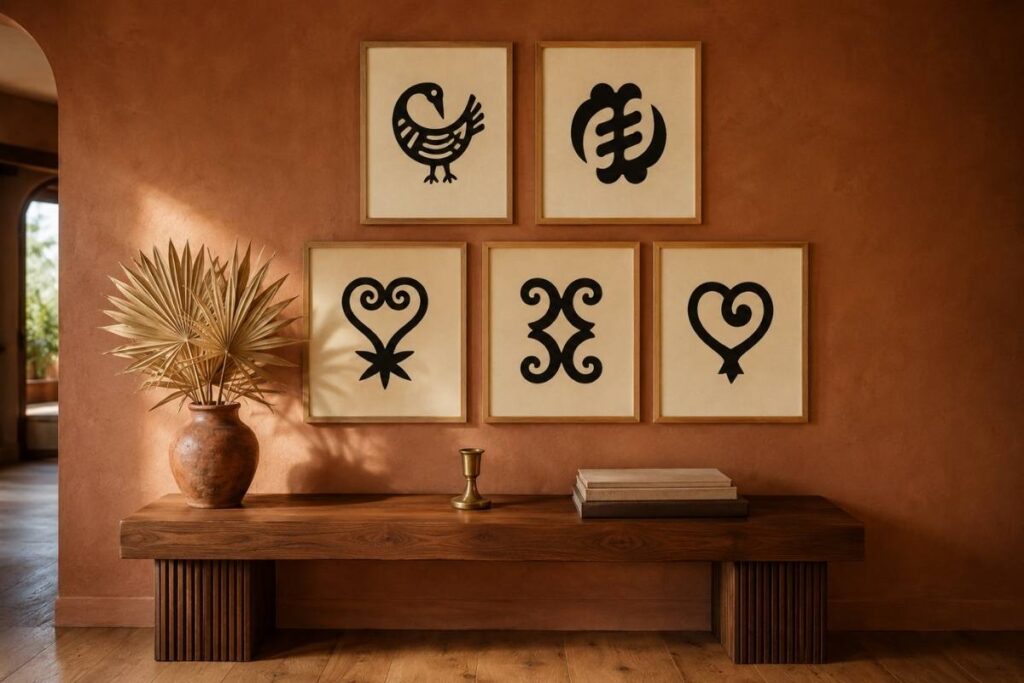
Table of Contents
The true origin of Adinkra
The word Adinkra comes from the Akan Twi language. It is usually translated as “farewell” or “goodbye,” but the fuller sense is closer to a name that sends a message — adín (name) and kra (message, soul, farewell). Both readings matter: Adinkra cloth was originally funerary, stamped and worn at burial rites to bid the dead goodbye and to remind the living of the proverbs they had left behind.
Tradition credits the symbols to Nana Kwadwo Agyeman Adinkra, a king of the Gyaman (Bono) kingdom, in what is now the borderland of Côte d’Ivoire and Ghana. The stories say the designs came to him in dreams, and that he named the cloth — and the system — after himself. When Gyaman was defeated by the Asante in the early nineteenth century, Gyaman craftsmen were brought to Asante lands and taught the technique there. That is how Adinkra became an Asante and broader Akan inheritance, with its present centre of production in Ntonso, about twenty kilometres northwest of Kumasi. The oldest surviving Adinkra cloth, carrying fifteen stamped symbols and dated to 1817, lives today in the British Museum.
The making is slow and worth picturing, because it explains the look. The dark dye, adinkra aduru, is made by soaking and boiling the inner bark of the badié tree until the liquor thickens to a near-black. The stamps are carved from pieces of calabash, five to eight centimetres square, each with a small wooden handle; the stamp is slightly curved so the dye rolls on with a rocking motion. Every print is hand-pressed, so every cloth is unique. Traditionally the finished cloth was reserved for royalty and spiritual leaders, worn for funerals and other solemn occasions.
Today there are more than a hundred recognised Adinkra symbols — some sources count 122, others 129 — and new ones are still being created to name contemporary ideas. That last fact matters: Adinkra is a living language, not a frozen museum set. It was text before it was decoration, and it is still being written.
How to read this list
Each symbol below is given in its Twi name, with a rough phonetic guide, its literal meaning, the proverb behind it where one exists, and a short note on how it speaks in a modern home. Adinkra are not interchangeable — a wall that holds Sankofa speaks of memory; a wall that holds Eban speaks of family. We have grouped the first twelve into four themes the Akan themselves have long used to understand the world: the divine, the self, the bond, and the journey. A second twelve follows, for those building a deeper collection.
I. The Divine
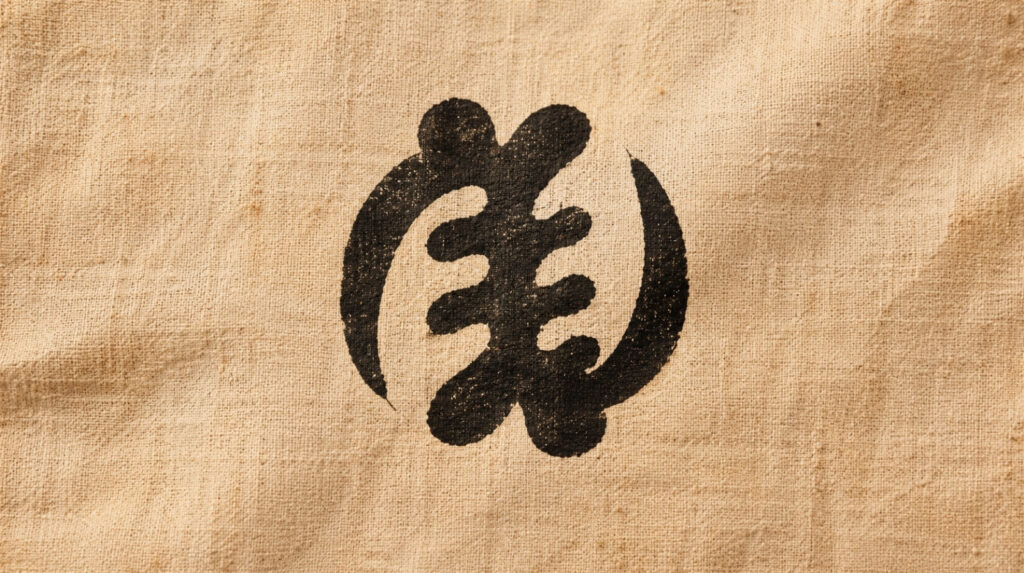
1. Gye Nyame — “Except for God”
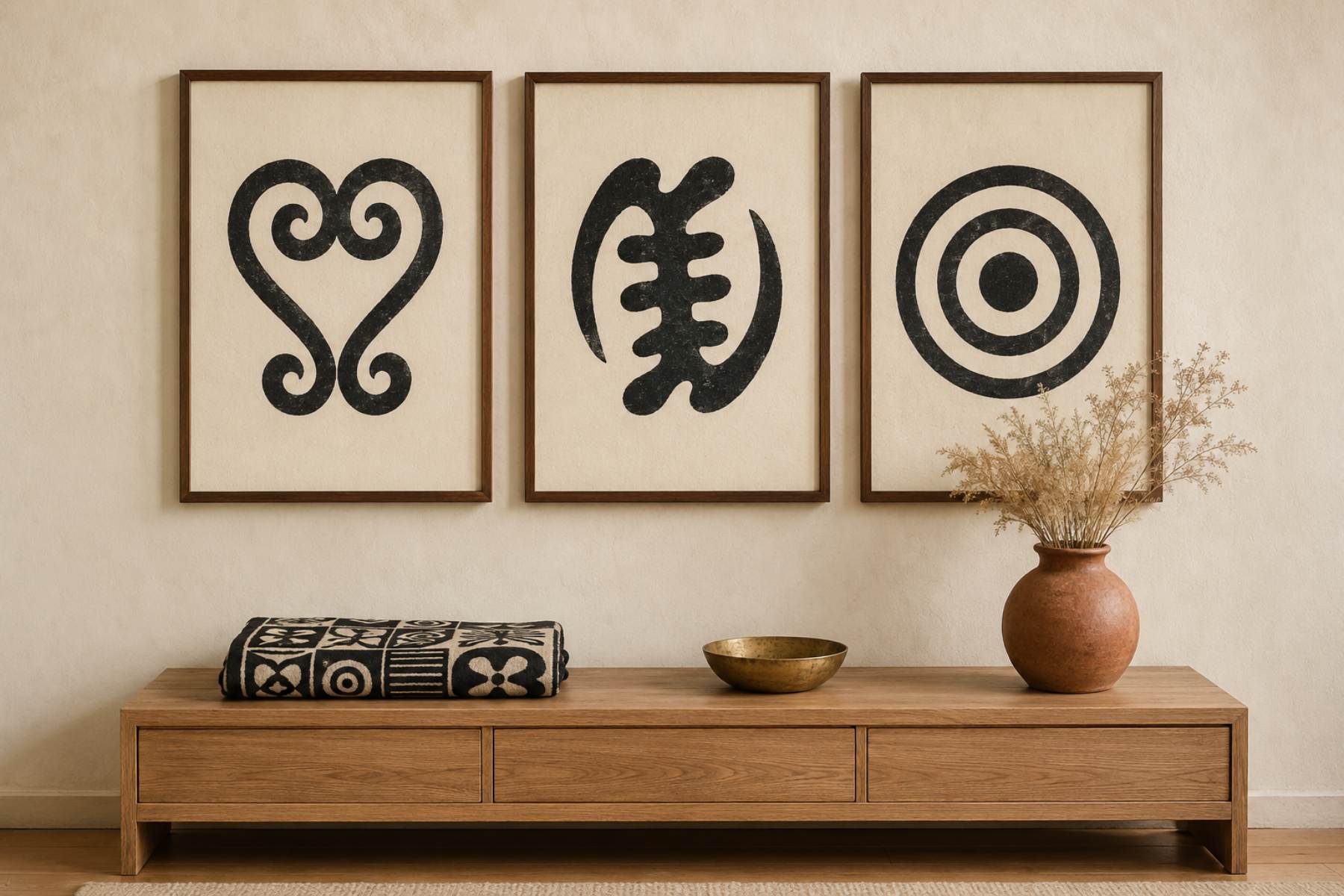
Pronunciation: “jeh N-yah-mee” — the most recognisable Adinkra in the world. Its proverb runs: “This great panorama of creation dates back to time immemorial; no one saw its beginning, and no one will see its end, except God.” It appears on Ghana’s currency, on presidential robes, and on jewellery worn across the diaspora. It speaks of the supremacy of the divine and the humility of the human. At home it often sits above the entry door — the first thing a visitor passes beneath.
2. Nyame Dua — “Tree of God”
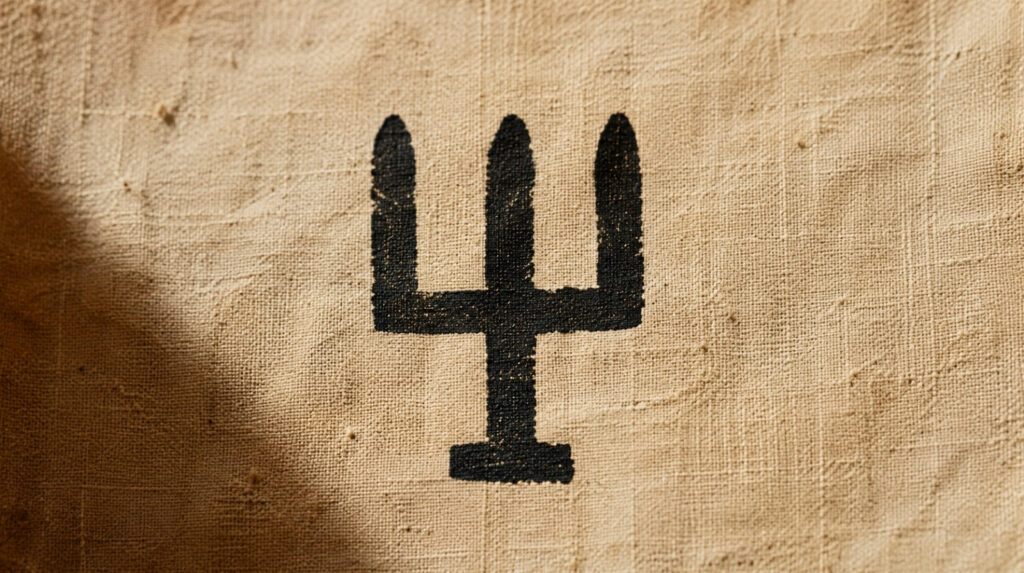
“n-yah-mee doo-ah” — God’s altar. The symbol depicts the three-pronged sacred stump that stood at the centre of an Akan compound, where libations were poured and blessings asked. Hung in a quiet room it reads as a small, deliberate signal: this is a space for stillness. It belongs in reading corners and bedside walls.
3. Nsoromma — “Child of the Heavens”
“n-soh-rom-mah” — a single five-pointed star. Proverb: “A wise child does not need to be shown the stars; he sees them himself.” An emblem of guardianship and the constant presence of the divine — one is never truly alone. A single Nsoromma above a child’s bed, or in the room of someone who has lost a parent, is an act of accompaniment that asks nothing in return.
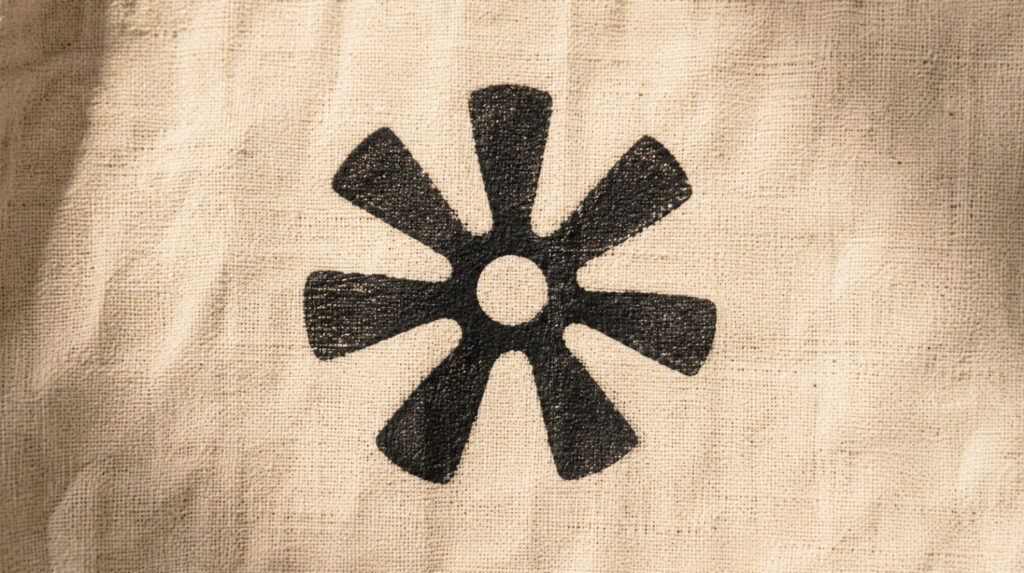
II. The Self
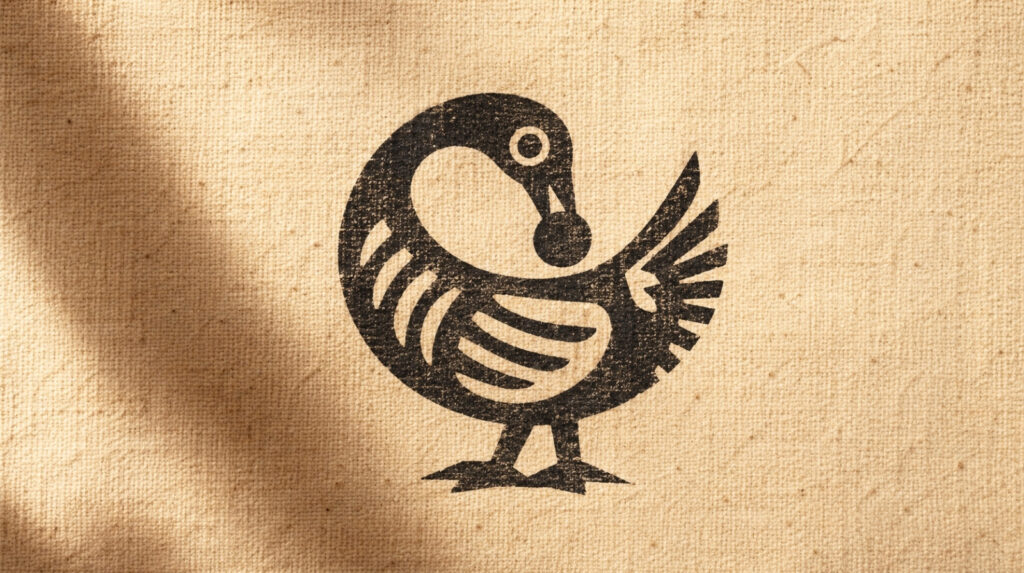
4. Sankofa — “Go Back and Get It”
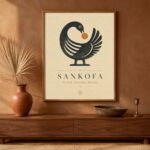
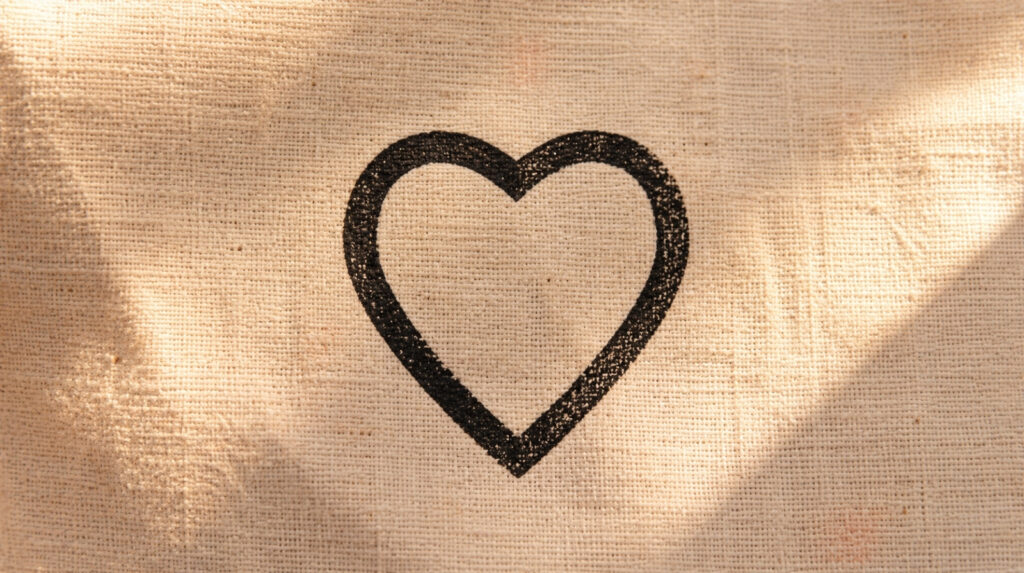
“san-koh-fah” — the most quoted Adinkra of all. Proverb: “It is not taboo to go back and fetch what you forgot.” It exists in two forms: a stylised heart, and a bird whose body faces forward while its head turns back to lift an egg — the past — from its own back. Sankofa does not romanticise the past; it instructs you to use it. For anyone whose ancestry was disrupted by displacement, it has become a kind of permission slip: reach back, the thing you forgot is allowed to be retrieved. At home it belongs where memory lives — above a desk, beside old photographs.
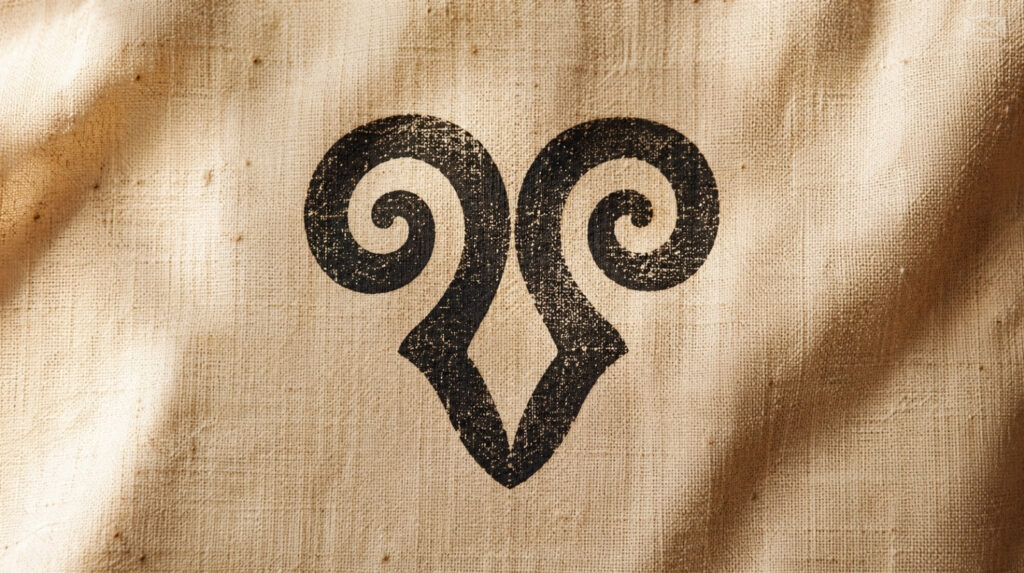
5. Dwennimmen — “Ram’s Horns”
“djwin-nee-men” — strength married to humility. Proverb: “It is the heart, not the horns, that leads a ram to bully.” The ram can strike with force, but it lowers its head first; power without character is empty. Beloved in leadership settings — the University of Ghana works it into its crest. Perfect for a study, a home office, or above a workbench.
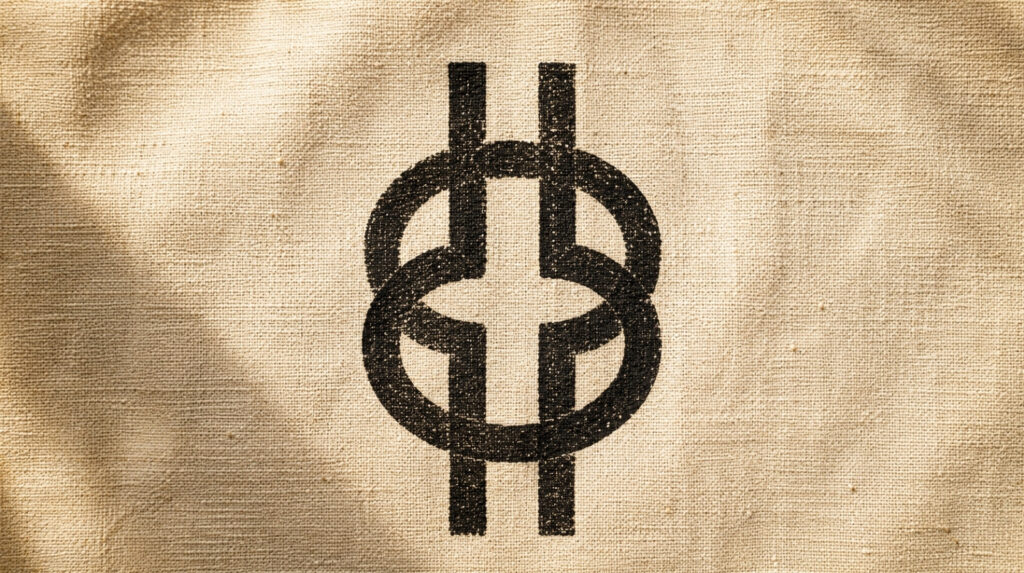
6. Nyansapo — “Wisdom Knot”
“nyan-sah-poh” — an intricately interlaced loop with no obvious beginning or end. Proverb: “Only a wise person can untie the knot of wisdom.” Wisdom is never linear; the wise untie the knot by patience and the right sequence of moves, not by force. The Adinkra of strategy and quiet intelligence — it belongs near a desk.
7. Akoma — “The Heart”
“ah-koh-mah” — often misread by newcomers. In Akan philosophy the heart is the seat of patience, not romance. Proverb: “Take heart. Be patient.” To have heart is to endure with grace. Akoma is the symbol of forbearance and love that lasts — one of the most gifted at weddings, and quietly powerful above a kitchen table or in a shared room.
III. The Bond
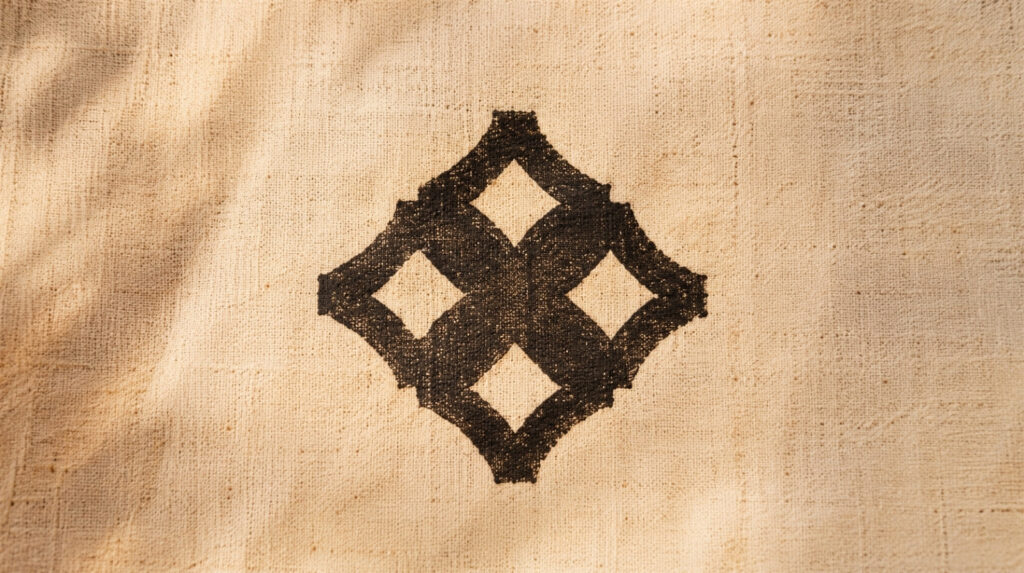
8. Eban — “Fence”
“eh-bahn” — an enclosed square. The Akan understanding is precise: a fence is built not against the outside world, but for the inside one — it marks the perimeter of a place where people are known and held. The Adinkra of love, security, and family. Ideal for an entry hall, a family room, or above a shared bed.
9. Funtunfunefu Denkyemfunefu — “Siamese Crocodiles”
“foon-toon-foo-neh-foo den-chem-foo-neh-foo” — two crocodiles sharing one stomach, yet fighting over food because each tastes it going down its own throat. The symbol of democracy, unity, and the cost of shared conflict. It speaks well in a dining or family room — a reminder that what wounds the family wounds everyone in it.
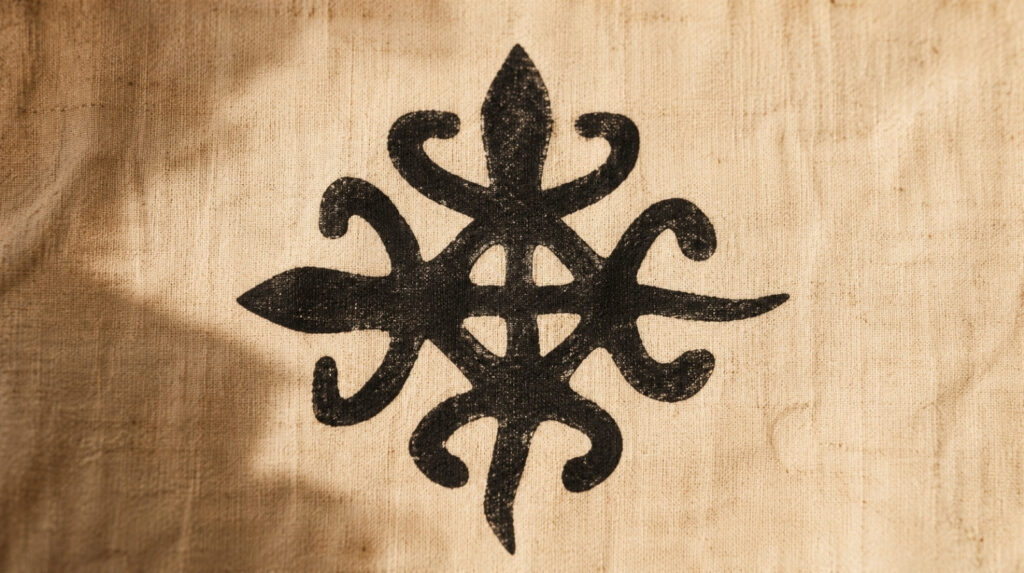
10. Mpatapo — “Pacification Knot”
“m-pah-tah-poh” — a closed knot with no beginning and no end, so that peace, once made, has no edge to come undone from. The Adinkra of reconciliation and forgiveness. The teaching is subtle: peace is not the absence of conflict, but what is made after it, deliberately, by both parties. It lives well in a hallway or meditation corner.
IV. The Journey
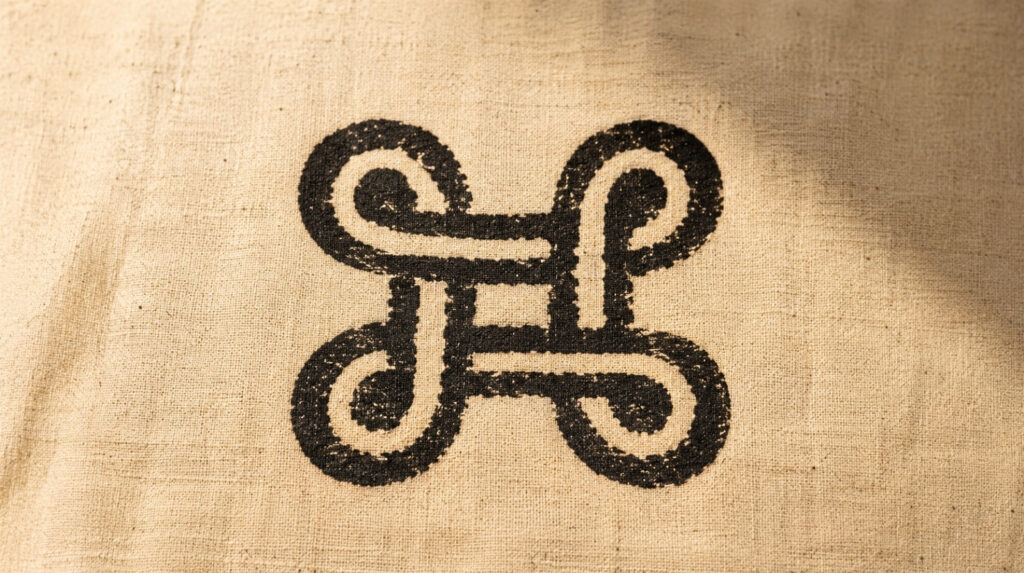
11. Adinkrahene — “Chief of the Adinkra Symbols”
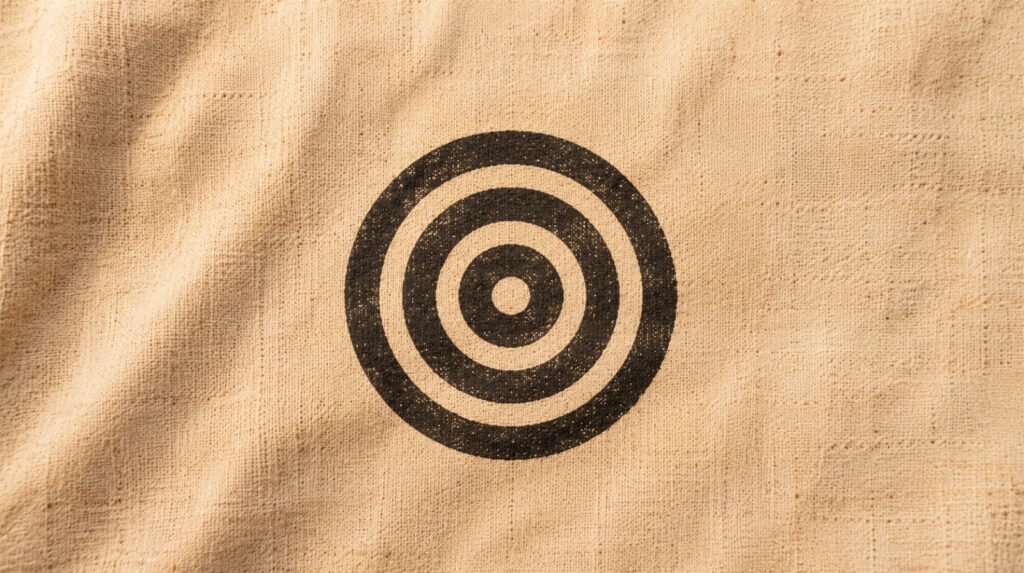
“ah-dink-rah-heh-nee” — three concentric circles, nothing more, and yet it is called king. It is said to have inspired the design of many other symbols. Its meaning is leadership and the authority that comes from character rather than force; the form suggests influence radiating outward like rings on water. Striking in scale — a single large Adinkrahene above a sofa anchors a room with still authority.
12. Nkyinkyim — “The Twisting Path”
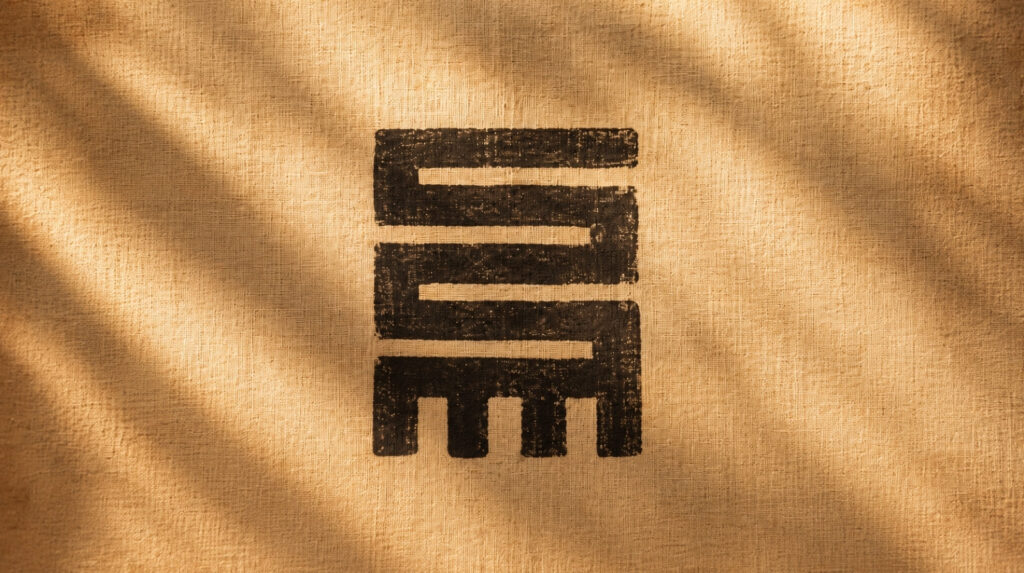
“n-chin-chim” — a single zigzag line. Proverb: “Life’s journey is twisted.” The Adinkra of initiative, dynamism, and the resourcefulness a bending road demands. In Akan thought the twisted path is not a failure of the journey — it is the journey. Perhaps the most modern of all the symbols; it belongs on the wall of anyone building something.
More Adinkra symbols to know:
For a deeper collection, these Adinkra symbols extend the vocabulary without repeating it.
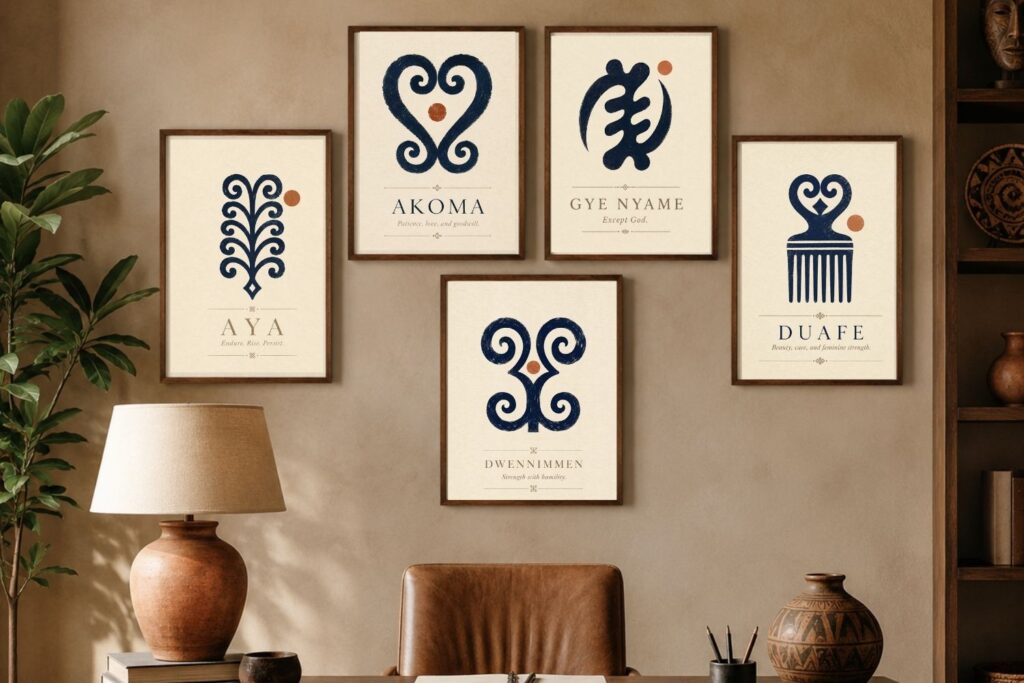
- Aya — “Fern” (“ah-yah”) — endurance and independence. The fern grows in hard places; to wear it is to say, “I have endured, and I fear no one.” Good for a studio or the room of someone who has overcome.
- Duafe — “Wooden Comb” (“doo-ah-feh”) — feminine care, cleanliness, and love; a prized grooming object. Gentle in a bedroom or dressing corner.
- Fawohodie — “Independence” (“fah-woh-hoh-dee-eh”) — freedom and self-reliance, with the reminder that “independence comes with responsibilities.” Fitting for a first home or a study.
- Nea Onnim — “He Who Does Not Know Can Learn” (“neh-ah on-nim”) — knowledge and lifelong learning. Belongs in a study, a child’s room, or a reading nook.
- Ese Ne Tekrema — “The Teeth and the Tongue” — friendship and interdependence; they sometimes conflict, but must work together. Well placed in a dining or family room.
- Hye Wo Nhye — “That Which Does Not Burn” (“hyeh woh n-hyeh”) — imperishability and endurance, after the priests said to walk on fire without burning. A symbol for resilience.
- Wawa Aba — “Seed of the Wawa Tree” — hardiness and perseverance, from a seed hard enough to carve. Fitting above a workspace.
- Bi Nka Bi — “Bite Not One Another” — peace, harmony, and the avoidance of conflict. Calm in shared and family spaces.
- Odo Nnyew Fie Kwan — “Love Never Loses Its Way Home” (“oh-doh n-yew fee-eh kwan”) — the power and endurance of love. Quietly moving above a shared bed.
- Woforo Dua Pa A — “When You Climb a Good Tree” — support and cooperation: “when you climb a good tree, you are given a push.” Worthy causes get help. Good for a family or mentorship space.
- Nkonsonkonson — “Chain Link” — unity and human relations; “we are linked in both life and death.” Strong along a family gallery or hallway.
- Sesa Wo Suban — “Change Your Character” — transformation and life change, combining a morning star with a wheel. A symbol for a room of new beginnings.
- Mate Masie — “What I Hear, I Keep” (“mah-teh mah-see-eh”) — wisdom, knowledge, and discretion in listening. The teaching is that understanding begins with keeping what you have heard rather than answering it. Quiet and well placed in a study, a hallway, or any room where people talk properly.
How to respect Adinkra symbols
Adinkra are a generously shared part of Akan heritage — adopted across the diaspora, in academia, and in design worldwide. The line between appreciation and appropriation is not drawn at ancestry; it is drawn at understanding. A few principles keep the tradition intact:
Learn the proverb before you hang the symbol. The simplest test is this: can you say what the symbol means and why it speaks to you? If yes, you are honouring it. Using one because the shape is pretty, emptied of its proverb, flattens a tradition that took centuries to build.
Match the symbol to the room, not the trend. Gye Nyame above a child’s bed is too heavy; Akoma is the right one. The symbols are not interchangeable, and treating them as identical decoration is its own kind of erasure.
Support the source where you can. Authentic Adinkra cloth is still stamped by hand in Ntonso and by Ghanaian makers online. Buying from them, and naming the Akan origin when you share the symbols, returns something to the tradition you are drawing from.
Don’t dress a print up as something it isn’t. A framed print inspired by Adinkra is a lovely thing; calling it handmade Adinkra cloth is not. Honesty about what a piece is keeps the real thing valued.
Handle the solemn ones with care. Adinkra began as funerary cloth. Some symbols carry weight — grief, mortality, the divine — that a casual decorative use can trivialise. When in doubt, choose the symbol whose meaning you actually want in the room.
How to make AI replicas of Adinkra respectfully
This is the new frontier, and it deserves an honest section. Anyone can now ask an image tool to “draw a Sankofa” or generate a wall of “Adinkra symbols” in seconds — and the results are very often wrong. We have seen it first-hand, and if you have generated Adinkra with an AI, you have probably seen it too: invented prong counts, broken symmetry, knots that don’t close, symbols mirror-flipped, and decorative shapes that look like Adinkra while saying nothing at all. Sometimes the tool merges two symbols into a hybrid that has never existed.
Here is why that matters more than a normal design error: in Adinkra, the shape is the meaning. A distorted Gye Nyame is not a stylistic choice — it is a distorted proverb. The whole point of the tradition is that the form can be read. Get the form wrong and you have made something that gestures at meaning while carrying none.
So the dividing line is simple: use AI for the context, never for the glyph. AI is genuinely wonderful for mockups, room scenes, backgrounds, palettes, and original art inspired by the tradition. It cannot be trusted to draw the sacred symbol itself. Treat it as a set-dresser, not a scribe.
A workflow that keeps you honest:
- Start from an authenticated reference. Get the exact symbol form from a reliable source — a museum, an academic Adinkra reference, a Ghanaian maker, or a properly documented vector (a clean, verified Adinkra vector on Vecteezy or a reference set on Creative Fabrica can work if the form is correct). Never let the AI freehand the glyph.
- Let AI generate only the surroundings. Keep the true symbol as a clean overlay or vector and use AI for the texture, the framing, the room, or the composition around it.
- Keep the name and proverb attached. Never sell or share the image stripped of its Twi name and meaning.
- Name the symbol and its origin. In your caption or listing, say which symbol it is, what it means, and that it comes from the Akan people of Ghana.
- Don’t call it handmade cloth. Describe it as a print inspired by or featuring the symbol.
- Verify before you publish. Run the checklist below against a reference. Confirm you have not invented, merged, or mirror-flipped anything.
- Give back where you can. Point buyers toward Ntonso and Ghanaian makers; credit the tradition that made the work possible.
The “AI usually gets these wrong” checklist. Before you publish an AI-made Adinkra, check: Adinkrahene is exactly three concentric circles; Nsoromma has five points; Sankofa is either the heart form or the backward-looking bird, not a muddle of both; Dwennimmen is symmetrical; the knots (Mpatapo, Nyansapo) must be closed, with no loose ends; nothing is mirror-flipped; and there are no invented hybrids of two symbols. If any of those fail, the tool guessed — go back to the reference.
The honest bottom line: AI can help you style a room around Adinkra beautifully. It cannot yet be trusted to draw Adinkra. Used with that boundary in mind, it is a tool. Used without it, it quietly manufactures nonsense that looks like heritage — which is exactly the flattening this tradition has survived for three hundred years and does not need more of.
How to live with these symbols at home
A few quiet rules we keep when working with Adinkra in interiors:
Read before you hang. A Sankofa hung by someone who has read its words is a different object from one hung because the shape was pretty. The room can feel the difference.
Work in ones, twos, or threes. A wall holding twelve Adinkra at once is a poster, not a meditation. A curated trio tells a small story — Eban, Akoma, Funtunfunefu for a family wall; Sankofa, Adinkrahene, Nkyinkyim for a study.
Pair with warm, restrained palettes. Adinkra were stamped in dark vegetable dye on natural cloth; the original palette is cream, charcoal, deep brown, and warm red. Modern rooms that hold them well lean into terracotta, ochre, walnut, and unbleached linen. Avoid cool greys and stark whites — they flatten the warmth the symbols were made to live in. (Our Ghana colour palette guide has the exact tones.)
Frame them well. Cheap frames signal a disposable print, and Adinkra are not disposable. For a step-by-step layout, our Adinkra 5-piece gallery wall guide walks through spacing and framing; a simple set of oak gallery frames and a warm picture light do most of the work.
Frequently asked questions
What are Adinkra symbols and where do they come from?
Adinkra are visual symbols originating with the Akan people of Ghana and Côte d’Ivoire, dating to the eighteenth century or earlier. They are stamped — never woven — onto cloth, and each one represents a proverb or philosophical concept. Tradition credits King Nana Kwadwo Agyeman Adinkra of the Gyaman kingdom; after the Asante defeated Gyaman, the craft spread to Asante lands, and its centre of production today is Ntonso, near Kumasi. The oldest surviving cloth, from 1817, is in the British Museum.
How many Adinkra symbols are there?
Sources count between 122 and 129 traditional symbols, and new ones are still being created to reflect contemporary ideas. This guide covers twenty-four of the most meaningful to live with — but the larger Adinkra dictionary reaches into democracy, justice, ingenuity, the stars, and much more.
What is the most popular Adinkra symbol?
Gye Nyame — “except for God” — is widely considered the most recognisable, both in Ghana and internationally. It appears on Ghana’s currency, on presidential robes, and on architecture and jewellery across the Akan world and the diaspora.
What is the difference between Adinkra and Kente?
Both come from Ghana, but they are different traditions. Adinkra are stamped symbols, each carrying a proverb — read as text. Kente is a woven cloth in vibrant colours, with patterns named after events and proverbs — read as textile. Our Kente cloth patterns and meanings guide covers the other half of Ghana’s visual language, and our African motifs explained guide sets Adinkra, Kente and mudcloth side by side.
Is it disrespectful to use Adinkra symbols if you are not Ghanaian?
Not in itself. Adinkra are widely shared, and the line between appreciation and appropriation is drawn at understanding, not ancestry. Using a symbol because you have learned its proverb and want to live with its meaning is appreciation; using one emptied of its proverb, as a pretty shape, is not. If you can say what the symbol means and why it speaks to you, you are honouring it.
Why do AI-generated Adinkra symbols look wrong?
Because AI image tools guess at shapes rather than reproducing a fixed glyph. Adinkra have precise, meaningful forms — an exact number of prongs, closed knots, specific symmetry — and image models routinely distort them, mirror-flip them, or merge two symbols into a hybrid that never existed. Since the shape carries the meaning, a distorted symbol is a distorted proverb. Always check an AI-made Adinkra against an authenticated reference before using it.
Are AI-generated Adinkra symbols okay to use?
They can be, with a boundary: use AI for the mockup, background, framing and styling — not to invent the symbol itself. Start the glyph from a verified reference, keep the Twi name and meaning attached, name the Akan origin, and don’t present a print as handmade cloth. Used that way, AI is a styling tool; used to freehand sacred symbols, it manufactures convincing nonsense.
Which Adinkra symbol is best for a bedroom?
Akoma (patience and enduring love) and Eban (love and family security) are the quietest, most fitting choices; Odo Nnyew Fie Kwan (the endurance of love) suits a shared room. For a child’s room, Nsoromma (guardianship) is gentle. We tend to avoid the large declarative symbols — Gye Nyame, Adinkrahene — in bedrooms; they are made to make a public statement.
Which Adinkra symbol means strength?
Dwennimmen — the ram’s horns — is the symbol most associated with strength, but its proverb is essential: “It is the heart, not the horns, that leads a ram to bully.” Strength here is meaningful only with humility. For endurance without that nuance, Aya (the fern) or Hye Wo Nhye (“that which does not burn”) are chosen instead.
Related reading
- 12 Ghanaian Symbols and Their Meanings: A Decor Lover’s Guide
- Sankofa Symbol Meaning: The Akan Proverb Behind the Bird
- Kente Cloth Patterns and Meanings: How to Read Ghana’s Royal Weave
- African Motifs Explained: Adinkra, Kente & Mudcloth
- Adinkra 5-Piece Gallery Wall: How to Build One at Home
- The Difference Between a Symbol and a Motif
- Ghana Colour Palette — the exact tones Adinkra were made to live in
Shop the collection
If you would like to live with these symbols, our Adinkra Symbol Set on Etsy is drawn from verified forms — each symbol named, each proverb kept — and single symbols are added as printable pieces over time. And our free Afrocentric Gallery Wall Guide covers the framing and spacing behind a wall that holds meaning, not just style. One quiet email, the PDF, and a note from us.
And our free Sankofa printable is one quiet email away — 300 DPI, warm cream, with the proverb printed on the file. If it is framing and spacing you want, the Adinkra 5-piece gallery wall guide walks through layout step by step.
- Essence of the Road Art on Etsy — the full printable collection
Closing
Adinkra were text before they were decoration, and they are text still. A wall that holds one — read, chosen for the room, framed with care — does something a pretty shape cannot: it keeps a proverb where the household can see it. Learn the words first. The symbol will hold the wall better for it.
This article is part of the Symbolism series at Essence of the Road Art — a home decor journal for soulful, Afrocentric and Afro-bohemian interiors. Slow design. Warm rooms. Real meaning.