Printable Sankofa Adinkra Wall Art — Yours To Keep
A FREE GIFT FROM ESSENCE OF THE ROAD ART
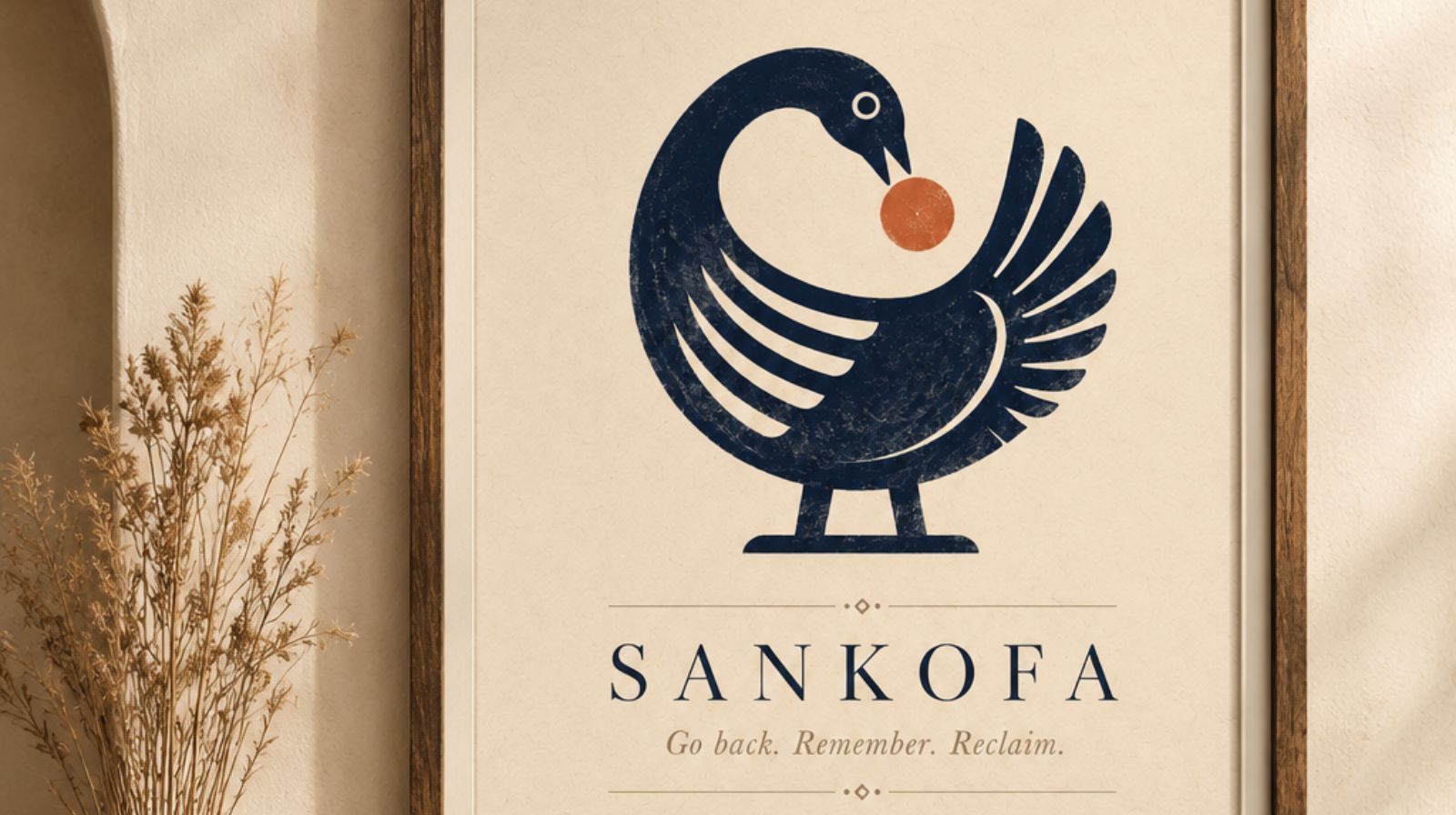
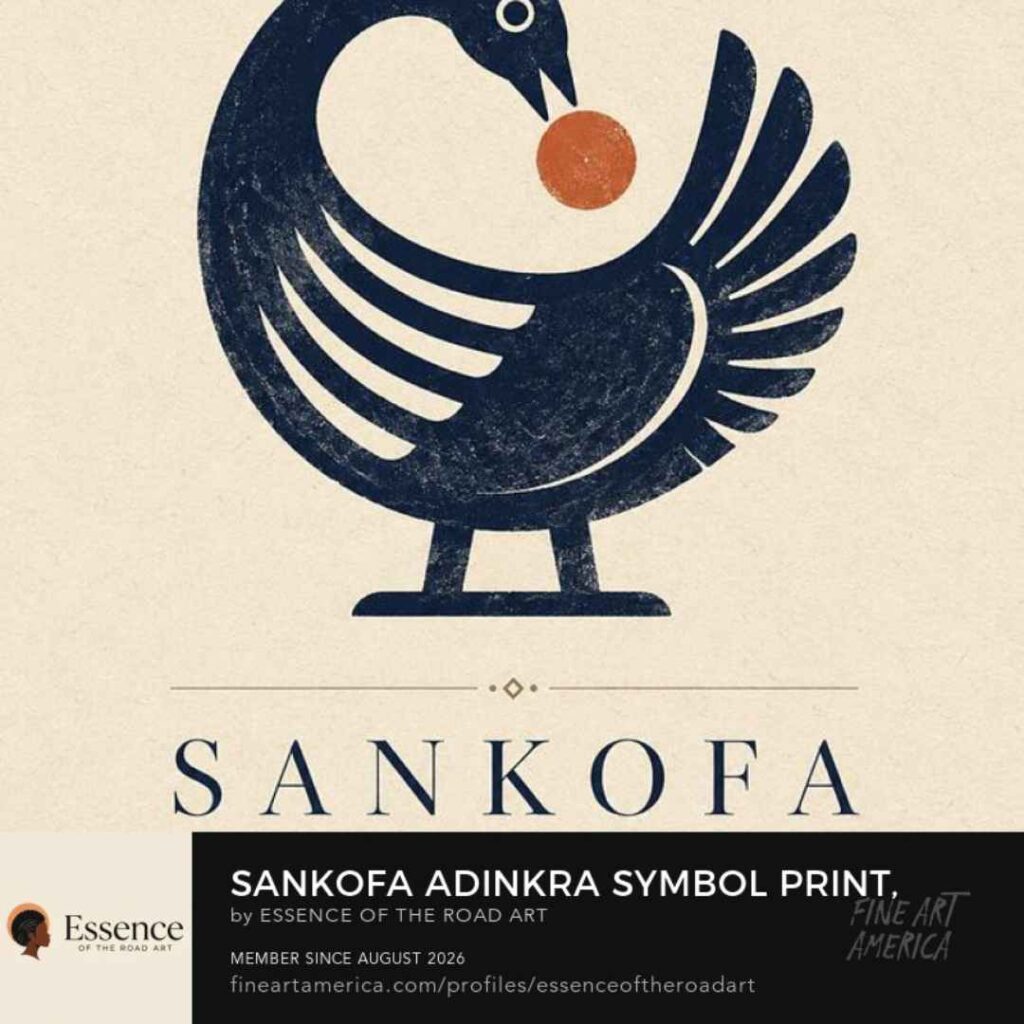
Sankofa is a Ghanaian Adinkra symbol with a single quiet instruction: return for what you have forgotten. We made this free Adinkra Wall Art print so it can sit on your wall as a daily reminder. Drop your email and we will send the file straight to your inbox.
Table of Contents
What you get
- A high-resolution, 300 DPI print-ready .JPG file (3:4 ratio) — frames cleanly in any 9×12, 12×16, 15×20 or 18×24 inch frame..
- A meaning that lasts Sankofa is one of the most beloved Adinkra symbols of Ghana. The full proverb and its translation are printed on the file.
- A welcome surprise: a small thank-you for joining the list — a discount code for any printable in our Etsy shop.
Sankofa: The African Symbol That Teaches Us to Look Back to Move Forward
Across the rich cultural traditions of West Africa, few symbols carry as much wisdom and emotional depth as Sankofa. Elegant, mysterious, and deeply philosophical, Sankofa is more than just an artistic design—it is a message about memory, identity, and growth. For centuries, this symbol has inspired people to reconnect with their roots, honor their ancestors, and learn from the past in order to build a better future.
Today, Sankofa appears in art, fashion, tattoos, education, and spiritual practices around the world. But behind its beauty lies a fascinating story filled with history, myths, and powerful meaning.
What Is Sankofa?
Sankofa comes from the Akan people of Ghana in West Africa and belongs to the famous collection of Adinkra symbols. These symbols are visual representations of ideas, proverbs, and moral values used in Akan culture.
The word Sankofa is derived from the Twi language:
- San = return
- Ko = go
- Fa = fetch
Together, the phrase is often translated as:
“Go back and fetch it.”
At first glance, this might sound simple, but its meaning is profound. Sankofa teaches that there is nothing wrong with returning to the past to recover forgotten wisdom, traditions, or lessons.
The Famous Bird Symbol
The most recognizable version of Sankofa is a graceful bird turning its head backward while its feet face forward. Often, the bird carries an egg in its mouth.
Every part of the image has symbolic meaning:
- The bird moving forward represents progress and the future.
- The backward-looking head symbolizes reflection on the past.
- The egg stands for knowledge, wisdom, or future generations.
In some artistic forms, Sankofa is also represented as a stylized heart shape. Though simpler in appearance, it carries the same message of remembrance and learning.
The Origin of Sankofa
The Sankofa symbol originated among the Akan people, particularly in present-day Ghana and Côte d’Ivoire. Adinkra symbols were traditionally stamped onto cloth worn during important ceremonies such as funerals, festivals, and royal events.
Historians believe the symbol became especially important during periods of social change and hardship. It reminded communities that survival depended on preserving ancestral knowledge and cultural identity.
Over time, Sankofa traveled far beyond West Africa. During the transatlantic slave trade, African traditions were scattered across the Americas. Although many cultural practices were suppressed, symbols like Sankofa survived in stories, spiritual beliefs, and oral traditions.
Today, Sankofa has become a powerful emblem of African heritage and cultural recovery, especially among African diaspora communities reconnecting with ancestral roots.
Myths and Spiritual Beliefs About Sankofa
Like many ancient symbols, Sankofa is surrounded by myths and spiritual interpretations.
One popular belief says the bird can see both the past and the future at the same time. Elders used this idea to teach younger generations that wisdom comes from balancing memory with vision.
Another myth suggests that forgetting one’s ancestors leads to confusion and loss of identity. In this tradition, Sankofa acts almost like a spiritual compass, guiding people back toward truth and self-understanding.
Some spiritual practitioners also believe the symbol carries protective energy. Wearing Sankofa jewelry or displaying the symbol in the home is thought to invite wisdom, strength, and ancestral guidance.
Although these beliefs vary between communities, the core message remains consistent: the past is not a burden—it is a teacher.
Why Sankofa Still Matters Today
In the modern world, Sankofa feels more relevant than ever. Many people move quickly through life, constantly focused on the next goal, trend, or technology. Sankofa reminds us to pause and ask important questions:
- What lessons have we forgotten?
- What traditions should we preserve?
- What mistakes should we avoid repeating?
The symbol has become especially meaningful in education, social justice movements, and cultural restoration projects. Teachers use Sankofa to encourage students to study history deeply. Artists use it to celebrate African identity. Activists use it to remind society that healing often begins with remembering.
Even on a personal level, Sankofa speaks to anyone who has ever reflected on their past in search of growth or understanding.
A Timeless Message
Sankofa endures because its wisdom is universal. It teaches that progress is not only about moving ahead—it is also about understanding where we come from.
The symbol quietly challenges the modern obsession with speed and constant change. Instead, it offers a gentler truth: sometimes the key to the future lies behind us.
Whether seen on traditional Ghanaian cloth, carved into jewelry, or tattooed as a personal reminder, Sankofa continues to inspire millions with its timeless message:
Never be afraid to go back and reclaim what was lost.
Please Note
This free printable is for personal use. Not for resale or commercial reproduction.
Get on fineartamerica.com


Need more inspirations?
Also read:
- Moroccan Geometric Patterns: 10 Zellige Motifs Explained

- 12 Adire Patterns and Their Meanings: A Decor Lover’s Guide
- 12 Ethiopian Symbols and Their Meanings: A Decor Lover’s Guide

- 15 Coffee Table Decor Ideas to Make Your Living Room Feel Warm, Collected and Personal

- Afrocentric Home Decor Beyond Wall Art: 9 Everyday Pieces That Carry the Same Design

- 15 Mudcloth Pillows for Modern Homes: A Curated Buying Guide