Afro-Boho Decor on a Budget: A $300 Soulful Room Plan
By Essence of the Road Art · Published July 2026
This article contains affiliate links. If you buy through them, we may earn a small commission at no extra cost to you. We only feature pieces we would live with ourselves.
Afro-boho decor done well does not require a $5,000 budget. It requires editing — knowing which handful of pieces produce the entire visual effect, and calmly ignoring the seventy other things the algorithm insists you need.
This is a literal $300 room plan: every piece named, priced and sourced, in the order you should buy them. Art comes from printables (the best value in the whole category — you pay for the design, not the shipping), the supporting infrastructure comes from Amazon and the thrift circuit, and the plan finishes with the one $12 change that outperforms everything else on the list. If you have not yet settled on your direction within the style, take the two-minute Afrocentric home style quiz before spending a cent — a $300 budget has no room for buying for the wrong archetype.
Quick answer: Afro-boho decor on a budget under $300 is achievable with a disciplined seven-item list: one printable wall art piece ($0–15 — start with our free Sankofa print), one mudcloth pillow cover ($20–40), one rattan side table ($30–60), one brass-toned floor lamp ($40–80), one terracotta vase ($15–30), a 5×7 jute rug ($60–100), and warm-white 2700K bulbs for every fixture ($10–15). Mid-range total: about $260, with the visual effect of rooms that cost ten times more.
Table of Contents
Why $300 is actually enough
A room reads through four or five signals: the light temperature, the largest textures (rug, bedding or sofa), the wall anchor, one or two crafted objects, and the palette holding them together. Get those right and the eye declares the whole room intentional; get them wrong and no amount of additional shopping repairs it.
Afro-boho is unusually budget-friendly because its materials are honest ones — jute, clay, rattan, cotton, brass — and honest materials are cheap at the bottom of their range without looking cheap. A $6 thrifted clay vase and a $600 gallery vase are doing the same visual work from across the room. The style’s enemies are also cheap to avoid: chrome, gloss, cool grey, and bright white cost nothing to not buy. The full philosophy of the style is in our Afro-Bohemian Decor 101 guide; this article is the shopping cart version.
The $300 shopping list
Item 0 — Free art first: $0. Before spending anything, download our free Sankofa print — a 12×16, 300 DPI Adinkra piece that frames beautifully in a $5 thrifted frame. It gives the room a meaningful anchor on day one and demonstrates the printable workflow the rest of the art budget uses. (The full print-and-frame walkthrough is in our DIY Sankofa tutorial.)
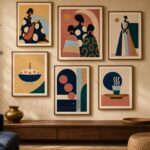
Item 1 — One paid printable art piece: $8–15. One strong piece beats three timid ones. The Abstract Africa Wall Art Printable is our most-loved single; the Black Woman Silhouette set of 3 covers a whole wall for the price of a pizza; the Earth Tone Terracotta + Africa Map set matches this article’s palette exactly. Printing runs $5 at home or about $7 per piece at a print shop.
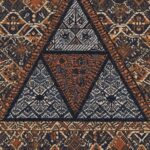
Item 2 — One mudcloth pillow cover: $20–40. One, not five — the throw-pillow aisle is where budgets go to die. A credible mudcloth pillow cover in cream-and-black or ochre instantly puts the signature afro-boho texture at eye level on the sofa or bed. Handy with a sewing machine? Our DIY mudcloth pillow covers tutorial gets the cost under $15, and Creative Fabrica’s mudcloth-pattern bundles ($5–15) supply printable stencil patterns for the hand-painted route.
Item 3 — One rattan or cane side table: $30–60. The woven texture signal, at furniture scale, at accessory price. Rattan side tables in this range are plentiful; check that legs are wood, not powder-coated metal pretending.
Item 4 — One brass-toned floor lamp: $40–80. Lighting is furniture in afro-boho. A matte brass floor lamp — arc or tripod — adds height, warmth and a metallic accent in one purchase. Matte or antique finish only; polished chrome-adjacent brass fights the palette.
Item 5 — One terracotta or hand-thrown vase: $15–30. The crafted-object signal. One terracotta vase with a dried palm frond or pampas stem finishes the side table. Thrift stores beat Amazon here more often than any other category — imperfect glazes are a feature.
Item 6 — One jute or sisal rug, 5×7: $60–100. The largest texture in the room and the foundation everything sits on. Natural jute rugs hide wear, warm every palette above them, and signal the style from the doorway.
Item 7 — Warm-white 2700K bulbs, every fixture: $10–15. The best money-to-mood ratio in interior decorating, full stop. A 4-pack of 2700K LED bulbs turns terracotta richer, brass more golden, and cream bedding from clinical to candlelit. If you do nothing else on this list, do this.
Running total: $183–340; realistic middle: about $260 — inside budget with room for shipping or one upgrade.
The assembly order (this matters more than the shopping)
Build in layers, largest to smallest, and the room styles itself. Rug first — it defines the zone every other piece belongs to. Bulbs and lamp second — judge every following purchase under warm light, not the cool light it will never live in. Art third — hang the anchor at 57–60 inches to center (the full hanging method here) and the wall stops feeling temporary. Textiles fourth — pillow and any throw, which now have a palette to answer to. Objects last — vase, table styling, the small brass thing from the thrift store. Reverse this order — objects first, rug last — and every step feels like clutter accumulating; follow it and each purchase clicks into place.
Two $300 rooms, same list
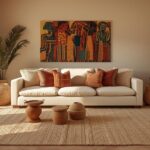
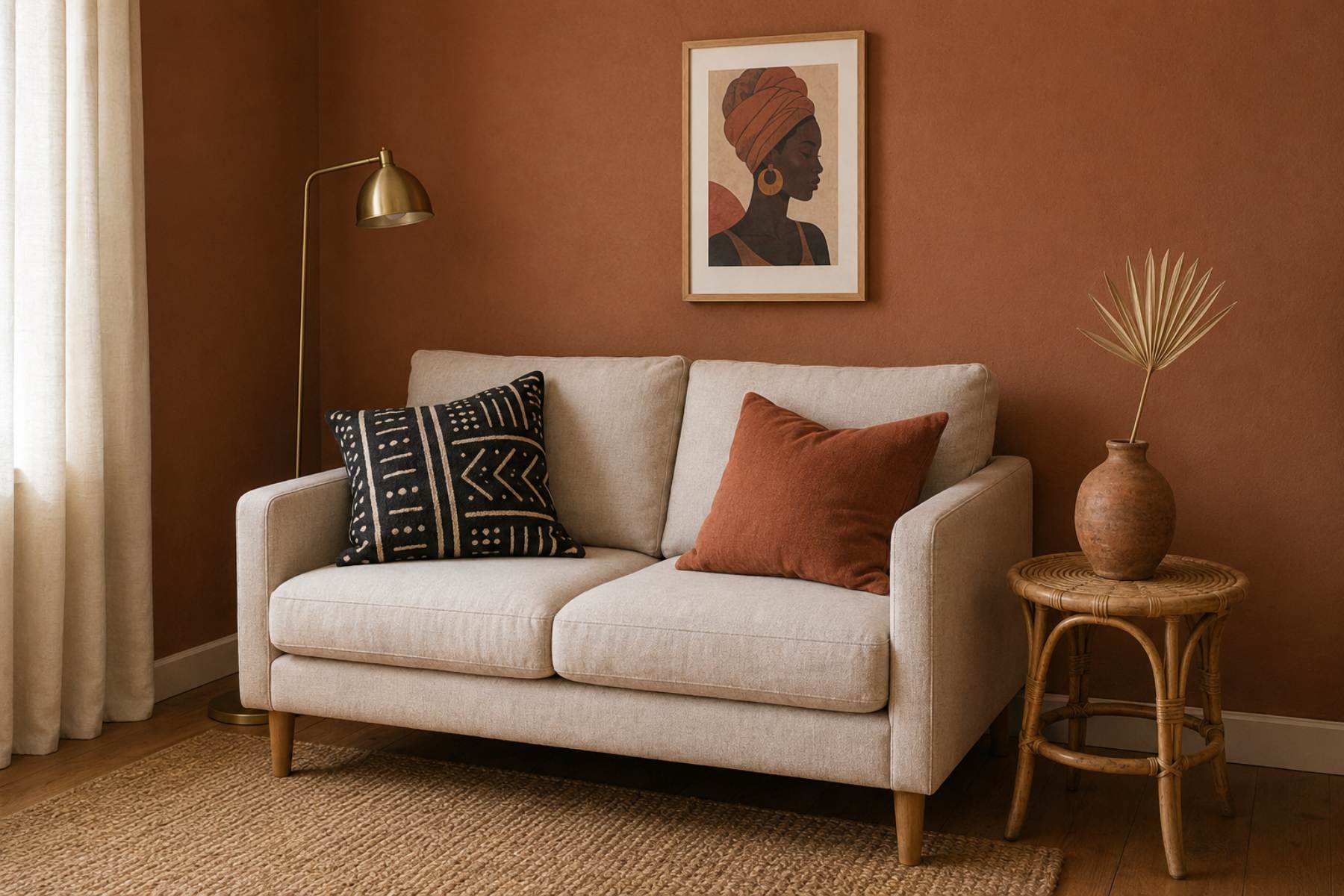
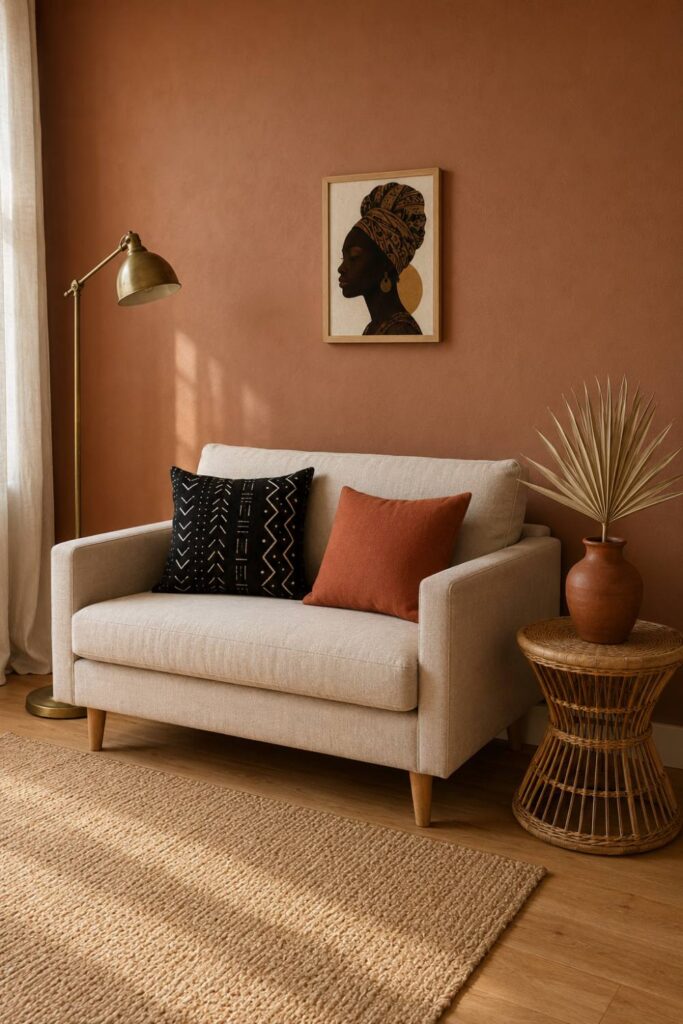
The living-room corner. Rug under the sofa’s front legs, lamp behind the sofa arm, Abstract Africa print (or your framed Sankofa) centered above, mudcloth pillow on the near cushion, side table with the vase where the lamp light lands. This is the version photographed everywhere, and the fuller room treatment is in our afro-boho living room ideas guide.
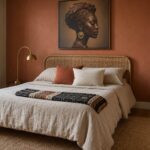
The bedroom. Same list, redistributed: rug two-thirds under the bed, art above the headboard, pillow cover on the front sleeping pillow, lamp in the reading corner, vase on the nightstand. The complete sleep-space formula — headboard, bedding layers, lighting — is its own article: our afro-boho bedroom sanctuary guide.
Where to thrift afro-boho effectively
Best thrift categories: rattan and wicker furniture, brass objects (candle holders, frames, small vessels), hand-thrown ceramics, baskets, and solid-wood side pieces. These are exactly the categories where age improves the object.
Worst thrift categories: upholstered furniture (odors and stains transfer), most lighting (wiring risk — though a lamp shade swap is fair game), and skin-touching textiles.
Where to go: estate sales for quality, Goodwill in older affluent neighborhoods for rattan density, Habitat ReStores for furniture and fixable lighting, Facebook Marketplace for anything too big to ship.
The search-term trick: on Marketplace, search “mid-century,” “boho,” “wicker” and “brass” — almost nobody lists under “afro-boho,” but the overlap with what those searches return is enormous. You are hunting materials, not keywords. Set saved searches with alerts and let the marketplace hunt for you overnight; the best pieces sell within hours of listing, and the alert is how you become the person who got there first.
Where to splurge when the budget grows
Authentic mudcloth before anything else. Real bogolanfini — hand-woven, hand-dyed in Mali — outclasses inspired-by versions visibly and ages into an heirloom. Adds $40–80 per piece; worth every dollar, and our African textiles guide explains how to verify what you’re buying.
Scale up the art. Moving the anchor from 12×16 to 18×24 changes the room’s visual weight more than any furniture purchase. With printables this upgrade costs $10–20 of print-shop fees, which is the quiet superpower of the format.
One real woven furniture piece. A genuine rattan headboard or vintage cane chair ($200–400) becomes the room’s centerpiece for a decade. This is the last upgrade, not the first.
What NOT to buy first
The gallery wall kit (one strong anchor first; galleries are chapter two). The macrame everything (one woven wall piece maximum — the rug and rattan already carry the texture). The matching furniture set (afro-boho is collected, not delivered). The statement paint job (bulbs first — half of what people dislike about their wall color is 4000K lighting). And anything chrome, glossy, or grey, at any price, ever.
A month of afro-boho: the $75-a-week version
If $300 at once is not how your budget works, the list splits into four honest weekends. Week one, $75: the bulbs and the rug — light and foundation, the two changes that make the room feel different that same evening. Week two, $75: the art — download the free Sankofa print, buy one paid printable, print both, frame both (one new frame, one thrifted). The wall is now the room’s argument. Week three, $75: the lamp and the vase — height and craft. Week four, $75: the pillow cover, plus whatever the thrift circuit surrendered along the way.
Four weeks is also, not coincidentally, the right pace for judgment. The room gets to vote between purchases: after the rug and warm light, half the things you planned to buy stop seeming necessary, and the money quietly reallocates itself to a better version of what remains. Rushed rooms look rushed; there is no $300 shortcut around that except time, and time is free.
Keeping it soulful, not staged
One caution as the budget version comes together: afro-boho on a budget can drift into afro-boho cosplay — all the textures, none of the roots. The guard against it costs $20–35: make one object in the room genuinely African-made. A Bolga basket woven in Ghana, a small soapstone dish from Kenya, a strip of true mudcloth from a Malian maker on Etsy — one real thing anchors every inspired-by thing around it, and it usually comes with a story you will retell for years. Our guides to what the textiles mean and what the symbols mean make sure you can answer for the room you built — which, more than any purchase, is what separates soulful from staged.
Three budget mistakes we hear about most
The haul. Someone spends the entire budget in one online session, everything arrives in one week, and the room looks like a showroom of a store that doesn’t exist. The fix is the weekly cadence above.
The five cheap prints. Five $4 generic prints cost more than one $8 piece with cultural weight, and deliver less. Art is the one category where fewer-better is not a platitude but arithmetic.
The cool-white room. Every warm material on this list — terracotta, brass, jute, oak — goes grey and sad under 4000K+ bulbs. People replace furniture when they should replace light. Ten dollars. First purchase. We keep repeating it because it keeps being the answer.
The rental edit
Everything on the list survives a lease. The rug covers the floor you cannot change; the lamp replaces the overhead fixture you are not allowed to rewire (leave the ceiling light off entirely — the room improves); the art hangs on damage-free strips or leans on a $20 picture ledge; the terracotta accent wall becomes a terracotta textile wall — a large hung mudcloth or flat-woven throw doing the color work paint would have done, removable in five minutes at move-out.
Renters also get one advantage owners don’t: permission to treat the whole room as a test. The printable-art workflow means the wall can change with the seasons for print-shop money, and when you eventually move, the entire $300 room packs into two boxes and re-assembles around whatever the next place gives you. We wrote a full room built on exactly this logic — see the Afrohemian rental living room guide — and its quiet thesis applies to every item above: soulful is portable.
Frequently asked questions
Is $300 really enough for a real afro-boho room?
For the visible center of one room — the corner the eye lands on — yes, comfortably. $300 spread across the seven-item list transforms one living room corner or one bedroom. Most beginners fail by buying many small things instead of few right ones; the list exists to prevent exactly that.
Where do I find the cheapest afrocentric wall art?
Printables, without contest. Our Etsy shop’s digital downloads start around $7–8, print for $5–7, and frame from thrift stores — $15–25 per finished framed piece, and the free Sankofa print starts the collection at zero.
Can I mix thrifted pieces with new ones?
That mix is the style. Afro-boho’s whole argument is the collected-over-time room — new rug, thrifted brass, printable art, inherited basket. The only consistency that matters is the palette: warm, earthy, matte.
What colors should I stick to on a budget?
Terracotta, ochre, warm cream, walnut brown, charcoal, brass — the palette from our Afro-Boho color palette guide. On a tight budget the palette is your bodyguard: if a bargain sits outside it, the bargain is a cost.
What’s the biggest budget mistake?
Spending the whole $300 in one afternoon online. Spend $150 on the fixed list (rug, bulbs, art), then let the remaining $150 follow the thrift finds — the room comes out better and cheaper than the all-at-once version. The list is a skeleton, not a script — the thrift circuit decides half your final room, and that is a feature: no one else’s $300 room will look like yours, which is precisely the point of a style built on collection rather than catalog.
Related reading
- Afro-Bohemian Decor 101: How to Style African Heritage With Boho Warmth
- Afro-Boho Living Room Ideas: Earthy, Layered & Soulful Styling
- Afro-Boho Color Palette 2026
- DIY Mudcloth Pillow Covers: A Beginner’s Sewing Tutorial
- A Beginner’s Guide to Afrocentric Decor in 2026
Closing
Budget afro-boho is not the compromise version of the style — it is the honest version. Jute, clay, rattan, warm light and one meaningful print were never expensive materials; the expensive part was always the editing, and this list did that for you. Buy the seven things, build in order, thrift the rest slowly, and let the room be finished enough — soulful rooms are collected, not completed.