Adinkra Symbols for Love: Meanings and Wall Art Guide
By Essence of the Road Art · Published November 2026
This article contains affiliate links. If you buy through them, we may earn a small commission at no extra cost to you. We only feature pieces we would live with ourselves. As an Amazon Associate we earn from qualifying purchases.
A heart is the easiest love symbol to buy and the hardest one to make personal. When people search for an African symbol for love, they are usually looking for something with more weight: a sign that says loyalty, patience or “we chose each other”, and that can hang in a bedroom or be given at an engagement without looking like a greeting card.
Adinkra symbols do that well. Each one carries a proverb or an idea, so the choice of symbol becomes the message. This guide covers the main Adinkra symbols for love, what each one means and where the meanings come from, and how to choose, size, frame and hang a love-symbol print so it reads as art rather than decoration.
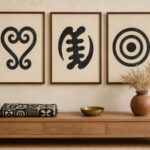
Quick answer: The best-known Adinkra symbols for love are Akoma (the heart: love, patience and endurance), Akoma Ntoaso (joined hearts: agreement and togetherness), Osram ne Nsoromma (the moon and the star: faithfulness and harmony between partners), Odo Nnyew Fie Kwan (“love does not lose its way home”) and Eban (the fence: love, safety and a protected home). For a couple, choose Osram ne Nsoromma or Akoma Ntoaso; for a new home, Eban; for self-love or a long friendship, Akoma. Our Adinkra Symbol Wall Art Set (5) includes Akoma alongside four other symbols.
Where Adinkra symbols come from
Adinkra are visual symbols created by the Akan peoples of present-day Ghana and Côte d’Ivoire, most closely associated with the Asante. They were traditionally stamped onto cloth with carved calabash stamps, and each design is tied to a proverb, a historical event or a value. The Culturally Situated Design Tools project at Rensselaer Polytechnic Institute documents the symbols and their geometry, and the CSDT Adinkra symbol list is a useful reference for names and meanings.
Two things matter for anyone choosing Adinkra art. First, the meaning lives in the name and the proverb, not in the shape alone, so a print should carry the name. Second, many Adinkra symbols have more than one recorded meaning. We give the meaning most sources agree on and link to the source, so you can read further before you gift a piece.
Six Adinkra symbols for love and what they mean
Not every Adinkra symbol about relationships is romantic. Some speak about loyalty, some about home, some about making peace. That range is useful: it lets you match the symbol to the person and the occasion instead of defaulting to a heart.
| Symbol | Literal name | Meaning | Best for |
|---|---|---|---|
| Akoma | The heart | Love, goodwill, patience, faithfulness, endurance | Self-love, friendship, a first gift |
| Akoma Ntoaso | Joined hearts | Agreement, togetherness, unity | Engagement, wedding, partnership |
| Osram ne Nsoromma | The moon and the star | Loyalty, love, harmony, faithfulness | Couples, anniversaries |
| Odo Nnyew Fie Kwan | “Love does not lose its way home” | Those led by love end up in the right place | Long-distance love, a return home |
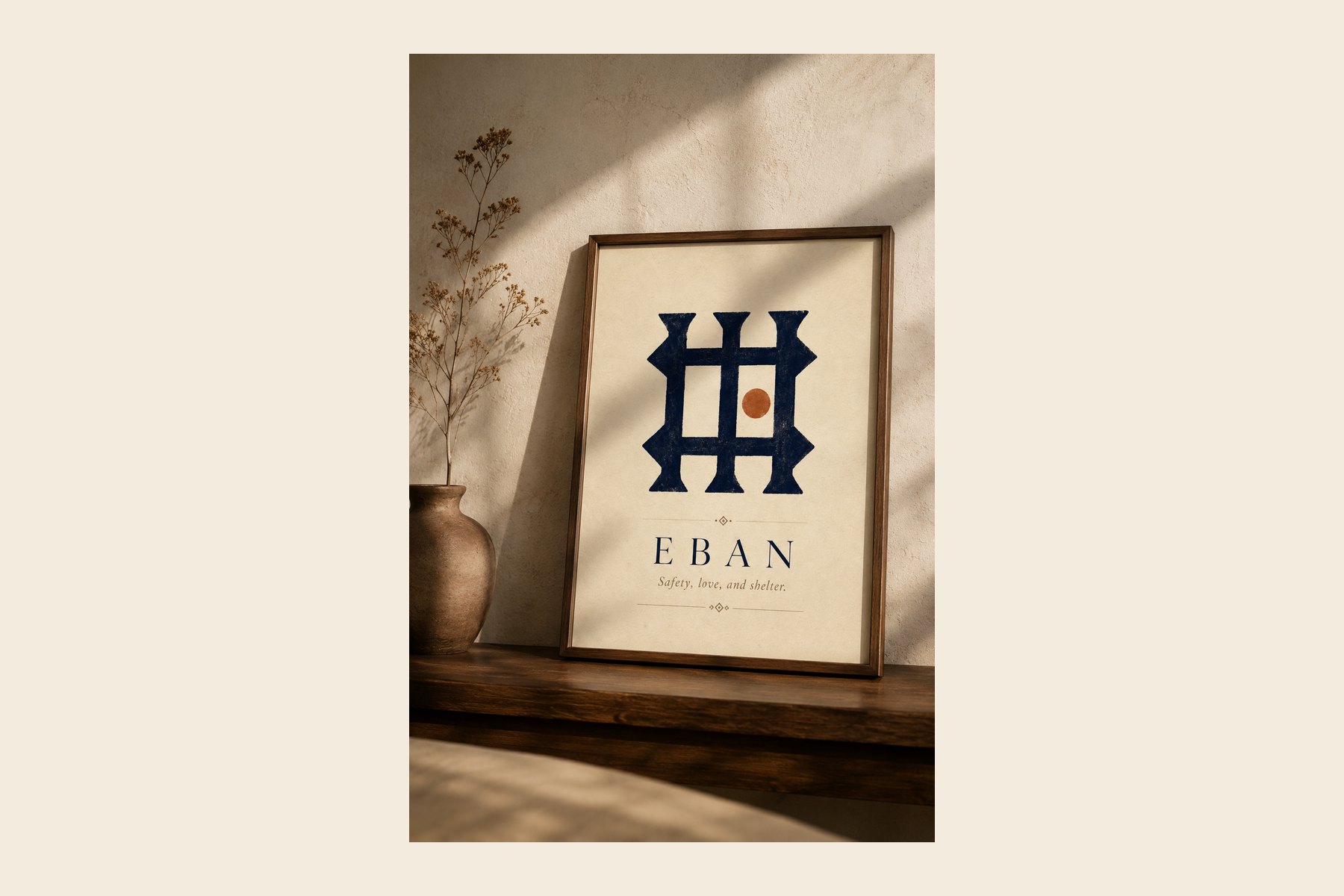
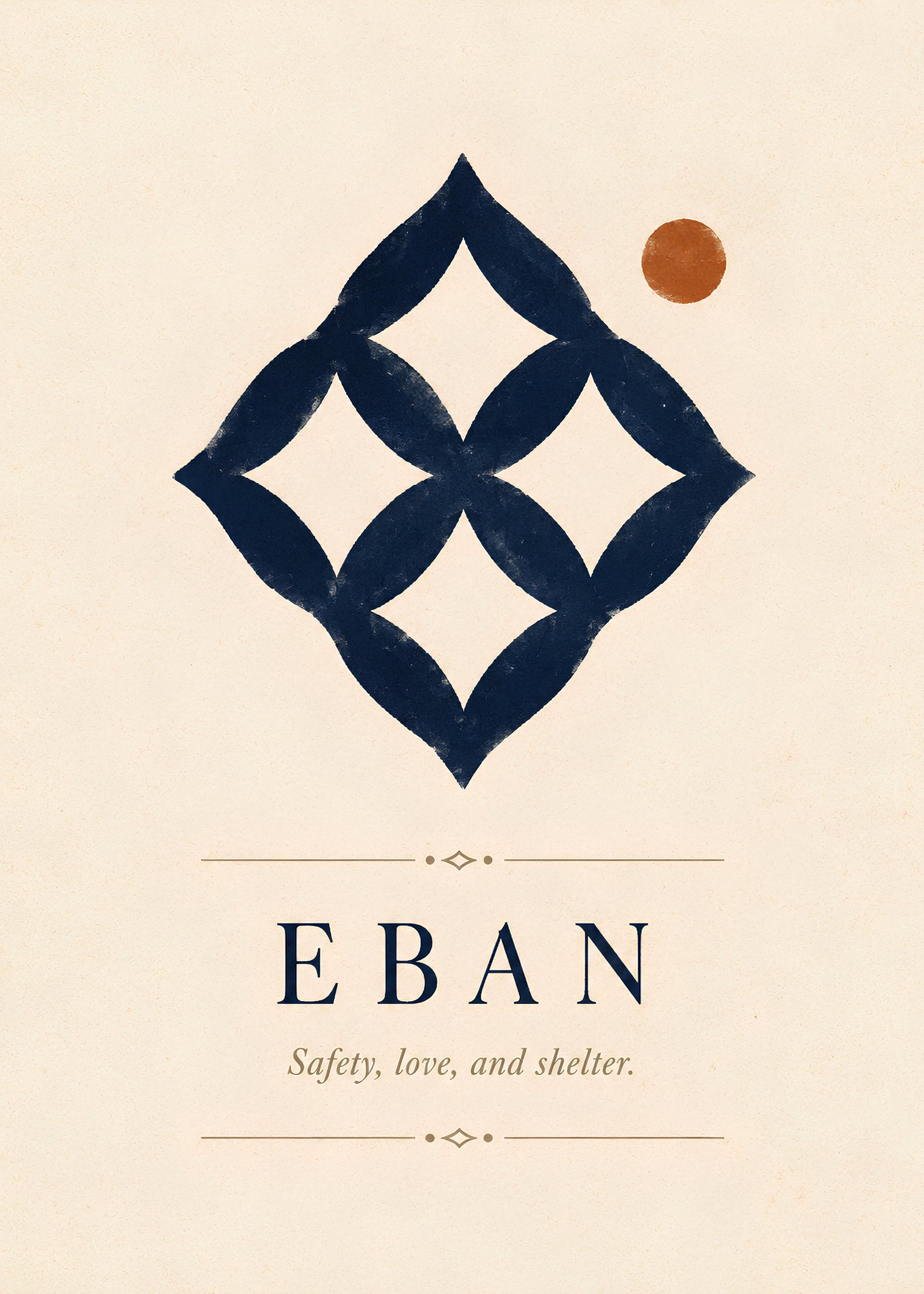
| Eban | The fence | Love, safety and security of the home | Housewarming, a couple’s first home |
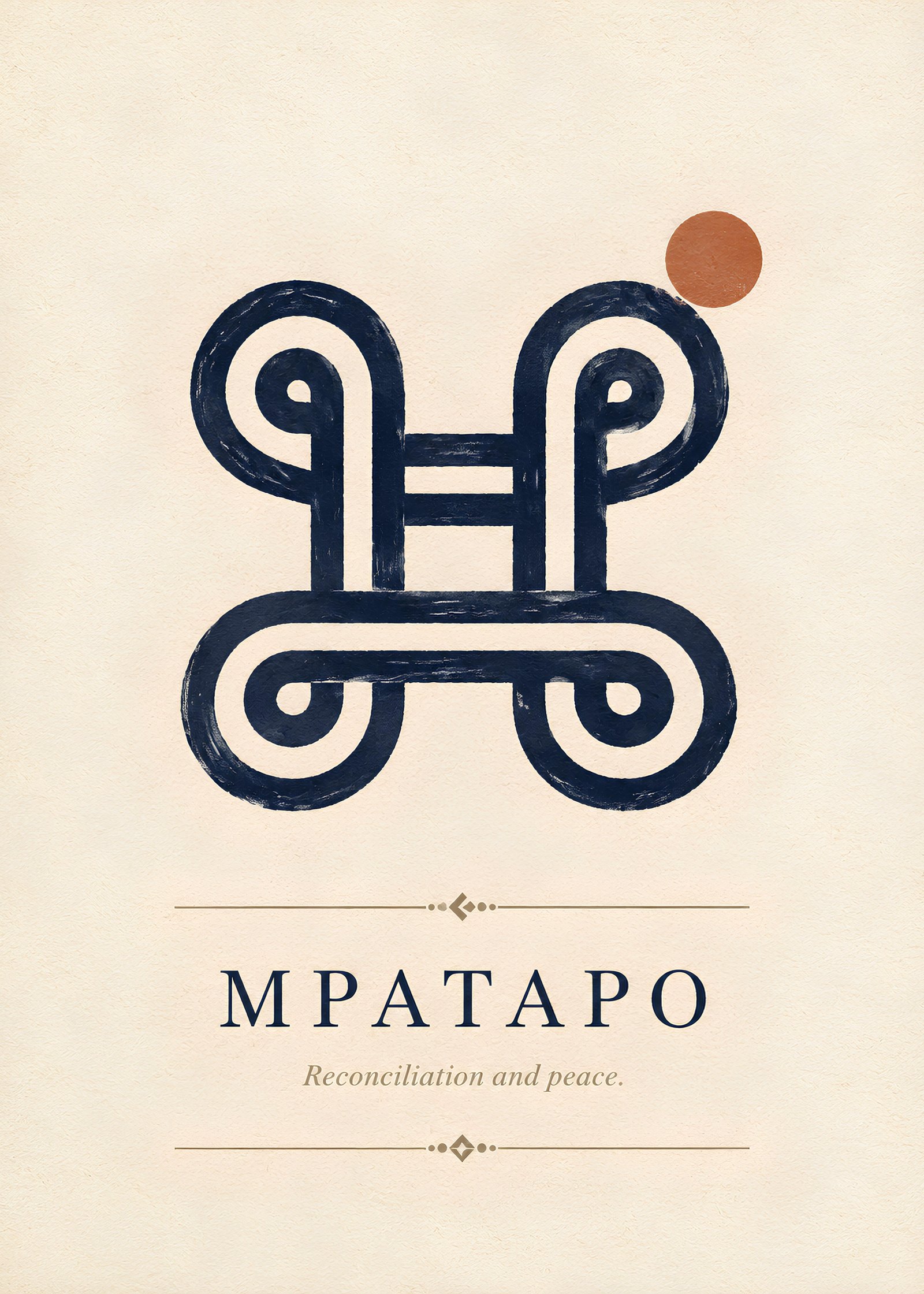
| Mpatapo | The knot of pacification | Forgiveness, reconciliation, peace after conflict | A recommitment, a family making peace |
Meanings follow Adinkra Symbols & Meanings (adinkrasymbols.org) and the CSDT list above. The Akoma and Odo Nnyew Fie Kwan entries are on the Akoma page and the Odo Nnyew Fie Kwan page.
Akoma: the heart
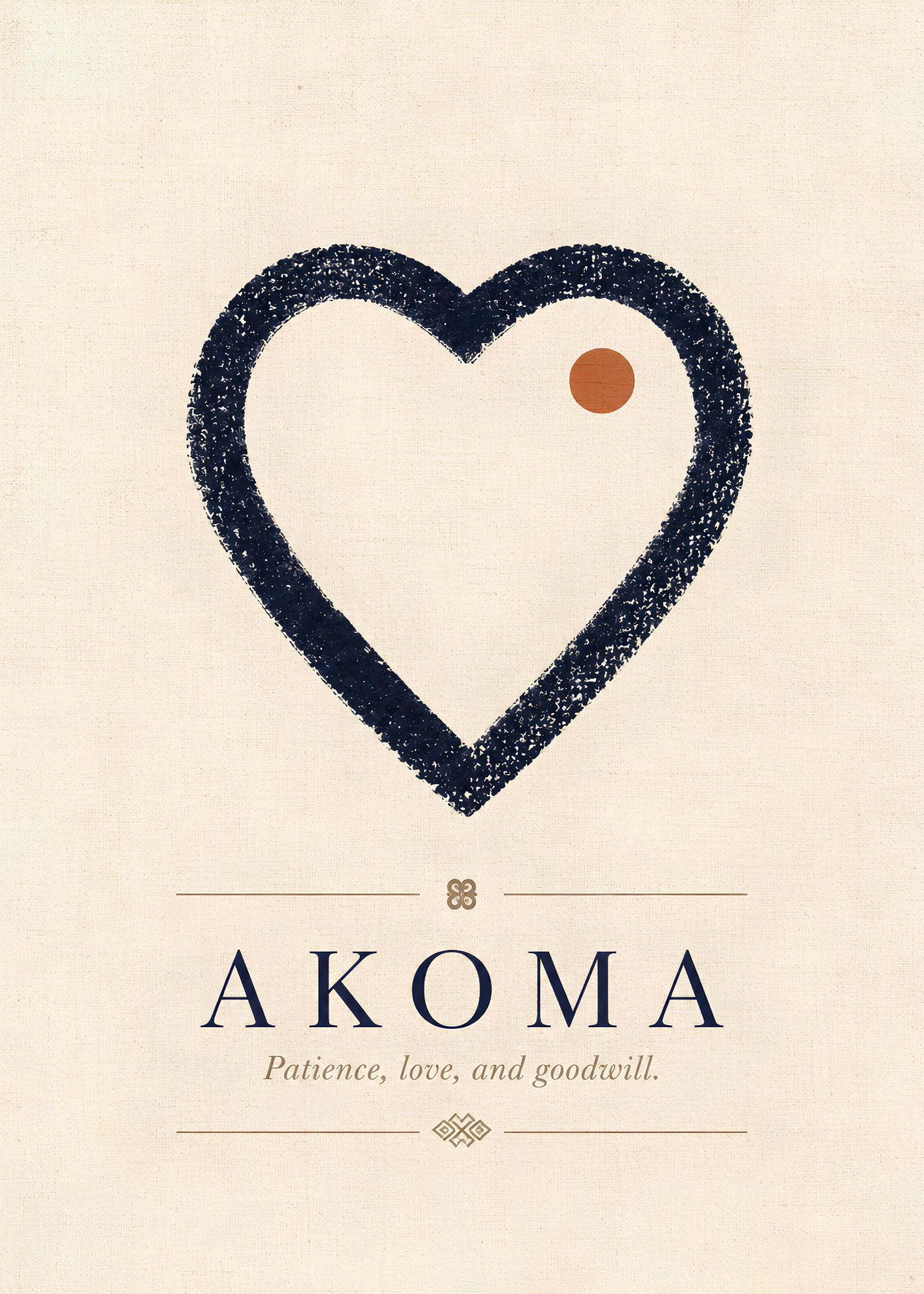
Akoma is the closest to a familiar heart, but its recorded meaning leans toward patience and endurance as much as romance. That makes it the safest choice for a friend, a sister or yourself. It is also the most legible symbol on a wall, which is why it works at small sizes.
Osram ne Nsoromma: the moon and the star
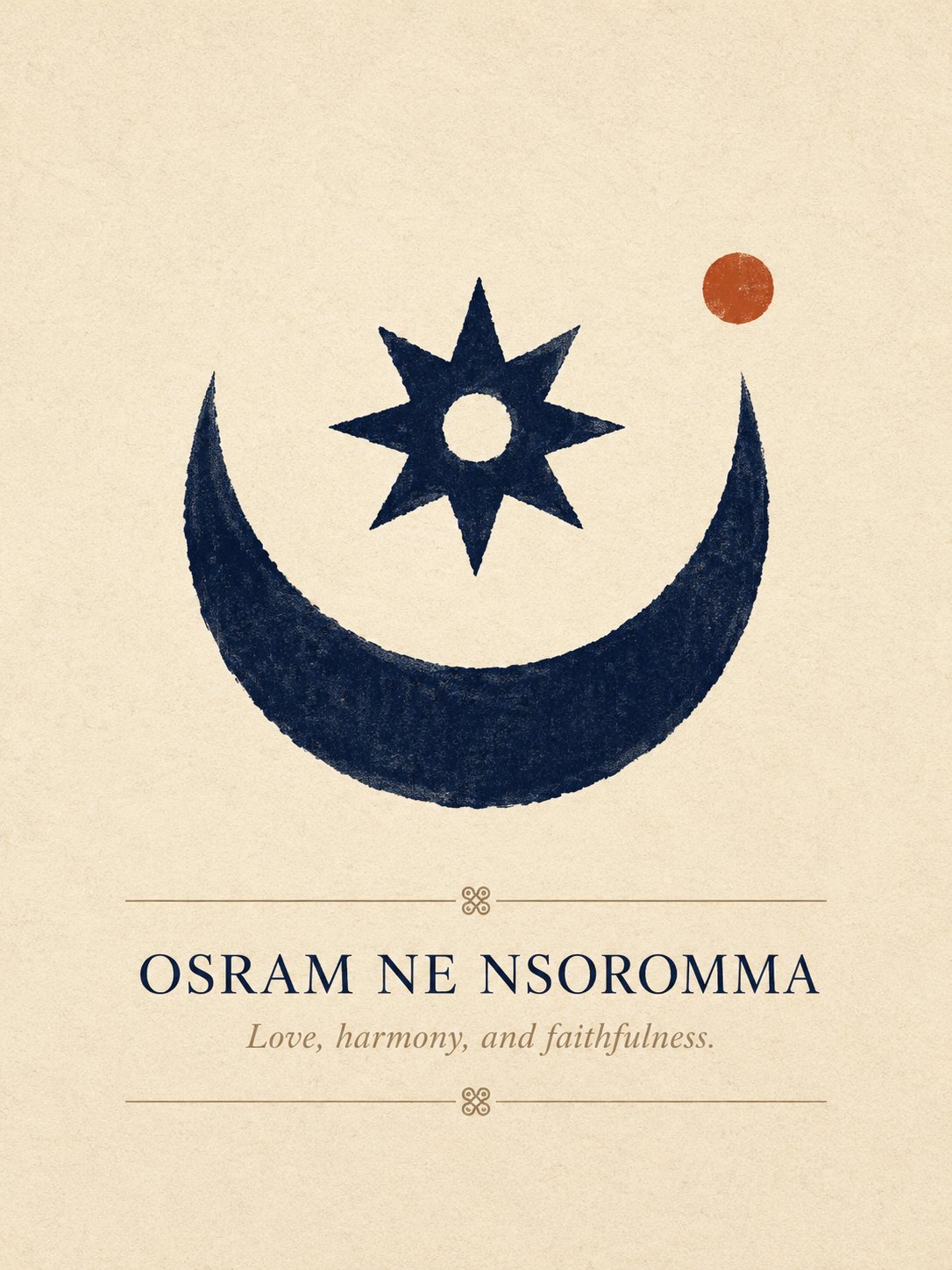
The moon and star are drawn together, the star sitting in the curve of the moon. It is the most clearly “two people” image in the Adinkra vocabulary, and its recorded meanings are loyalty, love, harmony and faithfulness. For an engagement or anniversary print, this is the one we would choose first.
Akoma Ntoaso and Odo Nnyew Fie Kwan
Akoma Ntoaso, the joined hearts, is about agreement and togetherness. It reads well in a wedding context or above a shared desk. Odo Nnyew Fie Kwan carries a proverb rather than a shape you might recognize, so it needs its name and translation printed beneath it, or a small card with the gift.
Eban: the fence
Eban shows an enclosed compound. Its meaning is love and safety within the home, the idea that a household is protected because it is cared for. That is why we suggest it for housewarming gifts and entryways rather than bedrooms.
Mpatapo: the knot of pacification
Mpatapo represents the knot that binds parties to a peaceful settlement after a dispute. It is not a romantic symbol, but it is one of the most meaningful gifts for a couple renewing vows or a family coming back together.
How to choose the right love symbol for the occasion
Start with the relationship, then the room. A symbol given at an engagement will probably hang in a shared bedroom; a housewarming piece will go in an entry or living room. The checklist below is how we match them.
- Engagement or wedding: Osram ne Nsoromma or Akoma Ntoaso. If you are giving a pair, the two together tell the whole story: faithfulness and agreement.
- Anniversary: Osram ne Nsoromma, or Odo Nnyew Fie Kwan for a couple who has lived apart.
- New home: Eban, alone or paired with Akoma.
- Valentine’s Day for yourself or a friend: Akoma.
- Recommitment or family reconciliation: Mpatapo, ideally with a short note that explains the knot.
Whatever you choose, include the name and meaning. A printed meaning card, or a print with the name and translation set beneath the symbol, turns an unfamiliar shape into a message the recipient can repeat to guests.
What size Adinkra love print to choose
Adinkra symbols are bold and graphic, so they hold up at small sizes, but most walls still look unfinished because the art is too small for the furniture beneath it. Aim for art, or a group of art, that spans about two-thirds to three-quarters of the furniture width.
| Wall or furniture | Single print | Pair (2 inches apart) |
|---|---|---|
| Queen bed (60 in wide) | 24×36 in (2:3) | Two 18×24 in (3:4) |
| King bed (76 in wide) | 30×40 in (3:4) | Two 24×36 in (2:3) |
| Console or entry table (36–48 in) | 18×24 in (3:4) or 16×20 in (4:5) | Two 11×14 in |
| Nightstand or shelf | 8×10 in (4:5) or 5×7 in | — |
| Desk wall | 11×14 in | Two 8×10 in |
Check the ratio before you order a frame. A 2:3 file prints cleanly at 4×6, 8×12, 12×18, 16×24, 20×30 and 24×36 inches; a 3:4 file at 12×16 and 18×24; a 4:5 file at 8×10 and 16×20. International A sizes (A4, A3, A2) share one ratio of about 1:1.41. For a sharp print at 300 dpi you need 3,000×4,200 pixels for a 10×14 area and 5,400×7,200 for 18×24; at larger sizes, 200 dpi is usually acceptable because the piece is viewed from farther away.
Where to hang love-symbol art
The symbol suggests the room. Osram ne Nsoromma and Akoma Ntoaso belong above a shared bed, where they are seen first thing in the morning. Eban works in an entry or hallway, the point where a home begins. Akoma suits a reading corner, a desk or a bathroom shelf.
- Hang the center of the art at 57–60 inches from the floor when it is on an open wall.
- Above a bed or console, leave 8–10 inches between the top of the furniture (or headboard) and the bottom of the frame.
- For a pair, keep 2–3 inches between frames and treat the pair as one piece when you center it.
- A single small symbol print can lean on a shelf or nightstand instead of being hung; it reads as personal rather than decorative.
Frame, mat, paper and color
Most Adinkra prints, including ours, are drawn in a single dark ink on a light ground. Our love-symbol prints use a deep navy (#192032) on warm cream (#F6E8D8) with a small terracotta accent (#B8653A). That three-color structure is easy to build a room around with the 60-30-10 rule: cream or warm white walls and large textiles as the 60, navy in the bedding, a rug or a chair as the 30, terracotta in a cushion, a vase or the frame mat as the 10.
- Frame: natural oak or walnut keeps the piece warm; a thin black frame picks up the navy and looks more graphic. Avoid heavy ornate frames, which compete with the symbol.
- Mat: a 2–3 inch off-white mat on an 8×10 or 11×14 gives a small symbol presence on the wall. On 18×24 and larger, a mat is optional.
- Paper: matte, archival, at least 230 g/m². Gloss reflects light across the dark ink and flattens the hand-stamped texture.
- Light: warm bulbs at 2700–3000 K keep the cream ground from turning gray. In a bedroom, a small picture light or a bedside lamp angled toward the wall is enough.
The art is the part to choose slowly; the supporting pieces can be simple. For the frame, look for natural oak frames with a mat or thin black frames in the exact size of your print. If you print at home, matte archival paper keeps the navy deep and the cream warm, and a plug-in picture light with a warm white bulb is enough to light a symbol print above a bed or console.
How to give and display Adinkra art with respect
Adinkra are a living visual language, widely used in Ghana today on cloth, architecture and printed goods, and they are commonly given and displayed. Respect comes down to accuracy.
- Name the source: Akan, Ghana and Côte d’Ivoire, not a vague “African tribe”.
- Use the symbol’s name and a sourced meaning; avoid invented meanings written for marketing.
- Do not alter a symbol so far that it loses its recognizable form, and do not combine two symbols into a new one with a made-up meaning.
- Where you can, buy from makers who explain the meanings, and keep a card with the piece so the story travels with it.
Frequently asked questions
What is the Adinkra symbol for love?
Akoma, the heart, is the Adinkra symbol most directly associated with love, along with patience, goodwill and endurance. For love between partners, Osram ne Nsoromma (the moon and the star) and Akoma Ntoaso (joined hearts) are often preferred because they describe two people together.
Which Adinkra symbol means eternal or faithful love?
Osram ne Nsoromma is the symbol most associated with faithfulness and loyalty between partners. Odo Nnyew Fie Kwan, “love does not lose its way home”, expresses a love that endures distance.
Is it appropriate to give Adinkra art as a wedding or engagement gift?
Yes. Adinkra symbols are widely used on cloth and objects for celebrations and everyday life. Choose a symbol whose meaning fits the occasion, and include its name and meaning with the gift.
What size Adinkra print works above a bed?
Above a queen bed, a single 24×36 inch print or a pair of 18×24 inch prints spaced 2–3 inches apart fills roughly two-thirds of the bed width. Leave 8–10 inches between the headboard and the bottom of the frame.
Can I pair an Adinkra symbol with other art?
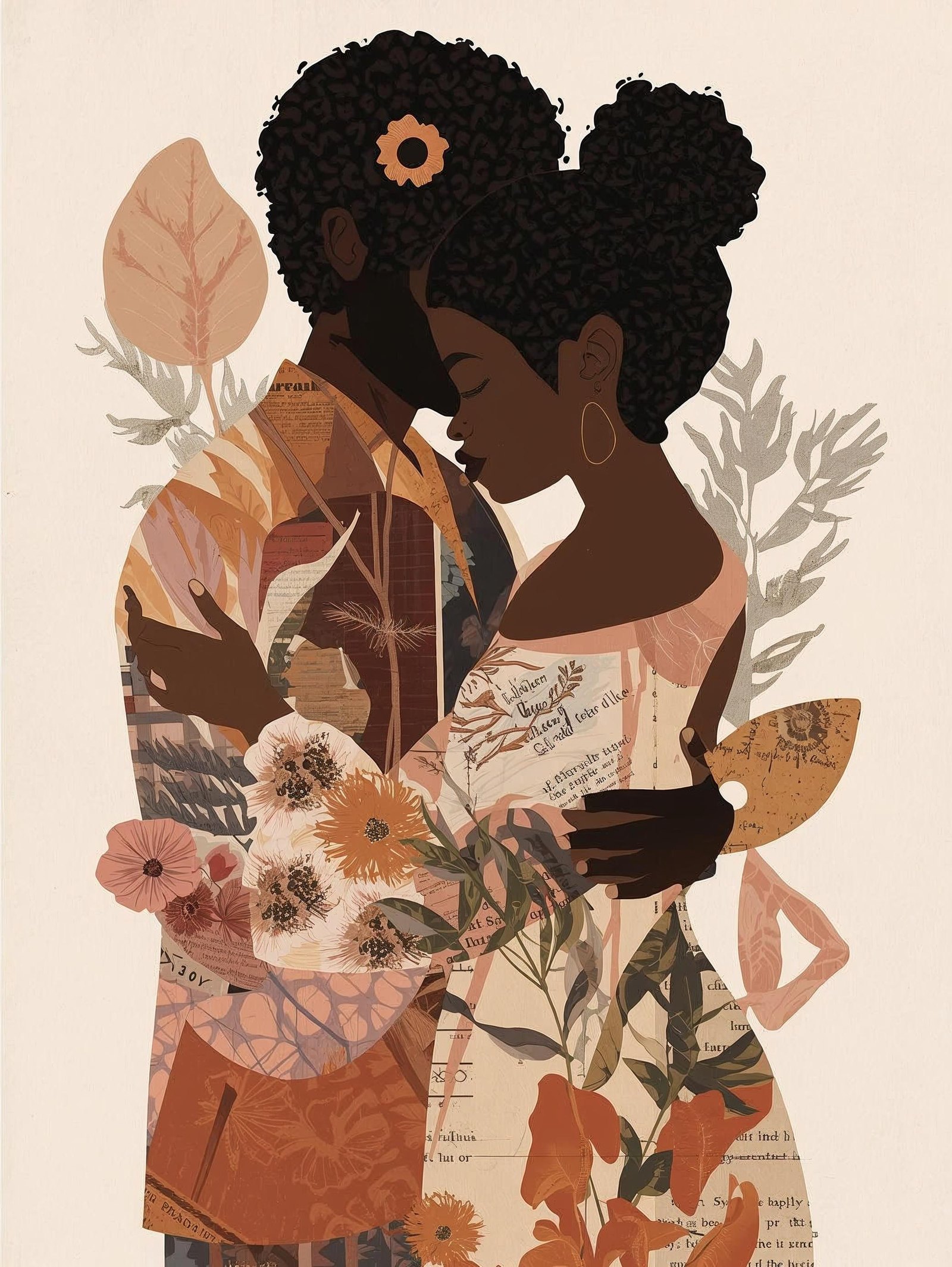
Yes. A single symbol print works well next to a figurative portrait or a textile-inspired piece in the same palette. Keep one dominant color, such as navy or terracotta, across the pieces so the wall reads as one story.
Related reading
- Adinkra Symbols and Their Meanings: The Ultimate Guide
- Adinkra 5-Piece Gallery Wall: How to Build One at Home
- Sankofa Symbol Meaning: The Akan Proverb Behind the Bird
- 12 Ghanaian Symbols and Their Meanings
- Afrocentric Gifts for Women Who Love Art
Closing
A love symbol says more when it is specific. Choose the Adinkra symbol whose meaning matches the relationship, give it a size that holds its wall, and let the name and proverb travel with it. If you want to start with a set, the Adinkra Symbol Wall Art Set (5) includes Akoma with four other symbols in the same navy and cream palette.