Black Thanksgiving Decor: An Ancestral Harvest Table and Wall
By Essence of the Road Art · Published July 2026
This article contains affiliate links. If you buy through them, we may earn a small commission at no extra cost to you. As an Amazon Associate I earn from qualifying purchases. We only feature pieces we would live with ourselves.
Thanksgiving is complicated, and pretending otherwise makes for bad decorating.
For a lot of Black families the fourth Thursday in November is not really about the founding story at all. It is about the drive, the kitchen at 6am, the aunt who arrives with a dish nobody asked for, the plates that only come out once a year, and the specific noise a house makes when everybody who matters is inside it. The meal is real. The mythology around it is somebody else’s.
Which leaves an awkward gap when you go looking for black thanksgiving decor, because almost everything available is built around the mythology — pilgrims, cornucopias, harvest-themed Americana. None of it is yours, and putting it up feels like decorating for a party you were not invited to.
The alternative is not to skip the season. It is to decorate for the part that is actually true: harvest, gathering, and gratitude that runs backward through the people who got you here.
Quick answer: The best black thanksgiving decor skips pilgrims and cornucopias entirely and builds on three things instead: a harvest palette of rust, clay, ochre and cream; imagery of hands, grain and the shared table rather than seasonal characters; and gratitude wording drawn from your own family rather than generic autumn slogans. Because it is built on colour and texture instead of props, most of it stays up through December. Our Afrocentric Wall Art Set (3), Neutral Terracotta Botanical Prints works as the harvest wall and simply stays where it is after the plates are cleared.
Table of Contents
Start with harvest, not with Thanksgiving
Harvest is the older, larger, more universal idea, and it is the one worth decorating around.
Every agricultural culture on earth has a harvest festival. West African harvest traditions — the yam festivals of Ghana and Nigeria among them — are among the oldest continuous ones anywhere, and they carry the same emotional structure: the year’s work is in, the community eats together, and the people who came before are named.
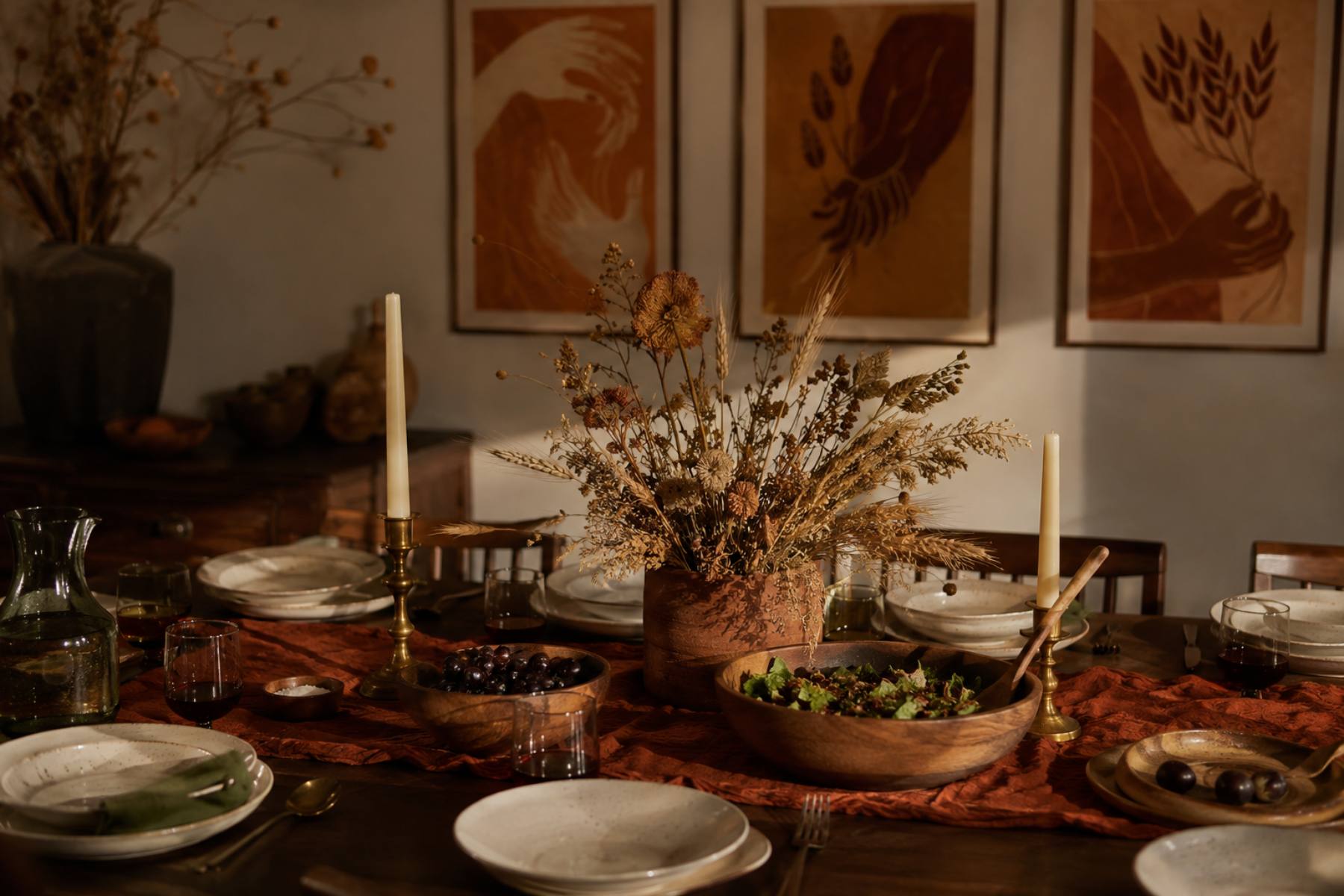
Decorating for harvest rather than for Thanksgiving gives you a wider, older, more honest vocabulary. Dried grain instead of plastic corn. Clay vessels instead of cornucopias. Warm cloth instead of themed napkins. And it has a practical benefit: harvest imagery has no expiry date on it. Nobody looks at dried wheat in a clay pot on December 3rd and thinks you forgot to take something down.
The palette: rust, clay, ochre, cream
Four colours, and the whole scheme falls out of them.
Rust for the table — linen runner, napkins, or the tablecloth itself. Deep enough to hide a spill, warm enough to make ceramic look good.
Clay and terracotta for objects — vessels, serving bowls, candle holders. This is the colour that does the most work, because it is genuinely the colour of cooking pots across most of the world.
Ochre as the light note — dried grasses, brass, candlelight, the yellow edge of the wall art.
Cream and bone for everything you eat off. Mismatched cream ceramic looks better than a matched set here; it suggests plates that came from different places and different decades, which is usually true.
Deliberately absent: orange, black-and-orange leftovers from October, and gold. Gold pulls the table toward Christmas a month early. Brass, which is duller and warmer, does not.
If you want the exact hex codes for this family, our Afro-boho colour palette guide has them, and they translate directly to fabric and paint.
The wall: three pieces about gathering
The wall behind or beside the table is where the cultural specificity lives, and it is the part that stays up.
Three pieces is enough. Any more and it competes with the table on the day.
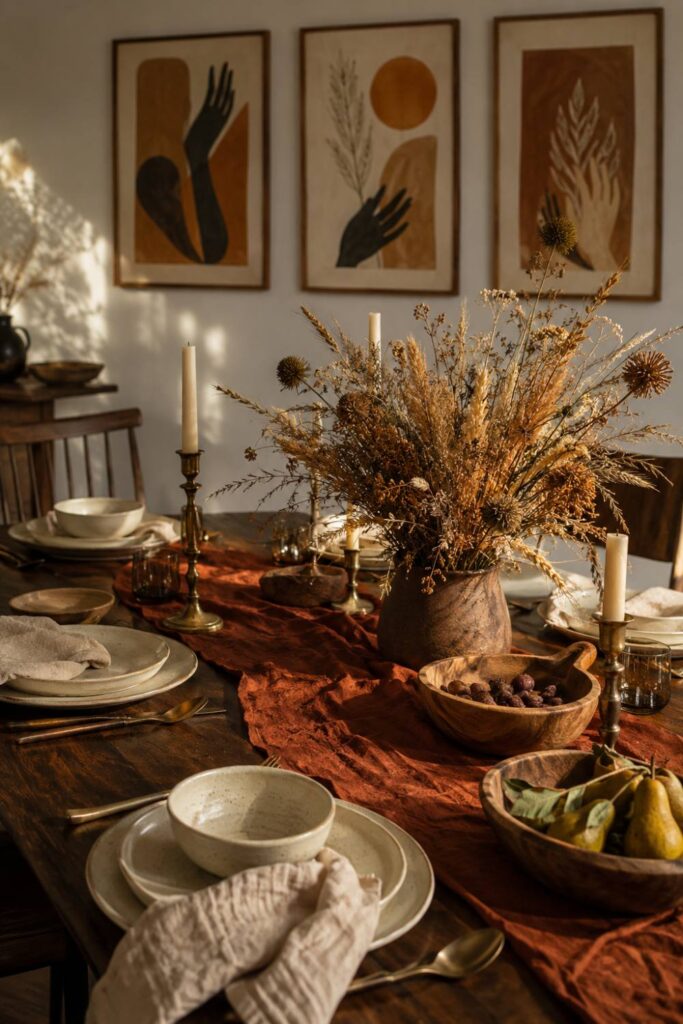
One piece about hands. Hands passing a dish, hands over a bowl, hands clasped. Hands are the least sentimental way to show a family without showing faces, and they do not date.
One piece about grain or growth. Dried wheat, seed heads, a plant form. This is the harvest anchor.
One piece with words — carefully. If you want text, use language that belongs to your family rather than a seasonal slogan. “We gather.” A grandmother’s phrase. A single Adinkra symbol with a meaning that fits, if that vocabulary is meaningful to you — we cover the symbol meanings in detail in our Adinkra guide so you can choose one that actually says what you mean.
The rule with the text piece is that it has to survive January. “Give thanks” survives January. “Happy Thanksgiving” does not.
Our Adinkra Symbol Wall Art Set (5) gives you five symbols to choose from if you want to hang one for the season and rotate it later. For the warmer, more botanical read, the Neutral Terracotta Botanical Set (3) is the simpler choice.
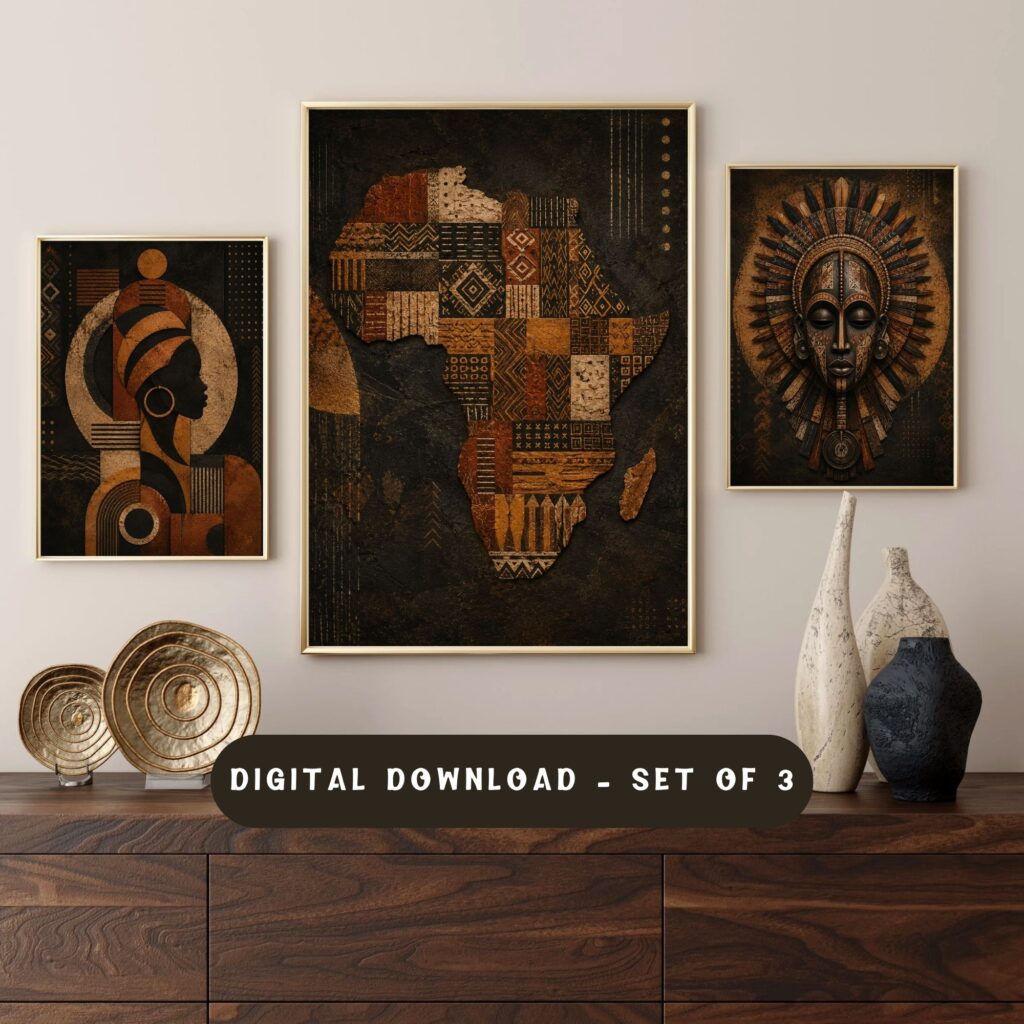
Black Woman, Tribal Mask, Africa Map Set (3), Afrocentric Gallery Wall, Cultural Art Prints
The centrepiece: dry, low, and mostly free
The single most useful rule for a Thanksgiving table: nothing on the table should be taller than a seated person’s chin. People need to see each other. A tall arrangement means everyone spends the meal talking around a plant.
So: low and long, rather than tall and central.
Dried, not fresh. Wheat, barley, dried grasses, seed heads, bare branches, dried protea. All of it lasts for months, none of it wilts across a four-hour meal, and most of it can be gathered on a walk. Fresh flowers in November are expensive and look out of season anyway.
Clay or wooden vessels, several, in a loose line down the centre rather than one big arrangement in the middle. Three or five small vessels read as abundance; one large one reads as a hotel.
Candles low and unscented. Nobody wants cinnamon competing with dinner. Cream or bone tapers in brass or clay holders, lit before people sit down.
A set of simple brass taper candle holders is the one buy here that gets used every year, at every gathering, for decades.
Setting the table so it survives the actual meal
Practical, because this table is going to get used hard.
Runner, not tablecloth. A rust linen runner protects the middle where the serving dishes go and leaves the wood visible. It also washes in one load rather than requiring a specialist.
Mismatched plates are better than matched. They are also more honest — most families are eating off two or three different sets by the time everyone is seated. Lean into it, keep them all in the cream-to-bone range, and it reads as intentional.
No place cards unless there is a real seating problem. They slow everything down and everybody knows where they sit.
Clear the centre before food arrives. Whatever you style, it has to be liftable in one movement when the dishes come out. Design for that from the start rather than scrambling.
The gratitude part, without the cringe
If your family does a gratitude round, the decor can carry some of it instead of putting every person on the spot.
A few options that work better than going around the table:
A written round. Small cards and a pen at each place, filled in during the meal, read out at the end or not at all. Introverts get to participate.
A name for the people who are not there. One empty chair, or one candle lit for people who have died, named out loud once. It takes thirty seconds and it is usually the part people remember.
A recipe card. Ask each person to write down one dish they associate with a family member. Over a few years this becomes an actual document.
None of this is decoration exactly, but it is what the decoration is for.
What stays up after November
This is the argument for building the whole thing from colour and texture rather than props.
Stays up: the wall art, the clay vessels, the dried arrangements, the brass, the rust linen. All of it moves straight into December, and most of it is simply your home now.
Comes down: nothing, really. Which is the point.
If you decorate with pumpkins and pilgrims, you have a box to fill on November 30th. If you decorate with dried wheat, clay and warm cloth, you have a house.
Frequently asked questions
How do I decorate for Thanksgiving without the pilgrim and cornucopia imagery?
Decorate for harvest instead of for the holiday. Use dried grain, seed heads and grasses in clay or wooden vessels; a rust or clay linen runner; cream ceramic; brass and candlelight. For the walls, choose imagery about hands, gathering and growth rather than seasonal characters. This gives you a table that is unmistakably autumnal and about abundance, without referencing a founding story that many families do not celebrate.
What colours work for Black Thanksgiving decor?
Rust, clay, terracotta, ochre and cream, with brass rather than gold as the metal. Avoid orange, which reads as leftover Halloween, and avoid gold, which pulls the room toward Christmas too early. This palette is the same warm-earth family that runs through Afro-bohemian interiors generally, which is why it looks at home in the house rather than like something applied for one day.
Can I use Adinkra symbols in holiday decorating?
Yes, if you choose the symbol for its meaning rather than its shape. Symbols carrying meanings around family, unity, remembrance and provision fit a gathering table naturally. What to avoid is treating them as decorative pattern with no regard for meaning — that flattens them into wallpaper. Pick one, know what it says, and be able to explain it if someone at the table asks.
How far in advance should I put up autumn and Thanksgiving decor?
Late September for the general autumn layer — colour, texture, dried arrangements. The table-specific pieces go out the day before. Because harvest decorating is built on colour rather than props, there is no awkward moment where it becomes “too early” or “too late”; it simply becomes a warm house in October and stays that way through the new year.
What if my family gathering is small, or I am hosting alone?
Everything above scales down without changing. A runner, three small vessels, two candles and a wall behind them works at a table for two as well as a table for twelve. Small gatherings actually benefit more from the wall art, because there is less on the table to look at. If it is just you, this is the year to hang the wall properly — it is there for every meal afterwards, not only this one.
Related reading
- Afro-Bohemian Decor 101: the foundational formula
- The Afro-Boho Colour Palette for 2026, with hex codes
- Adinkra Symbols from Ghana: meanings and how to use them
- Dining Room Decoration Ideas: an Afrocentric gallery wall above the sideboard
- Fall Bedroom Decor Ideas: an Afro-boho gallery wall above the bed
Closing
The best version of this holiday, decoratively speaking, is the one that would still make sense if you removed the date from it. A warm table, dried grain, clay, candlelight, and a wall that says something about the people who eat there — that works in November and it works in March.
Hang the wall first, because it is the part that lasts. The Afrocentric Wall Art Set (3), Neutral Terracotta Botanical Prints is where we would start, and it will still be there long after the plates are back in the cupboard.
Shop the Essence of the Road Art collection
- Essence of the Road Art on Etsy — full collection
- Afrocentric Wall Art Set (3), Neutral Terracotta Botanical Prints
- Adinkra Symbol Wall Art Set (5), Afrocentric Printable Art, African Symbols
- Afrocentric Abstract Wall Art Printable, Symbolism Poster, Mother and Child
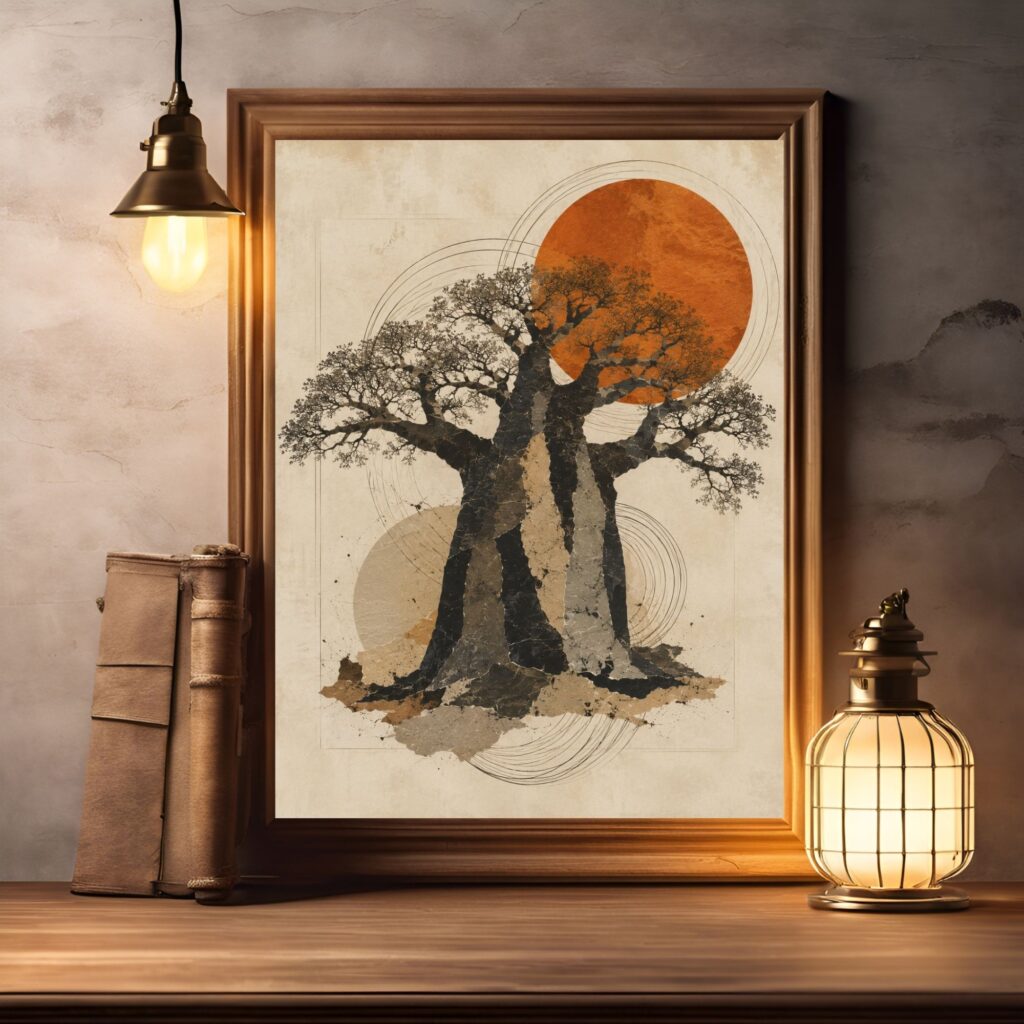
- Baobab Tree of Life Print, African Wall Art, Earth Tone Boho Decor