What Is Afrofuturist Art? (And How to Use It at Home)
By Essence of the Road Art · Published May 2026
This article contains affiliate links. If you buy through our links, we may earn a small commission at no extra cost to you. We only recommend pieces we would style in our own homes.
Why we wrote this
Afrofuturist art is one of the most visually alive movements in contemporary design — and one of the most misunderstood.
It went from a quiet academic term in the 1990s to a Smithsonian exhibition to a Pinterest aesthetic full of neon goddesses and gold filters, and somewhere along that road, a lot of the actual meaning got flattened. We wanted to write the article we wished we had found: one that explains what Afrofuturist art genuinely is, where it comes from, how to recognize the difference between the real thing and a stock-image version of it, and — practically — how to live with it.
This is not a manifesto. It is a calm guide for anyone who loves the aesthetic, wants to bring some of it home, and would like to understand what they are looking at first.
Afrofuturist art explained: what it is, where it comes from, and how to bring it home. A calm guide with 12 subtrends, buying tips, and styling ideas.
📌 Quick Answer
Afrofuturist art is a visual language that imagines Black futures by combining African and African-diasporic culture with technology, science fiction, myth, and liberation. The word was named by critic Mark Dery in the early 1990s, but the thinking is older — it runs through Sun Ra’s cosmic jazz from the 1950s, Octavia Butler’s speculative novels, and a long line of Black artists, musicians, and writers who used the future as a place to imagine Black freedom. Afrofuturism is not one style. It is a worldview, and it has at least a dozen distinct visual expressions, from cosmic queens to solarpunk African cities to ancestral-technology abstracts.
Table of Contents
What Afrofuturist Art Is (A Working Definition)
The cleanest working definition we use on this blog is this: Afrofuturist art imagines Black futures by combining ancestral memory, African and diasporic culture, technology, fantasy, and liberation into visual worlds that feel both ancient and futuristic. Tate’s definition leans on the science-fiction-plus-history-plus-fantasy framing. The Smithsonian’s is broader — it includes Black identity, agency, and freedom as the emotional core. We think both are correct, and we think the missing word in most online definitions is worldview.
Afrofuturism is not a style the way mid-century modern is a style. It is closer to romanticism, or to surrealism — a way of seeing, expressed across music, literature, film, fashion, and visual art. That matters for our purposes because it means a piece of Afrofuturist wall art can look like a cosmic goddess in gold and bronze, or like a soft watercolor of a future African city, or like an abstract map of stars and rivers in indigo. They are all Afrofuturist, and they are all very different to live with.
A useful boundary line: not every futuristic portrait of a Black person is Afrofuturist art. The thinking has to be there. The work has to imagine, critique, or remember. A neon-filtered photo with no idea behind it is decorative. Afrofuturism, when it works, has a thought.
Where Afrofuturism comes from
The word arrived in 1993, in an essay called “Black to the Future” by the cultural critic Mark Dery. He used it to describe a field that already existed — a loose constellation of Black writers, musicians, and thinkers who used science fiction and speculative imagination to reframe Black life. The naming was important. It gave a fragmented body of work a shared language.
But the practice is older. Sun Ra was making cosmic jazz in the 1950s and wearing Egyptian headpieces on stage, claiming Saturn as a home and outer space as a metaphor for freedom. Octavia Butler was writing Black speculative novels by the late 1970s — sober, complicated, deeply political — and Samuel R. Delany was doing the same. Parliament-Funkadelic landed their Mothership on stage in the 1970s and built a whole mythology around it. African diasporic spiritual systems, space-age aesthetics, and Black liberation movements were all feeding the same river.
So when we talk about Afrofuturism today, we are talking about a movement with at least seventy years of intellectual depth behind it. The 2018 Black Panther film made the visual vocabulary suddenly mainstream, but the thinking was there long before Wakanda.
What Afrofuturist art looks like
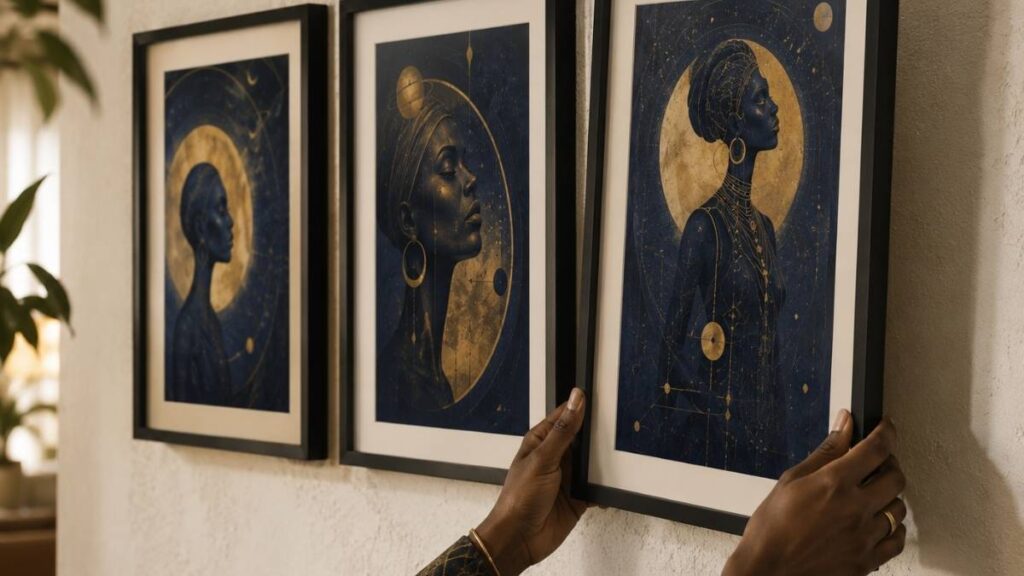
There is no single look, but a recognizable visual vocabulary recurs across the field:
- Black figures in future or speculative settings — centered as makers, rulers, travelers, scientists, healers, oracles.
- Cosmic imagery — stars, planets, galaxies, portals, deep blacks, scattered light.
- Metallic finishes — gold, bronze, chrome, copper, iridescence. These read as both technology and divinity.
- African textile references — pattern, weave, beadwork, sometimes literal, often abstracted.
- Ceremonial adornment — crowns, headdresses, masks, sculptural jewelry.
- Technological motifs — circuits, data, cables, robotics, digital glitch, AI textures.
- Alternative geographies — desert, future city, underwater civilization, spaceship interior.
- Hybrid bodies — part human, part animal, part machine, part spirit. Wangechi Mutu’s collaged figures are a strong reference here.
- Mythic feminine portraits — goddess, queen, warrior, healer, ancestor.
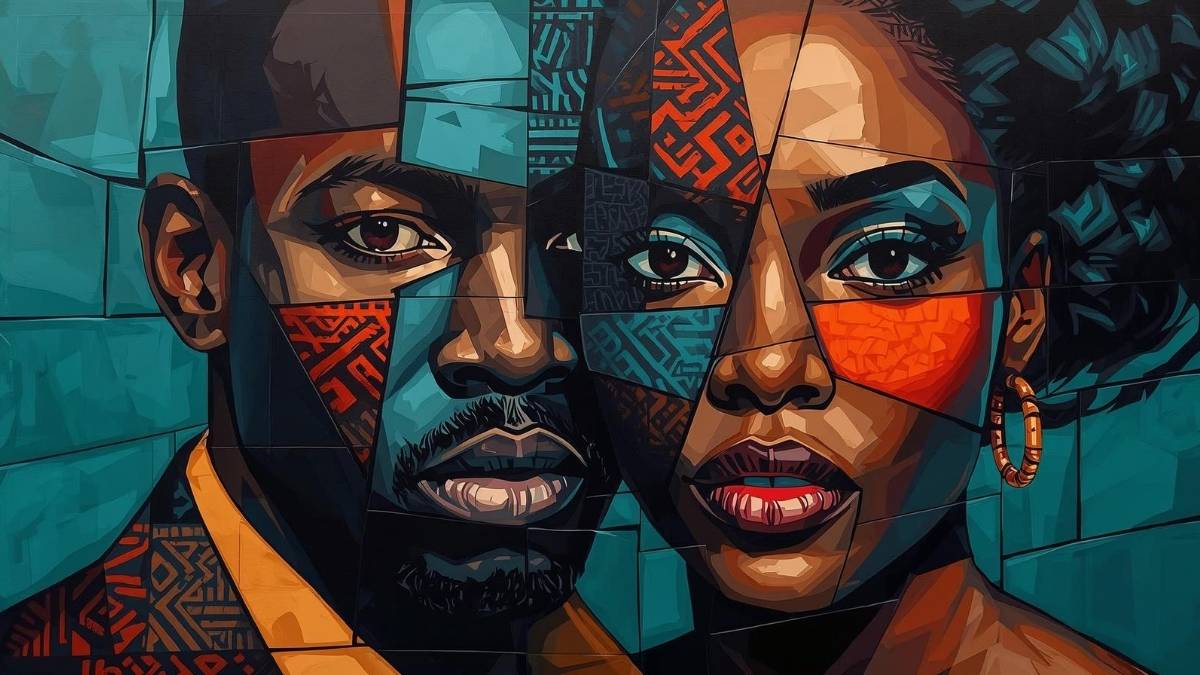
The palettes vary widely. The cyberpunk end of Afrofuturism leans into neon purple, electric blue, and black. The editorial end — the one we tend to gravitate toward at Essence of the Road Art — leans into bronze, indigo, terracotta, charcoal, cream, and muted gold. Both are legitimate. They just suit very different rooms.
If you are drawn to the editorial end of the spectrum — the indigo, bronze, and terracotta palette rather than the neon — these are the frame and display pieces we would pair with it:
- A deep walnut wood frame in a 24×36 format grounds cosmic portrait prints without competing with them.
- A matte black metal gallery frame set works for the cyberpunk end and mixes well in a grid wall.
- Washi tape or removable mounting strips for renters who want to rotate art seasonally.
The twelve subtrends, briefly
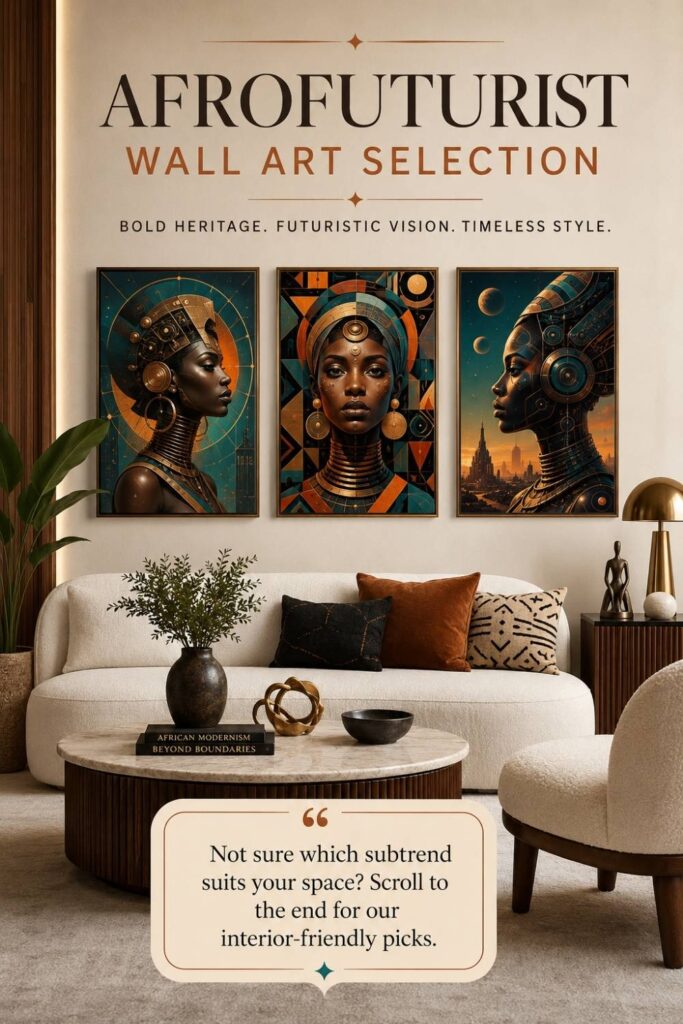
For anyone trying to understand what they like, it helps to know that Afrofuturism is not one aesthetic. There are at least twelve distinct subtrends inside it, and most pieces belong to more than one.
- Cosmic Afrofuturism — stars, planets, astronauts, celestial queens. Sun Ra’s lineage.
- Wakanda-inspired royal futurism — advanced African kingdoms, gold collars, warrior women, sovereign futures.
- Afro-cyberpunk — neon cities, cybernetic forms, digital masks, glowing data. Strong but easily clichéd.
- Ancestral technology — the idea that technology is not only Western. Symbols, beadwork, divination, herbal knowledge, speculative machines.
- Afro-surreal futurism — dreamlike figures, floating heads, portals, hybrid bodies. Mutu territory.
- Black goddess and divine-feminine futurism — Black women as cosmic priestesses, oracles, queens. The commercially dominant Etsy subtrend.
- Afro-steampunk — Victorian machinery, brass, gears, corsets, mechanical wings, Black historical fantasy.
- Afro-solarpunk — future African cities, plants, renewable energy, gardens, water systems. The greenest, gentlest branch.
- Mythic diaspora futurism — Black Atlantic memory, underwater worlds, migration, lost civilizations. The most literary.
- AI Afrofuturism — fast-growing, controversial. Visually rich, easily generic. Ethics matter.
- Afrofuturist fashion illustration — futuristic gowns, sculptural headpieces, runway silhouettes.
- Interior-friendly Afrofuturism — less neon, more refined. Bronze, celestial minimalism, textured black, indigo, terracotta. This is the strand we work with most.
We will write a longer piece on these twelve at some point. For now, the short version is enough to give you a map.
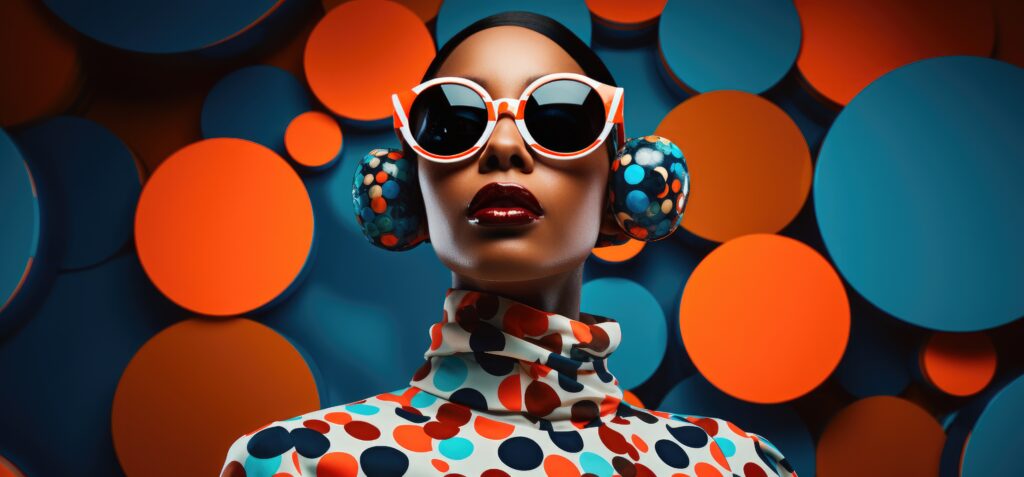
If you are working with AI image generation to explore these aesthetics — for mood boards, wall art concepts, or print creation — Vecteezy offers a large library of free and premium AI-generated art assets, including Afrofuturist-adjacent files. Their free tier is generous; their premium license covers commercial use.

Where you actually find it
Afrofuturist art lives in three quite different marketplaces, and they look almost nothing like each other.
Museums and galleries. Major institutions have begun to take Afrofuturism seriously. The Smithsonian’s Afrofuturism: A History of Black Futures ran from 2023 to 2024 and gathered more than a hundred objects across music, film, comics, fashion, and visual art. The Hayward Gallery in London hosted In the Black Fantastic in 2022, with eleven contemporary African-diaspora artists. These are the places to look if you want serious context.
Independent fine artists and digital studios. The work of Wangechi Mutu, Lina Iris Viktor, Tabita Rezaire, Nick Cave, Rashaad Newsome, and a growing roster of African digital artists sits here. Artsy carries some of them. Their personal websites and Instagram are usually the best entry points.
Etsy, Society6, Redbubble, and the print-on-demand world. This is where most readers actually buy. Afrofuturism here is largely digital download wall art — cosmic goddesses, gold portraits, cyberpunk faces, steampunk women, Samsung Frame TV files. The quality is uneven. The strongest sellers explain their inspiration, describe their files carefully, and offer multiple aspect ratios. The weakest are AI-generated images with no thought behind them.
For physical pieces — framed prints, stretched canvases, or art posters — Amazon’s art and print category has expanded significantly and now carries credible independent-print fulfillment. Filter by rating and look for 4.5-star sellers with 200+ reviews. We link to specific picks throughout this blog when we find ones worth recommending.
Our own Indigo Archives collection sits in the third category but tries to behave like the second — editorial, considered, with a clear visual idea per volume.
What to check before you buy
A short checklist for any Afrofuturist piece you are considering, whether physical or digital:
- Is it a digital download or a physical print? Both are legitimate. Just know which you are buying.
- What file sizes are included? For a digital wall art file, you want 300 DPI minimum and multiple aspect ratios (4:5, 3:4, 2:3, 11:14 cover most US print sizes).
- Is commercial use included, or personal only? Important if you plan to use the image outside your own home.
- Does the seller explain what inspired the piece? This is the single best signal we have found for distinguishing thoughtful work from generic AI output.
- Are sacred symbols handled with care? Adinkra, ankh, Vodun veves, Yoruba orisha imagery — these come from living traditions. Look for sellers who credit and contextualize, not sellers who scatter symbols decoratively.
- Are the mockups realistic? If the wall art is shown floating at the wrong scale or in a clearly AI-generated room, the artist probably did not stage it themselves.
Not sure how to size or hang what you buy? We walk through the full process — print sizes, frame choices, and lighting — in our gallery wall styling guide.
These are not trick questions. They just separate the listings that respect the tradition from the ones treating it as a moodboard filter.
FAQ
What is the difference between Afrofuturism and Afrocentric art?
Afrocentric art centers African and African-diasporic identity, beauty, and heritage — it can be traditional, modern, or abstract, and it does not need to imagine the future. Afrofuturist art is a subset that specifically combines that identity with technology, science fiction, myth, or future-world building. All Afrofuturist art is Afrocentric. Not all Afrocentric art is Afrofuturist.
Who coined the term Afrofuturism?
The cultural critic Mark Dery, in his 1993 essay “Black to the Future.” The practice itself, though, is much older — Sun Ra’s cosmic jazz dates to the mid-1950s.
Is Afrofuturism only a Black aesthetic?
Afrofuturism is created by and centered on people of African descent. Anyone can appreciate the work and live with it in their home, but the cultural authorship belongs to Black artists and thinkers. The healthiest way to engage as a non-Black admirer is to buy from Black artists, credit them, and read the writers — Womack, Dery, Eshun, Nelson — who have built the field.
What colors define Afrofuturist art?
There is no single palette. The cyberpunk end uses neon purple, electric blue, and black. The editorial end uses bronze, indigo, terracotta, charcoal, cream, and muted gold. The cosmic strand uses deep blacks with starlight whites. Pick the palette that matches the room you actually live in.
Where can I buy Afrofuturist art for my home?
For high-end work, look at Artsy, gallery websites, and museum shops. For accessible printable wall art, look at independent Etsy sellers who explain their inspiration and offer 300 DPI files. Our own Indigo Archives collection is one option in the second category.
How do I decorate with Afrofuturist art without it feeling costumey?
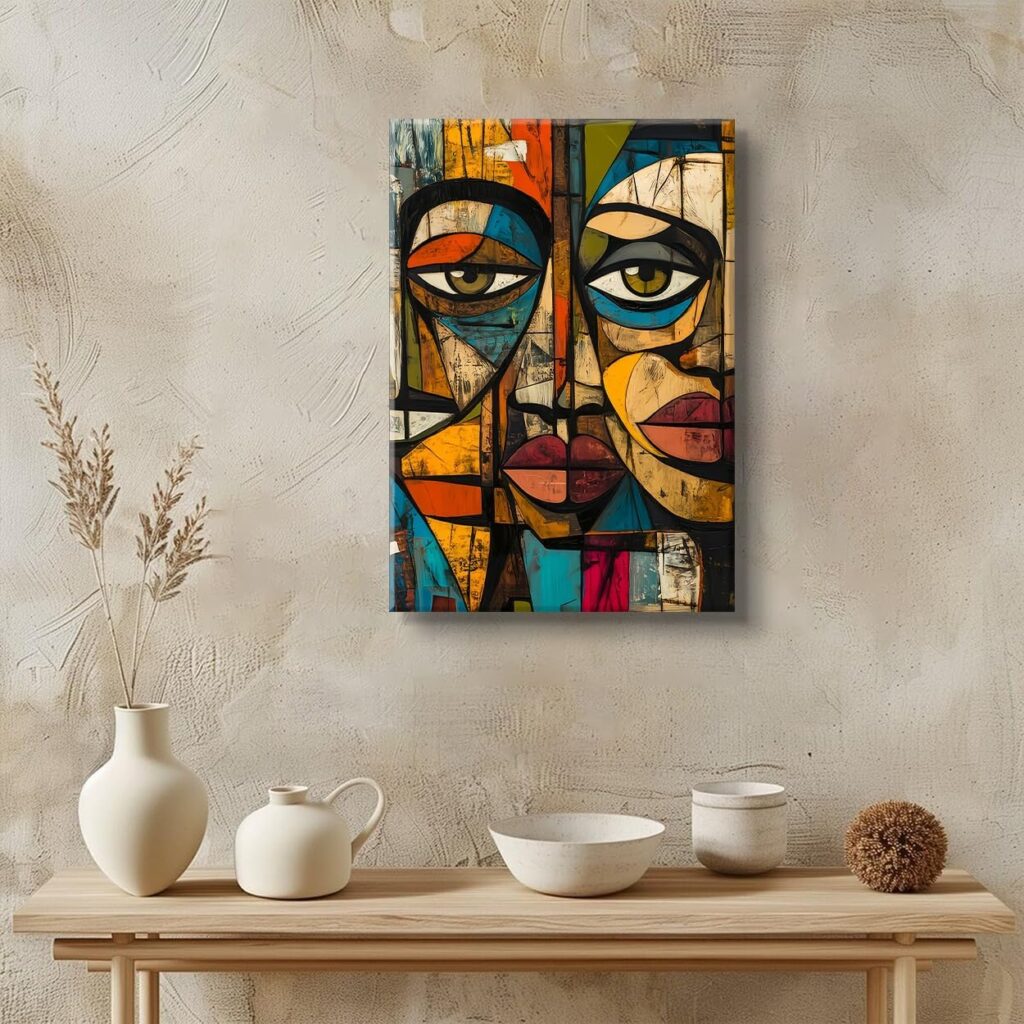
Start with the editorial end of the spectrum: bronze, indigo, terracotta, and celestial minimalism rather than neon or overcrowded cosmic imagery. Choose one strong piece as a room anchor — a large portrait print or a three-piece editorial set — and let it breathe. Neutral walls and natural textures (linen, rattan, wood) ground Afrofuturist art and make it feel curated, not costume.
A closing note
If you are ready to start building a wall around this aesthetic, our gallery wall guide covers everything from print sizing to frame choices to lighting. For bedroom-specific Afrofuturist styling, the Afrocentric bedroom ideas guide is a good next read.
And if you would like to see our own editorial answer to the question this movement asks, the Indigo Archives collection is six volumes of quiet Afrofuturist gallery sets in indigo, cream, and charcoal. Repeat buyers use the code ARCHIVE15 for 15% off.